
REVIEW · JAPAN AUDIO TOURS
Tokyo Self-Guided Audio Tour
Tokyo rewards curiosity, but its size can wear you down. This $9 self-guided audio tour links 22 major sights, from Tokyo Station and the Imperial Palace to Senso-ji and Ueno Park, letting you choose what deserves your time. I like the freedom to start anywhere and the chance to listen without staying online.
I also like the six-day access period, which lets you split the route across several outings instead of forcing everything into four hours. The catch is important: this is an audio guide and map, not a guided walk, and the huge route requires your own transport, planning, and patience.
Key points to know before you buy
- Twenty-two major sights: The route covers imperial gardens, shrines, museums, viewpoints, shopping districts, and Tokyo Bay.
- Nine-dollar entry price: The low cost is attractive, especially if you use the audio at several locations.
- Your own route: You can begin and finish anywhere, skip stops, pause the audio, or spread the experience across six days.
- Transport is not included: You must arrange trains, subway rides, walking routes, and any admission tickets yourself.
- Two access links: One opens the audio on SoundCloud, while the other opens a Google My Maps route with individual stops.
- Not a live guide: You will not find a person waiting at a meeting point or leading your group through the city.
What this Tokyo audio tour really offers
At first glance, 22 attractions in about four hours sounds ambitious. In practice, it is better understood as a library of short audio stops than as one realistic walking tour.
Each attraction has roughly 10 minutes of planned commentary. That gives you useful background while you look around, but it leaves no real time for museum visits, gardens, queues, photographs, meals, or the train rides between districts. I would use the tour as a flexible Tokyo sightseeing plan, not as a strict four-hour route.
The format is simple. Before your selected date and starting time, you receive two private links. The first opens the audio content through SoundCloud. The second opens an interactive Google My Maps page, where each marker connects to its matching audio stop.
The audio can be used before or during your visit. You can listen to the full sequence in advance, preview individual sites, or open the relevant stop after reaching the location. The material is designed to work without staying online, but you should still make sure the links and audio are available on your phone before setting out.
This arrangement suits independent visitors who dislike fixed schedules. It is less suitable if you want someone to explain street directions, adjust the route in real time, answer questions, or keep a group moving.
More Self-Guided Audio Tours in the world:
- Athens: Acropolis Ticket & Optional Self-Guided Audio Tours
★ 4.1 · 2,542 reviews - Gettysburg Battlefield Self-Guided Driving Audio Tour
★ 4.5 · 910 reviews - Joshua Tree National Park Self-Guided Driving Audio Tour
★ 4.5 · 762 reviews
Tokyo Station and the Imperial Palace area
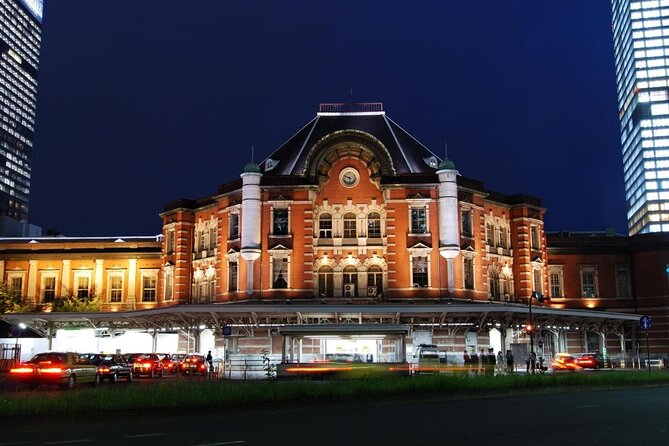
The route begins at Tokyo Central Railway Station, a sensible place to start because it is a major transport hub and a striking symbol of Japan’s modernization. The audio focuses on the station’s architecture and its role in the growth of the national rail network.
You receive about 10 minutes of commentary here, with no admission charge. The station also makes a practical starting point for a self-guided day, though you still need to decide where to go next and how to get there.
The East Gardens of the Imperial Palace bring a quieter change of pace. These grounds occupy part of the former Edo Castle site, so the audio connects landscaped gardens with the age of the shoguns and the later imperial center.
The gardens are free to enter, but 10 minutes is only enough for an introduction. If you want to stroll properly, inspect the Edo Castle ruins, and enjoy the open grounds, allow extra time. The stop is worth keeping even if you skip some of the museums later.
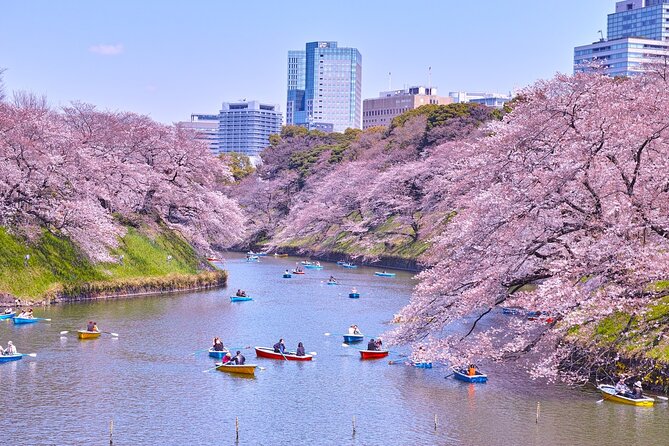
Chidorigafuchi follows with a moat, defensive history, and one of Tokyo’s best-known spring settings. The area is especially appealing during cherry-blossom season, though the route does not include admission. Seasonal timing matters here, and the audio would be more useful if you already know when the blossoms or autumn colors are at their best.
Yasukuni-jinja Shrine adds a difficult but important subject. The shrine honors Japan’s war dead and carries a complicated political and historical meaning. The audio introduces its cultural role, but you should approach this stop with care and allow yourself time to consider the subject rather than treating it as just another photo stop.
Shinjuku Gyoen, Shibuya, and Meiji Shrine
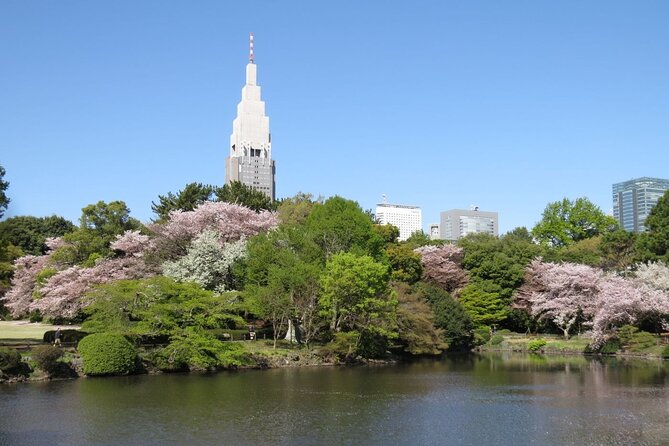
Shinjuku Gyoen National Garden offers one of the strongest contrasts in the route. Its Japanese, French, and English garden styles provide a calm break from Tokyo’s dense city streets, while the audio explains its imperial beginnings and later development.
There is an admission fee, and the 10-minute audio segment does not include time to wander. I would not rush this stop. If gardens appeal to you, it deserves much longer than its suggested commentary period.
The Tokyo Metropolitan Government Buildings provide a free viewpoint and a lesson in how Tokyo is run. The audio covers the building’s modern design and the city administration housed within it. This is one of the better-value stops because there is no admission fee and the view gives you a useful sense of Tokyo’s scale.
Meiji Jingu Shrine is set among forested grounds and is dedicated to Emperor Meiji and Empress Shoken. The stop introduces Shinto customs and the shrine’s imperial connection. You can use the audio to understand what you are seeing, but remember that a shrine visit also rewards quiet observation, respectful behavior, and time away from your phone.
Shibuya Crossing shifts the mood again. The famous intersection represents Tokyo’s modern commercial energy, and the audio explains how the surrounding district changed from a residential area into a fashion center.
The commentary is likely most useful before or after the crossing, since the junction itself is loud and crowded. Use the map to reach the stop, then pause and watch the movement around you. Ten minutes is enough for an introduction, but not necessarily enough to explore Shibuya beyond the crossing.
Roppongi and Tokyo Tower
The National Art Center, Tokyo is an unusual museum because it has no permanent collection. Instead, the building hosts changing exhibitions, and the audio explains its design and place in Tokyo’s cultural life.
The attraction itself may require an entry fee depending on the exhibition, so check the current arrangements before making it a main stop. The audio can help you understand the building, but it cannot replace time spent inside a temporary show.
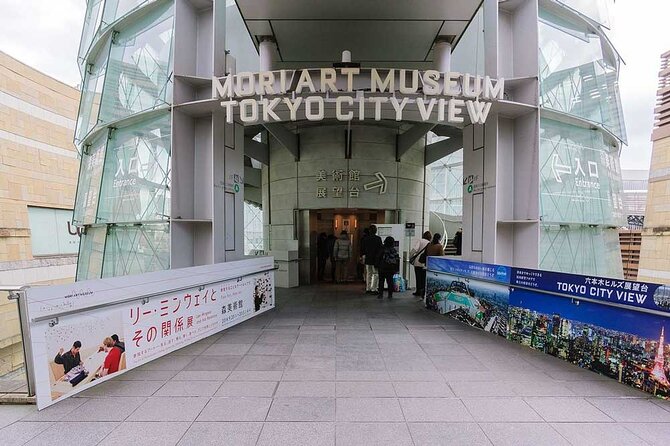
The Mori Art Museum continues the art theme from high above Roppongi Hills. The stop covers contemporary art and the museum’s role in Tokyo’s cultural scene, along with the city views associated with its location.
Admission is not included. This is a stop for people who want to pair art with a large urban panorama, but it can become expensive if you also pay for several other museums and towers on the same day.
Tokyo Tower is one of the city’s most recognizable structures. The audio explains its Eiffel Tower influence, construction, and importance during Japan’s postwar rebuilding period.
You can admire the tower from outside without paying, but entry to the observation areas is not included. That distinction matters in a nine-dollar product. The audio covers the landmark, but your ticket to go up is a separate decision.
Nearby Zojo-ji Temple gives you a strong visual contrast: an old Buddhist temple with Tokyo Tower rising behind it. The audio connects the temple to the Tokugawa shogunate, making this one of the route’s most effective pairings of old and new Tokyo.
Admission is free. If you are short on time, this is a sensible place to keep because the temple and tower can be considered in one area rather than as completely separate outings.
A few more audio tours around the world worth a look
- Barcelona: Sagrada Familia Entry Ticket with Audio Guide
★ 4.6 · 105,312 reviews - Rome: Pantheon Fast-Track Ticket and Official Audioguide
★ 4.5 · 27,353 reviews - Barcelona: Casa Batlló Entry with Self-Audioguide Tour
★ 4.7 · 25,359 reviews - Rome: Colosseum & Forum with Audio Guide App -Optional Arena
★ 4.2 · 24,770 reviews
Hama Rikyu and the Tokyo Bay section
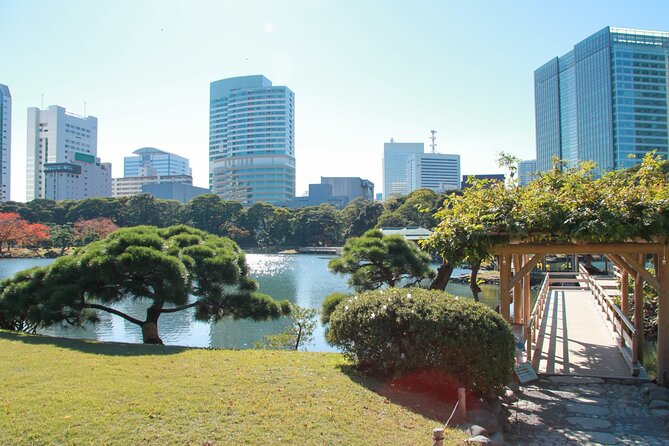
Hama Rikyu Gardens were once the residence of a feudal lord. The audio follows the grounds through the many changes that shaped modern Tokyo.
An entry fee applies, and you should allow more than 10 minutes if you want to enjoy the ponds, paths, and historic setting. This is another location where the fixed audio length may encourage you to move on too quickly.
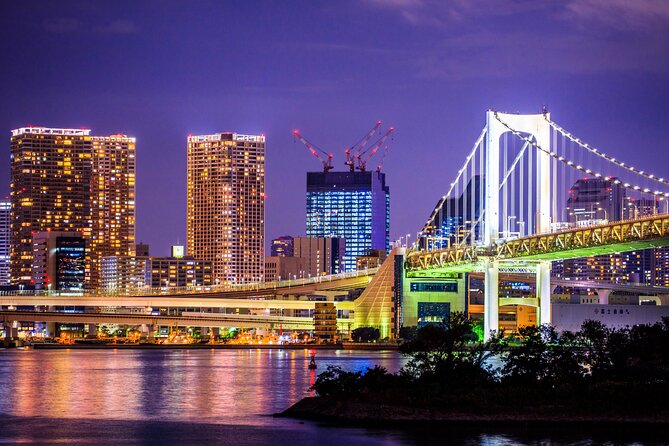
Rainbow Bridge introduces Tokyo Bay and the engineering behind the span. The audio covers its construction and nightly illumination. Admission is listed as free, though getting to a useful viewing point still requires your own transport and route planning.
Odaiba is built on artificial islands and has changed from a defensive project into a leisure and entertainment district. The audio gives that transformation some context, while the area itself offers a very different view of Tokyo from the central districts.
Odaiba is not a quick add-on. It sits away from many of the other stops, and transport time can eat into the four-hour estimate. If you want to include it, I would give the bay section its own half-day rather than trying to squeeze it between Shibuya and Asakusa.
Skytree, Senso-ji, and Asakusa
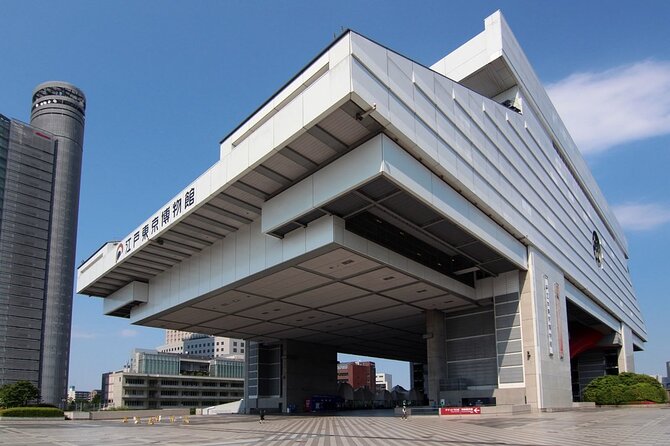
Tokyo Skytree is presented through its design, height, and links to traditional Japanese aesthetics. Admission is not included, and the tower can become a major time commitment if you decide to go up.
Even from ground level, the audio gives the structure a clearer purpose than a simple photograph. You can listen outside, then decide if the paid viewpoint fits your budget and schedule.
Senso-ji is Tokyo’s oldest temple and one of the key cultural stops on the route. The audio covers its founding legend and its role in Edo-period life. Admission is free, making it one of the strongest inclusions for a low-cost self-guided experience.
Asakusa extends the visit beyond the temple. The district preserves an older Tokyo atmosphere and has moved from an entertainment center toward a cultural district. The audio helps connect the temple grounds with the surrounding streets, but you should leave time to walk around rather than treating Asakusa as a single marker on a map.
This is one of the easiest areas to enjoy at your own speed. You can pause the recording, browse the streets, and return to the audio when you are ready.
Ueno Park and its three museums
Tokyo National Museum is Japan’s oldest and largest museum, with collections focused on Japanese art and antiquities. The audio provides a short orientation, but admission is not included and the museum is far too large for a 10-minute visit.
The National Museum of Nature and Science covers the natural world and technological progress. It also has a separate admission cost. If you have children or a strong interest in science, this may be more useful to you than another observation deck, but you should plan it as a proper museum visit.
The National Museum of Western Art occupies a building designed by Le Corbusier and has UNESCO World Heritage status. The audio brings attention to the architecture as well as the art, while entry fees remain separate.
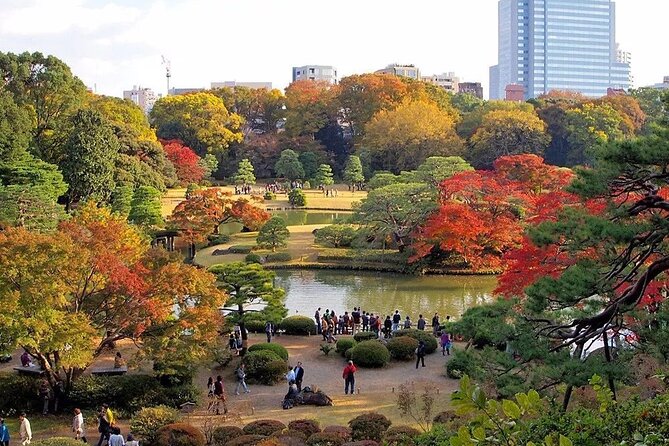
Ueno Park ties these three museums together. The park is free, has a long public history, and is particularly well known during cherry-blossom season. I would treat Ueno as a district visit rather than selecting all four stops as brief audio points.
This final group shows both the strength and weakness of the product. You get a useful map of major choices, but the short format cannot give every museum the attention it deserves.
Price, access, and the practical value
At $9 per person, the price is low for a private activity. There is no group to join, no fixed meeting point, and no live guide fee. If you use the material at several free sites, it can offer good value.
The price looks less generous if you expected a guided walking tour with transport. You pay separately for trains, subway rides, taxis if needed, and any museum, garden, tower, or observatory admission. The route also crosses a very large part of Tokyo, so transport is not a minor detail.
Your links remain valid for up to six days. That is the feature that makes the product most practical. You can use one day for the Imperial Palace and Shinjuku, another for Roppongi and Tokyo Tower, and a third for Asakusa and Ueno.
The provider describes the activity as private, meaning only your group participates. In this case, that means you are exploring independently rather than joining a private guide in person.
The overall score is 3.3 out of 5 from 10 ratings, which signals an uneven experience. The strongest positive point is the flexibility, with one assessment calling the experience all good while suggesting seasonal advice would improve it. The main problems raised are confusing details, audio that did not always match the user’s location, and difficulty reaching support.
That feedback points to a simple rule: read the instructions carefully before you leave. Confirm that you have received both links, open the map, test the audio, and understand that no transport or on-site representative is provided. The supplier has stated that the instructions explain these limits, but the mixed response shows that clear preparation still matters.
Who should book this Tokyo experience
I would choose this for an independent visitor who likes making decisions on the go, already understands Tokyo’s public transport, and wants basic historical and cultural context without paying for a full guide.
It also suits repeat visitors who want a low-cost list of places to revisit, couples or friends who do not want to move at a group pace, and anyone who prefers to split sightseeing over several days.
I would be cautious if you need reliable turn-by-turn guidance, live answers, smooth transfers, or a tightly organized route. The audio may not always tell you exactly what to do next, and the 22-stop plan is too spread out to function as a simple four-hour walk.
To get the most from it, download or open both access links before starting, mark the free sites you care about, check opening arrangements for paid attractions, and group stops by district. Start with only one or two areas per day. Tokyo is much easier to enjoy when you stop trying to conquer it.
Should you book the Tokyo Self-Guided Audio Tour?
Book it if you see the $9 fee as a flexible audio library and planning tool, not as a complete guided tour. The free shrines, public parks, temple grounds, station, viewpoints, and city districts give you plenty to work with.
Skip it if you want transport, a human guide, guaranteed location-based commentary, or a carefully paced four-hour experience. For the right independent visitor, the six-day access period and broad choice of sights are the real value. For someone expecting hands-on help, the low price may not compensate for the extra planning.
FAQ
How much does the Tokyo Self-Guided Audio Tour cost?
The tour costs $9 per person.
How long is the tour?
The stated duration is approximately four hours, with about 10 minutes of audio planned for each of the 22 stops. You can also split the experience across several days.
Can I choose where the tour begins and ends?
Yes. You decide your starting point and ending point in Tokyo.
Is transportation included?
No. Pickup, drop-off, and other transportation are not included. You arrange travel between the attractions yourself.
Are attraction admission fees included?
No. Entry fees are not included where attractions charge for admission. Several listed sites are free, including Tokyo Station, the East Gardens, Yasukuni-jinja Shrine, the Tokyo Metropolitan Government Buildings, Meiji Jingu Shrine, Shibuya Crossing, Zojo-ji Temple, Senso-ji, Asakusa, and Ueno Park.
How do I access the audio guide?
You receive a private SoundCloud link for the audio and a private Google My Maps link showing the 22 attractions. Each map point connects to its related audio guide.
Do I need to stay online while using the tour?
The audio tour is designed for use without being online. You should access the links before starting and make sure the content is ready on your phone.
How long are the access links valid?
The private access links remain valid for up to six days.
Just added around the world
- Coba Ruins: Self-Guided Walking Audio Tour in Mexico★ 3.5 · 2 reviews
- Self Guided Driving Audio Tour of Saguaro National Park★ 3.0 · 4 reviews
- Torino Walking Tour with Audio and Written Guide by a Local★ 4.5 · 35 reviews
- Self-Guided Audio Driving Tour of Mount Lemmon★ 5.0 · 4 reviews
- Trondheim’s Inner Circle: A Self-Guided Audio Tour★ 4.0 · 15 reviews
- Panorama Bus Tour with Audio Guide★ 4.0 · 3 reviews
- Saguaro National Park Self-Guided Audio Tour★ 3.5 · 11 reviews
- A Tromsø Introduction: A Self-Guided Audio Tour★ 3.5 · 19 reviews
Self-Guided Tours, compared.
Acropolis Ticket & Optional Self-Guided Audio Tours
Read our review →


Ultimate Acadia National Park Self-Guided Driving Audio Tour
Read our review →

Santorini: Akrotiri Ticket with Optional Self-Guided Audios
Read our review →
Browse the lists this tour appears in