
REVIEW · SACRAMENTO AUDIO TOURS
A Highway 49 Drive: A Self-Guided Audio Tour from Jackson to Angels Camp
Gold Country is best explored at road speed. This self-guided drive links Jackson with Angels Camp through old mining towns, outlaw stories, river country, and remnants of hard-rock mining. I like the freedom of setting your own pace, and I especially like that the audio adds context while you drive instead of leaving you to guess what those weathered buildings once meant. The $14.99 group price is also hard to beat for up to 15 people.
I also like the optional stops, especially Kennedy Tailing Wheels Park and Indian Grinding Rock State Historic Park. They turn a pleasant road trip into a more rounded look at the people and industries that shaped the area. The main drawback is time: the recorded route takes about two and a half to three hours, but the worthwhile walks, museums, and cave visit can easily make this an all-day outing.
Key points to know before you go
- Jackson to Angels Camp: The route begins at 33 Broadway in Jackson and finishes near the Angels Camp landmark on South Main Street.
- Gold Rush towns: You pass through Volcano, San Andreas, Mokelumne Hill, and Angels Camp, each offering a different glimpse of early mining life.
- Outlaw stories: The audio brings in Joaquin Murrieta and Black Bart, two figures connected with the rough-and-ready world of the Gold Rush.
- Mining remains: Kennedy Tailing Wheels Park explains what happened to the huge piles of waste created by hard-rock mining.
- Optional stops: Black Chasm Cavern, Indian Grinding Rock State Historic Park, the Amador County Museum, and the Red Barn Museum can add much more time and interest.
- Easy group value: One purchase covers a private group of up to 15 people, with offline audio, maps, and route data through the VoiceMap app.
Why this Highway 49 drive is worth your time
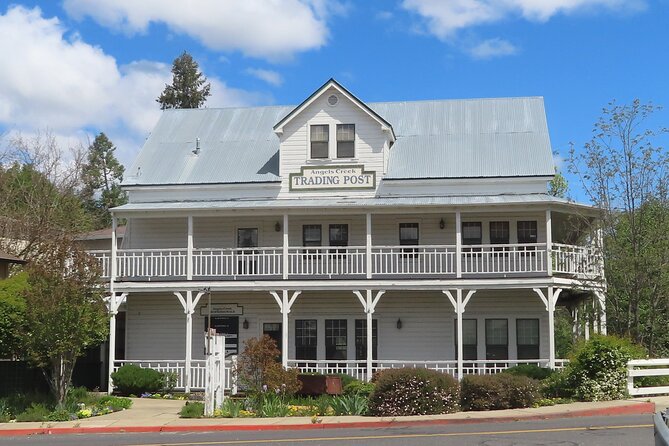
This is not a guided bus ride or a fixed sightseeing schedule. You drive your own car from Jackson to Angels Camp while the VoiceMap app supplies spoken commentary, directions, maps, and local stories. That format works well here because Highway 49 is a string of small places rather than one single attraction.
I like the way the route gives you a reason to stop in towns you might otherwise pass through. A storefront, hillside, or quiet junction can seem ordinary until the audio explains its connection to mining, pioneer settlement, or highway robbery. The experience is less about checking off grand sights and more about seeing how Gold Country grew in scattered pockets.
The audio portion is listed at roughly two hours and 30 minutes to three hours. That estimate should not be confused with the time needed for the full outing. If you walk through the towns, visit a museum, tour Black Chasm Cavern, or stop at Indian Grinding Rock, plan on an entire day. The driving is only part of the experience.
This is also a private activity, so only your own group participates. That gives you control over breaks and walking time. You are not tied to a guide’s schedule, but you are responsible for navigation, driving, parking, and deciding which optional stops fit your day.
More Self-Guided Audio Tours in the USA
- Gettysburg Battlefield Self-Guided Driving Audio Tour
★ 4.5 · 910 reviews - Joshua Tree National Park Self-Guided Driving Audio Tour
★ 4.5 · 762 reviews - Ultimate Acadia National Park Self-Guided Driving Audio Tour
★ 4.0 · 521 reviews
Starting in Jackson, where Gold Rush stories begin
The tour starts at 33 Broadway, Jackson, California 95642. Jackson provides a fitting launch point, since the route quickly puts you into the old western character of California’s interior mining country.
As you leave town, listen for the stories of Joaquin Murrieta and Black Bart. These outlaw tales add drama to the drive, but they also help explain the unsettled character of the Gold Rush era. Roads, towns, and businesses grew quickly around the mines, and law enforcement did not always keep pace.
The spoken narration matters most on the driving sections. Instead of reading from a brochure while you try to watch the road, you get background through your phone and can look at the sights when it is safe to do so. You should still treat the app as an audio companion, not as something to operate while driving.
The Jackson Rancheria Casino also appears along the route. The commentary explains the history behind its creation, adding a more recent chapter to the region’s story. This helps broaden the trip beyond old mining relics. Gold Country is not frozen in the nineteenth century, and the route makes room for the people and institutions connected to the area today.
Amador County Museum and the value of a slower pace
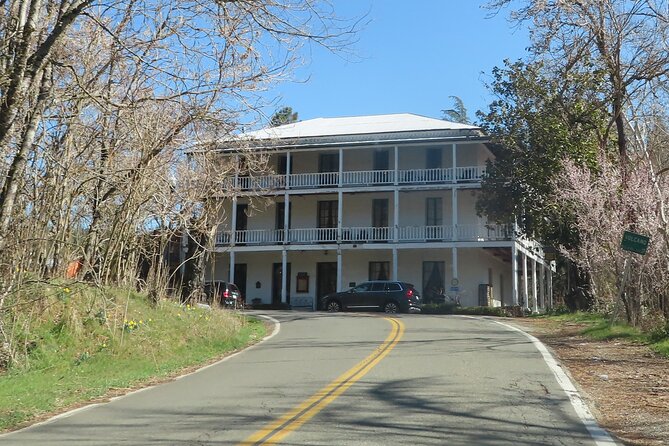
The drive passes by the Amador County Museum, an optional stop that can help you put the surrounding towns and mining stories into order. The supplied information does not specify admission details or opening times, so check before building your day around it.
Museums can be useful here because the route covers a lot of ground. A short visit gives you a chance to pause the audio, look at objects directly, and connect broad stories about miners and pioneers with physical evidence. If you are interested in local history rather than just scenic driving, this is the kind of stop worth considering.
The drawback is that every added stop reduces the time available for walking through the towns themselves. I would not try to see everything at speed. Pick the places that match your interests, then leave room for the simple pleasure of wandering along the old streets.
Volcano, San Andreas, and Mokelumne Hill
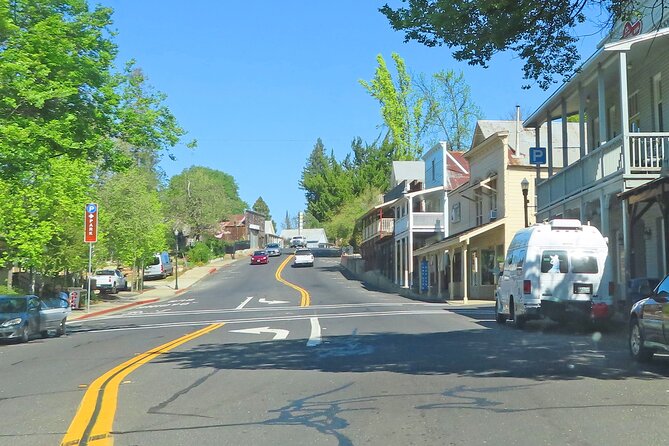
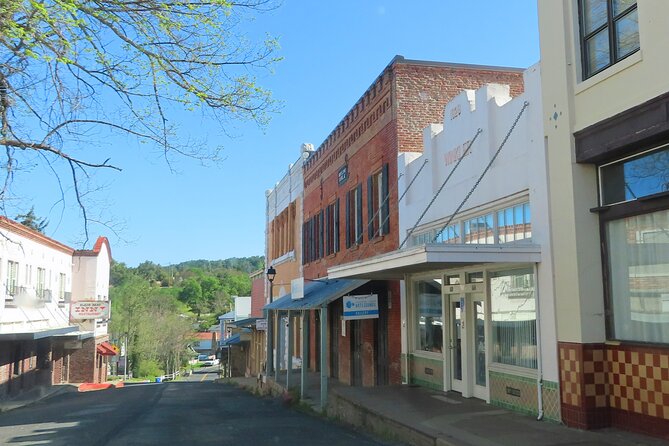
The route passes through Volcano, San Andreas, and Mokelumne Hill, three old Gold Rush towns with different visual characters and stories. Together, they are the heart of the drive.
Volcano gives you the old western atmosphere many people hope to find on Highway 49. San Andreas adds another look at a former mining center, while Mokelumne Hill brings the route toward the Mokelumne River and the rugged country around it. The point is not that every town has a giant attraction. The appeal comes from seeing how mining settlements were laid out and how much of their character remains visible.
You will get more from these places if you walk. One person who followed the route found the walking directions clear and the descriptions useful, but also warned that the trip involves plenty of walking and driving. That is good advice. Wear comfortable shoes, allow time to stop, and do not judge the route solely by the length of the audio.
The audio is particularly helpful in small towns because you may not find a formal guide waiting at each site. It tells you what to notice and gives the buildings and streets a human story. I like that balance: you explore independently, but you are not left without context.
Same place, a different route to walk:
- Los Angeles: Hop-On Hop-Off Bus Tour with Audio Guide
★ 3.7 · 2,030 reviews - City Sightseeing Hop-On Hop-Off Bus Tour with Audio Guide
★ 3.0 · 1,083 reviews - Medieval Torture Museum Ticket with Audio Guide and Ghost Hunting
★ 5.0 · 962 reviews - San Francisco: Alcatraz, Ferry & Audio Tour w/ Night Option
★ 4.4 · 617 reviews
Kennedy Tailing Wheels Park and the waste of mining
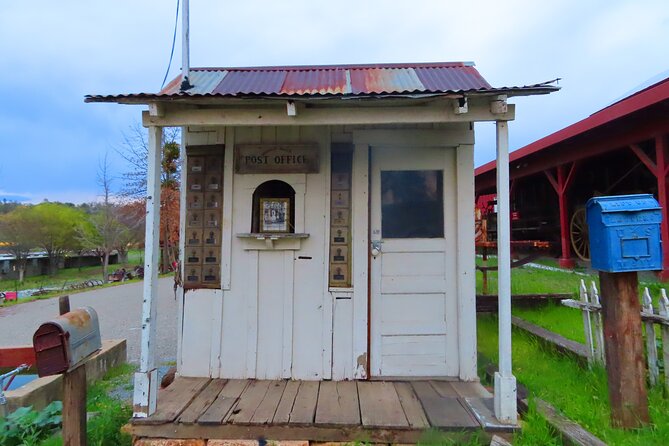
One of the more unusual stops is Kennedy Tailing Wheels Park. Here, the focus is not on gold itself but on what mining left behind.
Hard-rock mines produced enormous amounts of waste material. The tailings had to be moved, and the park shows how miners dealt with those tons of leftover rock. That is a useful correction to the usual Gold Rush story, which often focuses on nuggets, claims, and instant fortunes.
The site gives you a better sense of mining as heavy industrial work. It also explains why the region contains so many piles, structures, and altered hillsides connected to past mining. You are looking at the machinery and problems behind the romantic legend.
This stop is a good match for anyone who likes engineering, industrial history, or practical details. It may be less exciting if you only want old storefronts and outlaw stories, but I think it adds needed depth to the day.
Indian Grinding Rock State Historic Park as an optional addition
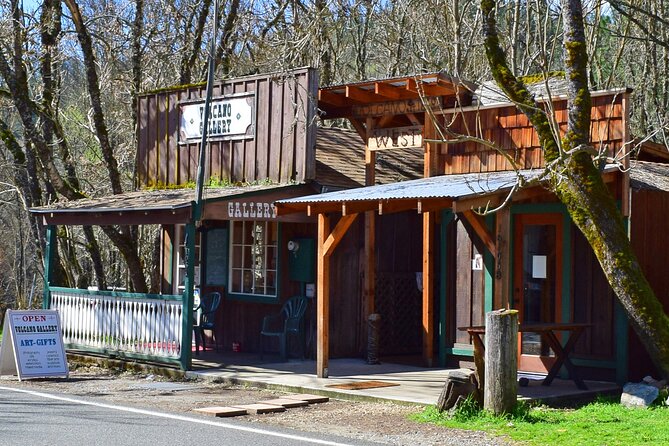
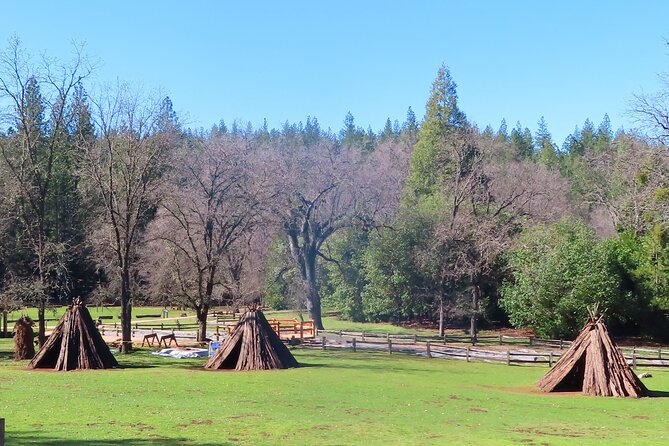
The route passes by Indian Grinding Rock State Historic Park, another optional stop. Its inclusion reminds you that this area’s story did not begin with the Gold Rush.
The park connects the drive with the Native American history of the Sierra foothills. The provided tour information does not give specific opening hours, admission prices, or visit length, so confirm those details before stopping.
I would make room for it if you want a broader understanding of the region. The mining towns are important, but they represent only one period of human activity here. An optional stop such as this can keep the day from becoming a narrow tour of mining legends alone.
Because the stop is optional, you can also skip it if your schedule is tight. That flexibility is one of the strongest features of a self-guided route.
Black Chasm Cavern and a different kind of underground story
Black Chasm Cavern is one of the route’s most striking optional attractions. It is known for unusual helictites, a type of cave-formed mineral, and has National Landmark status.
The cavern changes the rhythm of the trip. After hours of roads, town streets, and mining relics, you get a natural feature with its own geological story. The helictites are the main draw, giving you something far removed from the human history covered elsewhere on Highway 49.
Admission is not included, and the tour price does not cover entrance to any attraction along the route. You should check current ticket information and opening times before making this a central part of the day. The same applies to any museum or historic park you plan to visit.
I would consider Black Chasm Cavern a strong choice if you have a full day and want variety. If you only have the basic three-hour audio route, keep driving and save the cavern for another visit rather than rushing through every stop.
Following the Mokelumne River
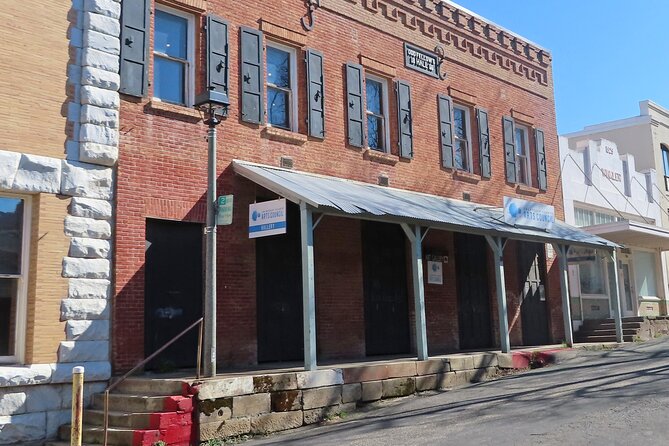
Part of the route follows the Mokelumne River, adding a change of scenery between the mining towns. The river section helps break up the historic material and gives the drive a more natural setting.
The tour does not promise a special river activity or a dedicated viewpoint, so think of this as part of the road experience rather than a separate attraction. Listen to the narration, watch for the changing surroundings, and let this portion provide a quieter transition between stops.
I appreciate routes that include these connecting stretches. They make the trip feel like a journey through a region rather than a list of isolated places. You get a sense of how the towns relate to one another and why settlements developed along particular roads and waterways.
Red Barn Museum and the final approach to Angels Camp
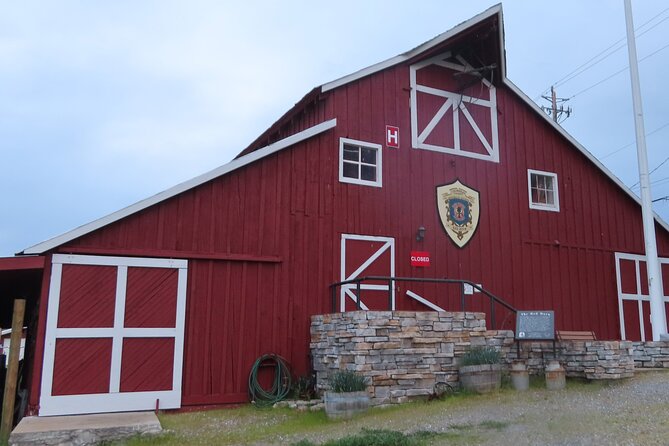
The route passes the Red Barn Museum and Red Barn Annex, both optional stops. As with the Amador County Museum, entrance fees are not included, and the supplied information does not provide current opening details.
These stops may appeal to you if you want additional local collections after seeing the larger Gold Rush towns. They are best treated as flexible add-ons. If you have already spent hours walking and visiting other sites, you may prefer to continue toward Angels Camp.
The tour ends near Angels Camp, California Historical Landmark No. 287, at South Main Street and Birds Way. Angels Camp is the final old western-style town on the route and gives you a natural place to finish the drive.
The listed meeting-point hours show the destination as open around the clock, but that does not mean every nearby business or attraction is open 24 hours. The route simply ends in a public town location rather than at a staffed tour office.
What the $14.99 price really gets you
At $14.99 per group of up to 15 people, the price is excellent if you are sharing one car with family or friends. A group of two pays the same total as a group of 10, so the value improves quickly as your party grows.
The fee covers:
- Lifetime access to the English-language tour
- Offline audio
- Offline maps and geographic data
- The VoiceMap app for Android and iOS
You supply the car, phone, headphones, fuel, food, and entrance fees. Transportation is not included. That is important because this is not a transportation service from Sacramento or another city. You need to reach Jackson yourself and arrange your own ride to Angels Camp or beyond after the route ends.
The offline access is useful in a rural route where phone coverage may vary. Download the audio, maps, and route information before setting out. You also need a smartphone and headphones, neither of which is supplied.
The price is less attractive if you only listen to the audio without stopping. The real value comes from pairing the narration with the towns, parks, museum options, and mining sites along the way.
How much time should you set aside?
The official audio route takes about two and a half to three hours. That is a reasonable estimate for driving and listening, but not for a relaxed visit.
For a simple point-to-point drive, allow the listed time and add a little flexibility for navigation and stops. For the fuller experience, plan on an entire day. The optional attractions can involve walking, museum visits, or separate admission arrangements.
A sensible approach is to choose two or three priorities before you start. You might focus on:
- Old town walks in Volcano, San Andreas, Mokelumne Hill, and Angels Camp
- Kennedy Tailing Wheels Park and one museum
- Black Chasm Cavern and Indian Grinding Rock State Historic Park
- The driving stories, river section, and outlaw history
Trying to include every stop may leave you hurrying. The route works better when you let the towns set the pace.
Who will enjoy this self-guided tour?
I would recommend it most to people who enjoy road trips, local history, small towns, and flexible schedules. It suits couples, families, and private groups who would rather stop when they like than follow a fixed tour timetable.
It is also a good choice for anyone who wants more than a scenic drive but less structure than a traditional guided excursion. The audio gives you direction and background, while you remain in charge of the day.
You may want to skip it if you dislike driving, need a fully escorted tour, or have only a short window for sightseeing. The route involves substantial time on the road, and the best version includes walking and optional admission fees.
The overall rating is 3.8 out of 5 from 10 reviews, which fits the experience well. The strongest praise centers on reaching small gold towns that people might otherwise miss and hearing useful narration during the drive. The main caution is also clear: the route rewards a full day, not a rushed afternoon.
Should you book the Highway 49 drive?
Book it if you want an affordable, flexible way to connect Jackson and Angels Camp while learning why the Gold Country towns, mine remains, river corridors, and outlaw stories matter. The group price is especially good for a carload of people, and offline access makes the route practical.
Before you buy, check your available time and decide which optional stops matter most. If you can give the route a full day, enjoy walking, and are comfortable supplying your own car and attraction tickets, this is a smart way to explore a less polished and more authentic side of California’s Gold Country.
FAQ
Where does the tour start?
The tour starts at 33 Broadway, Jackson, California 95642.
Where does the tour end?
It ends near Angels Camp, California Historical Landmark No. 287, at South Main Street and Birds Way in Angels Camp.
How long does the audio tour take?
The driving and audio portion takes approximately two hours and 30 minutes to three hours.
Can the experience take a full day?
Yes. If you stop at museums, parks, Black Chasm Cavern, or the historic towns, you should plan on an entire day.
What language is the tour offered in?
The tour is offered in English.
How many people can use one purchase?
One purchase covers a private group of up to 15 people.
Is transportation included?
No. You must provide your own transportation between Jackson and Angels Camp.
Are attraction entrance fees included?
No. Tickets or entrance fees for museums and other attractions along the route are not included.
What do I need to use the tour?
You need a smartphone and headphones. The tour uses the VoiceMap app for Android and iOS.
Can I use the audio without an internet connection?
Yes. The tour includes offline access to the audio, maps, and geographic data.
Is the tour refundable?
No. The experience is non-refundable and cannot be changed after booking.
Just added around the USA
- Self Guided Driving Audio Tour of Saguaro National Park★ 3.0 · 4 reviews
- Self-Guided Audio Driving Tour of Mount Lemmon★ 5.0 · 4 reviews
- Saguaro National Park Self-Guided Audio Tour★ 3.5 · 11 reviews
- A Self Guided Audio Tour in Tombstone★ 4.0 · 11 reviews
- Catskills Scenic Byway Self-Guided Driving Audio Tour★ 4.0 · 9 reviews
- Big Bend National Park Self Guided Audio Tour Guide★ 5.0 · 12 reviews
- Self-Guided Audio Driving Tour in Catskills Scenic Byway★ 4.5 · 7 reviews
- Shiloh Battlefield Self-Guided Driving Audio Tour★ 4.0 · 9 reviews
Self-Guided Tours, compared.

Acropolis Ticket & Optional Self-Guided Audio Tours
Read our review →


Ultimate Acadia National Park Self-Guided Driving Audio Tour
Read our review →

Santorini: Akrotiri Ticket with Optional Self-Guided Audios
Read our review →
Browse the lists this tour appears in