
REVIEW · GREECE AUDIO TOURS
The Palace of the Grand Master. Self-guided Audio Tour
History sounds better with a little context. This self-guided audio tour gives you a phone-based introduction to the Palace of the Grand Master in Rhodes, helping you understand the rooms, statues, mosaics, and restoration work instead of simply walking past them. I like the freedom to pause and move at my own pace, and I like the low price of $13.88 per person. The main concern is technical: you must download and activate the tour properly before arriving.
The tour lasts about two hours and uses offline text, maps, and audio narration in English. It does not include palace admission, a smartphone, headphones, transportation, or a live guide, so you need to arrange those parts yourself.
Key points to know before you go
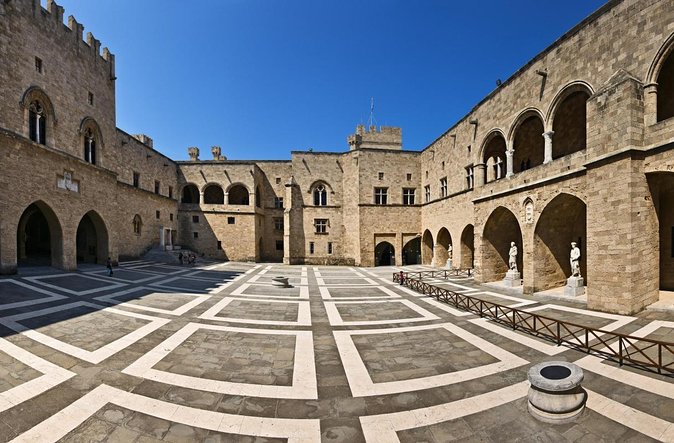
- The courtyard once held stables and a kitchen: The palace’s grand inner court had very practical beginnings.
- The Room with the Ribbed Vault has an ancient mosaic: Look for birds, trees, and vases in a pavement brought from Kos.
- The audio guide works offline: Download the content before reaching the palace, where reception may be weak.
- You set the pace: Stop, replay, or skip sections without keeping up with a group.
- Admission costs extra: Your $13.88 purchase covers the audio tour, not entry to the palace.
- The experience is best for independent visitors: It suits you if you want facts and timelines without paying for a private guide.
What you are really buying for $13.88
At $13.88, this is not a full guided visit. It is an inexpensive layer of explanation that you carry on your phone while exploring the palace. That distinction matters because your admission ticket is separate, and you will not meet a guide at the entrance.
I see the strongest value in the price. A live guide gives you personality and the chance to ask questions, but it also costs more and follows a fixed route. Here, you pay a small amount for historical background, room-by-room narration, and maps that can help you make sense of the building.
The audio tour is particularly useful because the palace contains more than impressive stonework. Without context, you may see a courtyard filled with statues, a striking mosaic, or a vaulted room and move on after a quick photograph. The narration explains how each space was used and why it matters.
The tradeoff is that the experience depends on your phone. You must bring a charged smartphone and headphones if you want private listening. The audio tour supports Android and iOS, but not Windows phones.
More Castle and Palace Audio Tours in Greece
- Crete: Knossos Palace Entry Ticket with Optional Audio Guide
★ 3.9 · 2,251 reviews - Crete: Palace of Knossos E-Ticket and Audio Guide
★ 3.8 · 1,540 reviews - Crete: Knossos Palace and Museum E-Tickets with Audio Guides
★ 4.0 · 828 reviews
Starting at Ippoton Street in Rhodes
The meeting point is the Palace of the Grand Master of the Knights of Rhodes on Ippoton Street, Rhodes 851 00. The activity begins and ends at the palace, with no hotel pickup or transportation included.
The stated opening hours are 8:00 a.m. to 8:00 p.m., Monday through Sunday, for the listed operating period. You should still check the palace’s current conditions before setting out, since site rules, access, and the route can change.
The practical order is simple. Get your palace admission, activate the audio tour, and begin once you are ready to listen. Since the experience is self-guided, you do not need to arrive at a particular time for a group departure.
That flexibility is one of the best features. You can choose a quieter time of day, move quickly through rooms that interest you less, or stop longer when something catches your attention. The only limit is the palace’s opening schedule and any restrictions imposed on the site.
The inner courtyard and its surprising working past
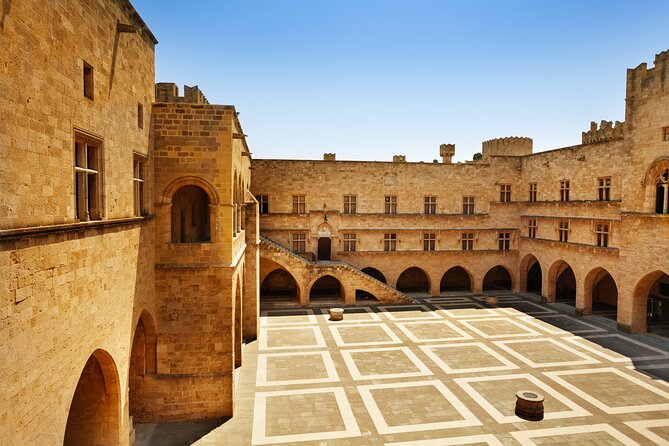
The inner courtyard is one of the most useful stops because its appearance can mislead you. Today, it reads as a formal historic space, decorated with statues of Roman senators. But the audio narration explains that it once held horse stables and a kitchen.
That contrast gives the courtyard real character. The Knights Hospitallers needed a working residence, not just a ceremonial palace. Horses, food preparation, storage, and daily administration all had to fit within the complex.
The statues add another layer. They are not simply decorative figures placed at random. The narration asks you to look closely at why statues of Roman senators appear here and how later ideas about grandeur shaped the palace.
You also get guidance on the modern restoration. This is especially valuable because restoration can make a building look older and more unified than it really is. The tour points out what went wrong in the restoration program, allowing you to separate medieval remains from later work.
I would give this section time. Walk slowly through the courtyard, listen to the relevant narration, and look up and around rather than focusing only on the central space. The point is not just to admire the setting. It is to notice how military, domestic, political, and decorative purposes overlap.
The Room with the Ribbed Vault and its mosaic floor
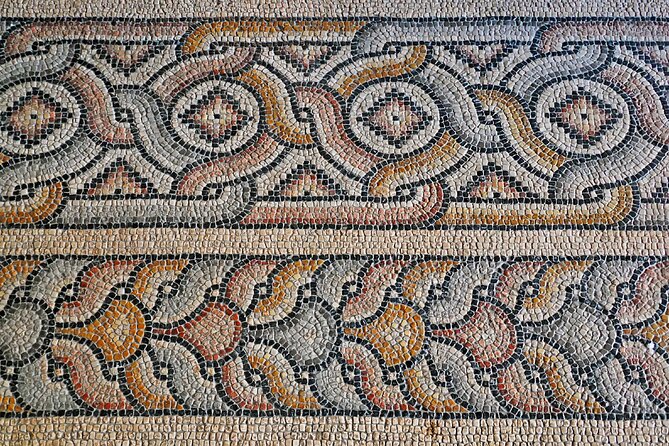
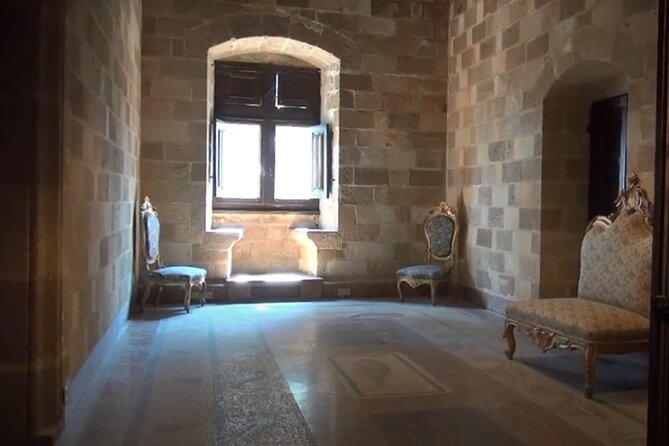
The Room with the Ribbed Vault is one of the tour’s most distinctive stops. It contains an early mosaic pavement decorated with birds, trees, and vases, along with 16th-century furniture.
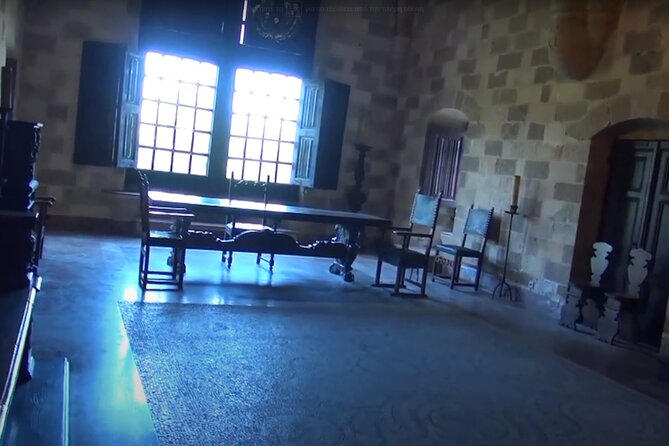
The mosaic originated from Kos. That detail changes how you view the floor. You are not looking at a decoration created only for this room. You are seeing an object with its own earlier history, brought from another island and placed within the palace.
The room also served as the office of Cesare Maria De Vecchi. He was linked to the program that aimed to restore the glory associated with the Knights. The audio guide connects the room’s furniture, mosaic, and political setting, giving you several layers to consider at once.
This is the kind of place where a self-guided tour earns its fee. A brief label may identify a mosaic or a former office, but narration can explain why those details belong together. You can pause near the floor, replay the section, and take in the room without worrying that a group is waiting.
Because the tour is on your own phone, you control the timing. That is helpful if you want to spend longer with the mosaic or need a moment to examine the furniture. It is less helpful if you prefer a human guide to point out exactly where to stand or answer follow-up questions.
More Self-Guided Audio Tours in Greece
- Athens: Acropolis Ticket & Optional Self-Guided Audio Tours
★ 4.1 · 2,542 reviews - Santorini: Akrotiri Ticket with Optional Self-Guided Audios
★ 4.1 · 298 reviews - Acropolis & Parthenon Admission Ticket w/ self guided audio tours
★ 3.5 · 172 reviews - Delphi Self-Guided Tour with 3D Models & Audio (No Ticket)
★ 4.1 · 69 reviews
The Room of the Nine Muses
The Room of the Nine Muses is another featured highlight. The title alone suggests a room designed to connect the palace with classical culture and artistic ideas.
The audio guide directs your attention to the room’s decoration and explains the stories behind what you see. That approach is more useful than simply collecting room names. If you listen before looking closely, you can examine the details with a better idea of what they represent.
The tour’s strength here is structure. Instead of wandering through a sequence of grand interiors with no clear thread, you get a set of selected spaces and an explanation for each one. The Nine Muses room, the courtyard, and the Ribbed Vault room provide different views of the palace: artistic, practical, archaeological, and political.
You should not expect every corner of the palace to receive the same level of attention. This is a roughly two-hour audio visit, not a private scholar’s tour. The selected stops give you a useful framework, but you may want to read the palace’s own information panels as well.
Roman senators, furniture, and the value of looking twice
The tour encourages you to notice details that are easy to pass by. The Roman senator statues are one example. The 16th-century furniture is another. The mosaic’s small images of birds, trees, and vases are yet another.
I like this kind of narration because it gives you a reason to pause. Palace interiors can blur together when you are moving through them quickly. A specific question, such as why these statues are here or where the mosaic came from, makes the visit more active.
The audio content is described as educational and focused on facts and timelines. That will suit you if you want a clear historical framework. If you prefer a guide with jokes, personal stories, or lively conversation, the experience may feel a little formal.
The tone also depends on your expectations. You are not hiring a retired local guide with personal knowledge of Rhodes. You are buying recorded narration. That keeps the cost down, but it means the visit will not adapt to your interests.
Why downloading before arrival matters
The largest practical weakness is not the palace. It is the technology.
The activation link should be used before you arrive, and the audio, text, and maps should be downloaded while you have a reliable internet connection. The offline feature is meant to prevent roaming charges and reduce dependence on mobile reception at the site.
Do not wait until you are standing at the entrance. Technical problems have included delayed activation links, trouble downloading the file, and audio that failed to play after being downloaded. Restarting the app or phone may help, but that is a poor way to begin a sightseeing visit.
I would take these steps:
- Download the tour the day before.
- Open it and check that the audio plays.
- Confirm that the map and written content are available offline.
- Save the activation link somewhere easy to find.
- Bring headphones and a charged phone.
- Keep the support contact details available in case access fails.
This preparation takes only a few minutes and protects the main benefit of the product. The provider has offered refunds in some technical cases, but you should not count on quick help while you are already inside the palace.
How the self-guided format affects your visit
The private format means only your group participates. There is no live guide and no fixed group pace. You can stop for photographs, replay a section, or skip ahead without interrupting anyone else.
That makes the tour a good match for couples, families with older children, and independent sightseers who like to control the day. It can also work well if your interests are uneven. One person can spend more time with the mosaic while another moves on, as long as you remain together or arrange a meeting point.
The format has limits. You cannot ask why a particular object is not covered, request more detail about a restoration decision, or change the route based on a question. The narration is already recorded, so your experience depends on the material selected by Clio Muse Tours.
The tour is in English. The included content consists of audio narration, text, and maps on your smartphone. Since headphones are not supplied, your own pair is essential if you want to listen comfortably in a public space.
Two hours inside the palace: who will enjoy it most
The estimated duration is two hours, which gives you enough time for a deliberate visit without turning the palace into an all-day project. Your exact pace will depend on how often you stop and how much time you give the rooms.
I would recommend it most strongly if you:
- Want historical facts but do not need a live guide.
- Prefer to explore at your own speed.
- Like using maps and audio on your phone.
- Are interested in restoration, mosaics, and former room uses.
- Want a low-cost alternative to a private guided tour.
- Can prepare the app before entering.
You may want a different option if you dislike phone-based tours, want detailed conversation, or do not want to manage admission and technology separately. The audio guide can explain the palace, but it cannot replace the presence of a person who responds to your questions.
The experience is also less suitable if you arrive without a working Android or iOS phone, headphones, or enough battery. Service animals are allowed, and the site is near public transportation, but no transportation is included in the price.
What I like, and what gives me pause
The best feature is the freedom. You can listen to the courtyard section while standing among the statues, then take your time with the Ribbed Vault room and its mosaic. You do not have to keep pace with a group or wait for a guide to finish speaking.
I also like the selection of stops. The Nine Muses room, inner courtyard, and Ribbed Vault room show different sides of the palace. Together, they give you more than a quick list of architectural features.
The price is another strong point. At $13.88, it is a modest addition to an admission ticket, especially if you would otherwise walk through without much explanation. It offers useful background without committing you to a costly private tour.
The weak point is reliability. Some users have had no trouble at all, while others have been unable to access the tour or download it in time. The provider has responded to technical complaints and offered refunds or replacement access in some cases, but the risk remains. Download everything early.
Should you book this Palace of the Grand Master audio tour?
Book it if you want an affordable, flexible explanation of the palace and are comfortable using your own phone. The courtyard’s former stables and kitchen, the Roman senator statues, the Kos mosaic, the Nine Muses room, and Cesare Maria De Vecchi’s office give the tour enough specific material to make the visit worthwhile.
Skip it if you want a live personality, instant answers, or a tour that handles every practical detail for you. You will still need to pay for admission and bring your own device and headphones.
My advice is simple: buy it only if you will download and test it before leaving for the palace. With that preparation, the $13.88 price is fair and the self-guided format gives you welcome control. Without it, a small technical problem can eat into a two-hour visit.
FAQ
Where does the audio tour begin?
It begins at the Palace of the Grand Master of the Knights of Rhodes on Ippoton Street, Rhodes 851 00, Greece.
Where does the experience end?
The activity ends back at the palace meeting point.
How long does the tour take?
The estimated duration is about two hours.
Is palace admission included?
No. The admission ticket is not included in the audio tour price.
Is there a live guide?
No. This is a self-guided audio tour, and no live guide is provided.
What devices are supported?
The audio tour works on Android and iOS smartphones. It is not compatible with Windows phones.
Are headphones provided?
No. You must bring your own smartphone and headphones.
Does the tour work offline?
Yes. Offline text, audio narration, and maps are included. You should download the content before arriving.
Can I cancel for a refund?
You can cancel at least 24 hours before the experience start time for a full refund. Cancellations or changes made within 24 hours are not refunded or accepted.
Just added around Greece
- E-Ticket to Akrotiri with Audio Tour on your Phone★ 5.0 · 2 reviews
- Authentic Santorini: A Self-Guided Audio Tour of Oia★ 4.5 · 3 reviews
- The Palace of the Grand Master E-Ticket with Audio Tour★ 4.0 · 9 reviews
- Acropolis of Lindos E-Ticket with Audio Tour on your Phone★ 4.5 · 8 reviews
- Explore Lindos Acropolis in 3D & Audio★ 4.0 · 4 reviews
- Olympia Archaeological Site & Museum E-Ticket with Audio Tour★ 4.0 · 11 reviews
- Mykonos: Find your (queer) god Self-Guided Audio Tour★ 4.0 · 2 reviews
- Varlaam Monastery Greece Self-Guided Walking Audio Tour★ 5.0 · 3 reviews
Castle & Palace Audio Tours, compared.
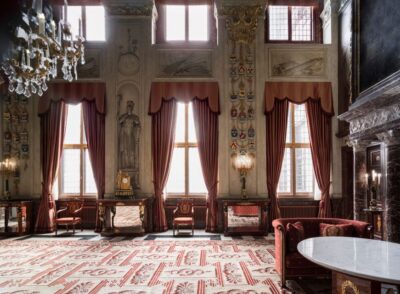
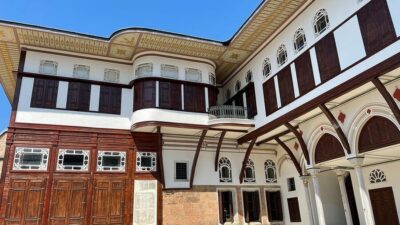
Topkapi Palace and Harem Skip-the-Line-Tickets & Audio Guide
Read our review →
Sforza Castle Entry Ticket with Digital Audio Guide
Read our review →
Topkapi Palace and Harem Ticket with Audio Guide
Read our review →
Knossos Palace Entry Ticket with Optional Audio Guide
Read our review →

Dolmabahce Palace and Harem Fast-Track & Audio
Read our review →
Browse the lists this tour appears in