
REVIEW · USA AUDIO TOURS
Olympic National Park Self-Guided Audio Tour
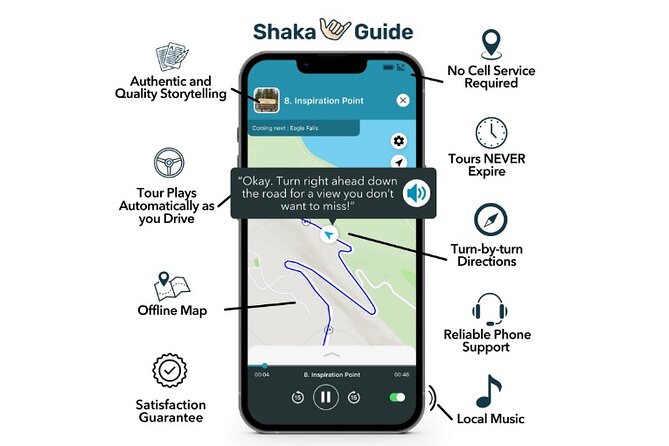
One road, three very different worlds. This Olympic National Park self-guided audio tour links mountain meadows, old-growth forest, and wild Pacific beaches with GPS directions and stories that play as you drive. I especially like the one-price-per-group format and the freedom to pause, skip stops, or spread the route over several days. The main drawback is its huge scope: seeing all 27 stops in the suggested 10 to 11 hours would make for a very rushed day.
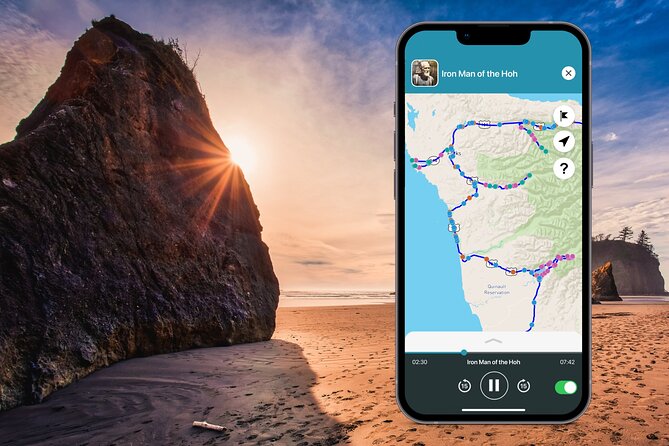
The tour is in English and runs through the Shaka Guide app on your phone. Its narration, music, turn-by-turn directions, and offline map are designed to keep you oriented while you travel between Port Angeles, Hurricane Ridge, Lake Crescent, the Hoh Rain Forest, the coast, and Lake Quinault. You get independence, but not a live guide to answer questions or adjust the plan for weather and road conditions.
Five things to know before you go
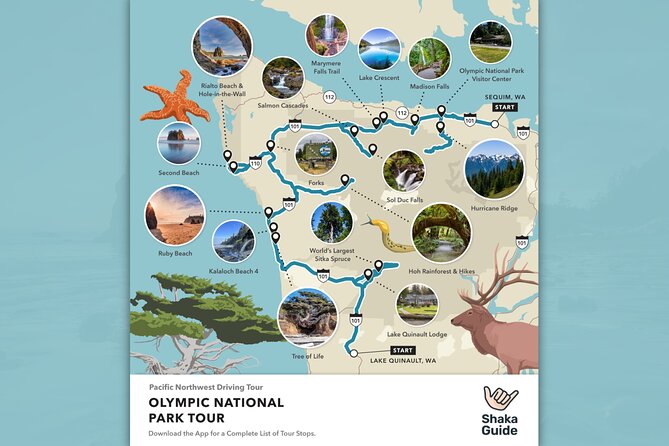
- The route covers nearly the whole Olympic Peninsula: You move from Port Angeles and Hurricane Ridge to Lake Crescent, Sol Duc, Forks, the Hoh Rain Forest, Ruby Beach, and Lake Quinault.
- The audio responds to your position: GPS-activated narration begins as you approach a stop, with directions and music playing through the app.
- One booking covers up to 15 people: At $15.19 per group, the tour can be strong value for a family or several friends sharing a vehicle.
- You still pay park and attraction costs: Olympic National Park admission is listed at $30 per booking, and the Forks Timber Museum costs $5 per person.
- The route is best treated as a flexible plan: The many hikes and viewpoints cannot all receive proper attention in one day, so choose your priorities before setting out.
- Download everything on Wi-Fi: Once the tour is saved to your phone, the offline map lets you continue without constant data service.
How the self-guided format works
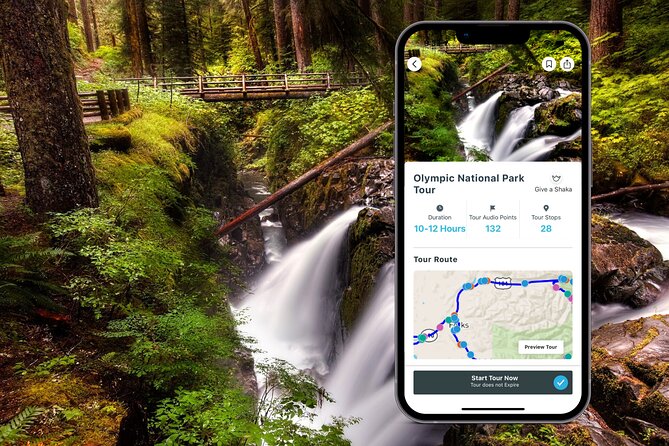
After booking, you receive confirmation and instructions by email. Download the Shaka Guide app, use the redemption code, and save the tour while connected to strong Wi-Fi.
In the app, open the My Stuff tab, select this tour, choose your starting point, and begin. The tour follows GPS rather than a fixed meeting time, so you can start in Port Angeles or use another suggested point on the route. That flexibility matters in Olympic National Park, where weather, road conditions, parking, and trail choices can change your timing.
The audio plays automatically as you drive. I like this better than stopping to read a long screen of text, especially on a route with many turns and large gaps between sights. Still, pay attention to the road first. Pull over before studying directions, changing stops, or taking photographs.
The route is private for your group, not a bus tour. You can pause the narration, skip a beach, spend longer at a waterfall, or return another day because the tour does not expire. The app also offers call, chat, and email support if you need help.
One limitation is language. The tour is offered in English. A German-speaking user praised the timing of the explanations but noted that language selection would be useful. That is worth considering if not everyone in your group is comfortable listening in English.
More Self-Guided Audio Tours in the USA
- Gettysburg Battlefield Self-Guided Driving Audio Tour
★ 4.5 · 910 reviews - Joshua Tree National Park Self-Guided Driving Audio Tour
★ 4.5 · 762 reviews - Ultimate Acadia National Park Self-Guided Driving Audio Tour
★ 4.0 · 521 reviews
Port Angeles and the climb to Hurricane Ridge
Begin at the Olympic National Park Visitor Center in Port Angeles. This is a smart first stop because rangers and volunteers can answer questions about trails, road conditions, and tide charts. You can also pick up park information, browse the NPS gift and bookshop, watch a park film, and see exhibits about Olympic’s natural and cultural past.
Families get a hands-on Discovery Room, while two short nature trails and restrooms make this an easy place to get organized. Allowing only 15 minutes is enough for a quick orientation, but you may want longer if you need hiking advice.
The Heart of the Forest Trail begins at the Heart O’ the Hills campground, Loop E, with parking near the amphitheater. The full round trip is more than four miles, but the first mile gives you a fine taste of old-growth forest. Watch for banana slugs, rough-skinned newts, and Pacific tree frogs. The trail is a better choice if you want a short woodland walk rather than a major hike.
The Strait of Juan de Fuca Scenic Byway viewpoint takes only about five minutes. On a clear day, you can see across the water to Victoria, Canada, and possibly the Cascades. Interpretive signs identify the landmarks, making this a quick but worthwhile roadside pause.
Hurricane Ridge is one of the tour’s major highlights. From the visitor center, easy paved meadow loops offer broad views with little walking. Summer can bring wildflowers, while the Olympic Mountains provide the main spectacle in every season when visibility is good.
For more exercise, the Hurricane Hill trail is a moderate three-mile hike. Its trailhead sits about 1.5 miles beyond the visitor center, with overflow parking below near picnic areas. The audio can get you to the area, but it cannot guarantee clear skies or an open road, so check current conditions at the visitor center before driving up.
Madison Falls, Lake Crescent, and Marymere Falls
Madison Falls is an easy stop beside the highway. A short walk from the parking area brings you to the 45-foot cascade, and the nearby Elwha River adds another reason to linger. The river is recovering after the removal of two dams, while the nearby Sweet Family Homestead is connected with the park’s pack horses and donkeys.
Lake Crescent deserves more than a quick photograph. It is Washington’s second deepest lake, and its clear water can be visible to a depth of about 70 feet. On a bright day, the lake may take on a sapphire color.
You can find lodging, boating, hiking, and swimming at Log Cabin Resort on the east shore and Lake Crescent Lodge on the south shore. Fairholme Campground on the west shore has a store, beach, and camping. These facilities make Lake Crescent one of the easier places to build in a longer break.
Marymere Falls is the natural companion to Lake Crescent. The trail is less than two miles round trip and moderately easy, passing through old-growth forest beside Barnes Creek. From the lodge, it crosses Highway 101, follows the creek upstream, and crosses log bridges before reaching two viewing platforms at the 90-foot waterfall.
The listed hour at Marymere Falls includes the walk and time at the falls. Bring shoes suitable for a forest trail, and remember that the route crosses a road.
Sol Duc’s salmon, hot springs, and waterfalls
Salmon Cascades is a short stop beside the Sol Duc River. Chinook, coho, sockeye, and steelhead use this river, and during migration you may see salmon leaping toward their spawning grounds. Even without jumping fish, the river view and interpretive signs make the stop worthwhile.
The Ancient Groves Trail is a half-mile loop through mossy old-growth forest, with glimpses into the Sol Duc River canyon. It is a good choice when you want a short walk between longer stops.
At Sol Duc Hot Springs Resort, three mineral pools and one freshwater pool offer a chance to rest. Soaking sessions last an hour and a half, require paid reservations, and are first-come, first-served. The Springs Restaurant provides a meal option, but neither food nor soaking is included in the tour price.
Sol Duc Falls is one of the route’s strongest stops. The 1.6-mile round-trip trail begins at the end of Sol Duc Hot Springs Road and passes through forest, creeks, and wooden bridges. The falls split into three cascades that plunge over the rock, with viewing platforms across from and above the water.
The suggested 45 minutes may be enough for the walk if you keep moving, but you will want extra time for photographs and the forest trail. This is a place where trying to keep to a strict schedule can work against you.
More National Park Audio Tours in the USA:
- Arches National Park Self-Guided Driving Audio Tour
★ 4.5 · 288 reviews - Yellowstone National Park Self-Guided Driving Audio Tour
★ 4.5 · 249 reviews - Self-Guided GPS Audio E-Bike Tour Hawaii Volcanoes National Park
★ 4.5 · 131 reviews - Shenandoah National Park Self-Guided Driving Audio Tour
★ 4.5 · 109 reviews
Forks and the beaches near La Push
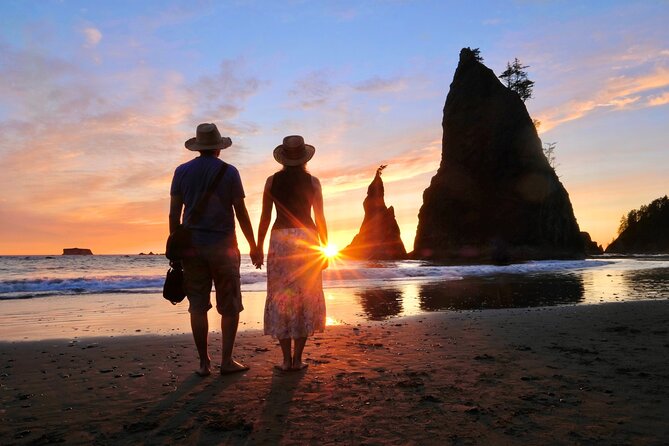
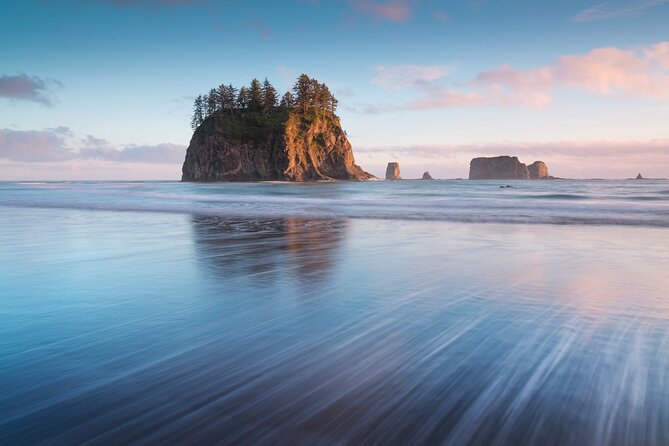
Second Beach near La Push requires a two-mile round-trip walk through fern, moss, and fallen nurse logs. The route is relatively easy on the way down, with a climb on the return. At the shore, you get sand, tide pools, and sea stacks.
Rialto Beach is easier to reach, with parking and vault toilets. Its rough surf, huge driftwood logs, and view toward James Island give it a rugged character. The longer walk to Hole in the Wall is 3.4 miles round trip along pebbles, with tide pools and sea stacks at the far end. Check tide conditions before attempting it.
Forks makes a useful town stop and a change from the forest. The town receives about 120 inches of rain a year, and its logging past is part of the local story. It is also known for the Twilight books and films.
At the Forks Chamber of Commerce and Visitor Center, you can collect information about trails, restaurants, and the self-guided Twilight driving route. The Forks Timber Museum next door focuses on the timber industry and charges $5 per person. Five minutes in Forks is enough for a look, but the town can also serve as a practical place to pause for food or information.
The Hoh Rain Forest and Ruby Beach
The Hoh Rain Forest is one of the tour’s signature stops. Moss-covered trees, thick ferns, and the chance to spot Roosevelt elk or banana slugs create a setting unlike Hurricane Ridge or the coast.
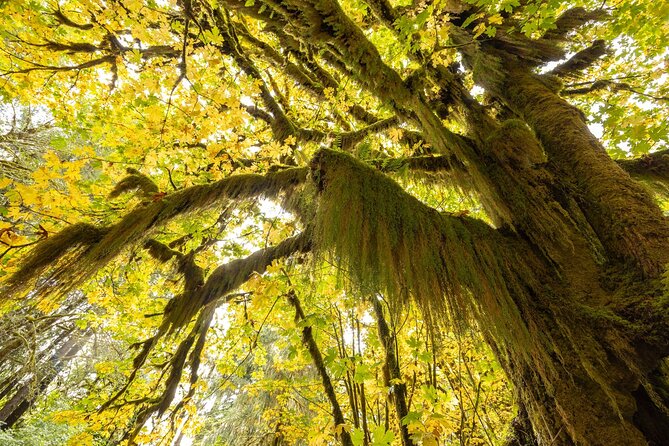
The Hoh Visitor Center has trail information, restrooms, interactive displays, and two easy walks. The Trail of Mosses is less than a mile and features bigleaf maples draped in moss. The Spruce Nature Trail is slightly longer and passes through red alder and cottonwood forest beside the Hoh River.
One hour gives you time for one short trail at a relaxed pace. If you want both, reduce time elsewhere. The Hoh is popular, so parking and crowds may affect your schedule, although no fixed entry time is attached to the audio tour.
Ruby Beach requires only a quarter-mile walk from the parking area, but reaching the shore means dealing with large driftwood logs. Once there, you get sea stacks, tide pools, a creek, and a broad pebbly beach. Weekends and holidays can be busy, so an early or later visit may feel calmer.
The Big Cedar Tree near Kalaloch is a short walk from the road. A storm split the trunk of this once-massive, roughly 1,000-year-old western red cedar, but the remaining form is still impressive. Treat it as a brief roadside stop rather than a major hike.
Kalaloch Beach 4 has a short, steep path to a broad beach and good tide pools. The final rock scramble uses a rope and may be difficult for anyone with mobility limits. Harbor seals may be visible in the surf, and the beach is also used for birding and walking.
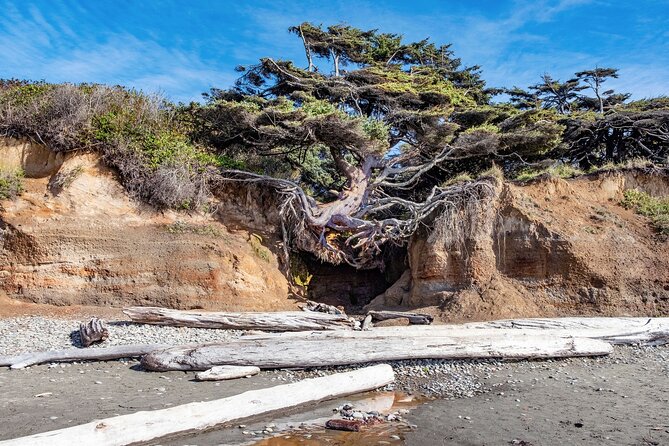
The Tree of Life is another short stop, where a Sitka spruce stretches between eroded cliffs with open space beneath its roots. Admire it from a distance. Climbing or hanging on the roots speeds up the tree’s decline.
Kalaloch Lodge offers the only coastal lodging in the park, along with ocean views, meals, and an ice cream option at the nearby mercantile. It is a practical place to rest before continuing south.
Lake Quinault and the final forest stops
The Quinault Rain Forest Nature Trail is a half-mile loop with waterfalls, creeks, moss-covered trees, and interpretive signs. It offers a compact forest walk, with restrooms at the trailhead.
Lake Quinault Lodge, built in 1926 in just 53 days, sits beside the lake. You can eat in the Roosevelt Dining Room, walk along the shore, or relax on the back lawn. This is one of the route’s better stops if you want a meal in a historic setting rather than another quick viewpoint.
The World’s Largest Sitka Spruce is reached by an easy quarter-mile walk. The tree measures more than 18 feet across and reaches 191 feet high. Merriman Falls is even simpler: the 40-foot cascade sits beside the road and can be seen from your car.
The Kestner Homestead offers a look at an early pioneer site in the Quinault valley. You can park at the gate and walk a short distance, or use a scenic trail from the Quinault Rain Forest Ranger Station. Nearby, the half-mile Maple Glade Rain Forest Trail offers another short forest walk.
Finish at July Creek Picnic Area on the north shore of Lake Quinault. A short path leads through giant trees to the water, with picnic tables and restrooms. It is a quiet way to end the route, though you may need more than one day to enjoy this entire western and southern section properly.
What the $15.19 price really gets you
At $15.19 per group of up to 15 people, the price is low for a private route with hours of narration, GPS directions, music, recommendations, and an offline map. A family or full carload pays the same amount as a couple, which gives the tour its strongest value.
The park admission is separate and listed at $30 per booking. Meals, drinks, transportation, Sol Duc Hot Springs reservations, and the $5 Forks Timber Museum fee are also separate. The tour does not arrange a car, so you need your own transportation.
The real value is flexibility. A traditional guided excursion might offer more direct answers, but this audio tour lets you choose your pace and use the route over multiple days. That matters here because Olympic National Park is too large for a relaxed visit to every stop in one sitting.
Who should choose this tour?
I would choose it if you have a car, enjoy independent sightseeing, and want context while driving without joining a group. It suits families, couples, and friends who want to share one inexpensive purchase.
It is also useful for a first visit because the route connects the park’s main types of scenery and points out short walks, major hikes, food stops, and practical facilities.
I would not choose it as your only plan if you want a live guide, detailed trail instruction, or a tightly managed schedule. The route is broad, and some stops require checking tides, parking, road conditions, or reservations. Use the audio as a smart companion, not as a promise that every stop fits into one day.
FAQ
How much does the Olympic National Park self-guided audio tour cost?
The tour costs $15.19 per group, with up to 15 people included. Olympic National Park admission is separate and listed at $30 per booking.
How long does the tour take?
The suggested duration is approximately 10 to 11 hours. Because the route includes 27 stops and several hikes, you can also pause it or use it across multiple days.
What language is the tour offered in?
The tour is offered in English. The supplied information does not list additional language options.
Does the tour include transportation?
No. Private transportation is not included, so you need your own vehicle to follow the route.
Does the audio tour work without cell service?
Yes. Download the tour and offline map using strong Wi-Fi before you leave. The audio, directions, and map are designed to work without continuous Wi-Fi or mobile data.
Can I start the tour at a custom location?
Yes. The tour start is customizable, and the app lets you select the starting point.
What is included in the tour?
You get hours of audio narration, stories, travel tips, music, automatic GPS-triggered commentary, turn-by-turn directions, an offline map, and recommendations for activities and restaurants.
Is Sol Duc Hot Springs included?
No. Paid reservations are required for the hour-and-a-half soaking sessions, and the cost is separate from the audio tour.
Can I cancel for a full refund?
Yes, if you cancel at least 24 hours before the experience start time. Cancellations made within 24 hours are not refunded, and changes within that period are not accepted.
Should you book it?
Book this tour if you want a low-cost, private way to connect Olympic National Park’s major sights and you are happy to set your own pace. Its strongest features are the well-timed GPS narration, the useful route guidance, and the ability to share one purchase with a whole carload.
Plan to use it over two or more days if you want proper time for Hurricane Ridge, Marymere Falls, Sol Duc Falls, the Hoh Rain Forest, and the coast. If you do that, the tour becomes much more than background audio. It becomes a practical road companion for one of America’s most varied national parks.
Just added around the USA
- Self Guided Driving Audio Tour of Saguaro National Park★ 3.0 · 4 reviews
- Self-Guided Audio Driving Tour of Mount Lemmon★ 5.0 · 4 reviews
- Saguaro National Park Self-Guided Audio Tour★ 3.5 · 11 reviews
- A Self Guided Audio Tour in Tombstone★ 4.0 · 11 reviews
- Catskills Scenic Byway Self-Guided Driving Audio Tour★ 4.0 · 9 reviews
- Self-Guided Audio Driving Tour in Catskills Scenic Byway★ 4.5 · 7 reviews
- Big Bend National Park Self Guided Audio Tour Guide★ 5.0 · 12 reviews
- Shiloh Battlefield Self-Guided Driving Audio Tour★ 4.0 · 9 reviews
National Parks, compared.

Ultimate Acadia National Park Self-Guided Driving Audio Tour
Read our review →
Vesuvius National Park Skip-The-Line Ticket and Audio Guide
Read our review →
Self-Guided GPS Audio E-Bike Tour Hawaii Volcanoes National Park
Read our review →
Browse the lists this tour appears in