
REVIEW · PHILADELPHIA AUDIO TOURS
Philadelphia Historic Sites Self-Guided Walking Tour
History comes alive one stop at a time. This Philadelphia walking tour pairs GPS-triggered audio stories with a route through the Liberty Bell, Independence Hall, Franklin’s grave, and Elfreth’s Alley. I like the freedom to pause for photos or lunch, and I like that the app works offline after downloading. The main drawback is that the route can feel information-light for such a historic city, and a few users had trouble getting the app to open.
At $14.99, this is a sensible choice for a short visit or a first look at Old City. You get more than 30 audio segments over roughly 1.5 miles, with lifetime access and no scheduled group to chase. Bring headphones, a charged phone, and a little patience with GPS, since the audio may begin as you approach the next stop before you have finished the previous story.
Key points to know before you go
- More than 30 audio stories cover about 1.5 miles, with an expected walking time of one to two hours.
- The route links major landmarks including the Liberty Bell, Independence Hall, Elfreth’s Alley, Christ Church, and the Museum of the American Revolution.
- GPS starts the narration automatically, so you can walk hands-free without constantly checking your phone.
- Offline access is a major plus, but you must download the tour over strong Wi-Fi or cellular service before arriving.
- Lifetime access gives you plenty of flexibility, including the option to pause, return later, or use the tour again on another trip.
- Admission tickets are not included, so museums and paid historic interiors require separate planning.
A flexible way to meet Philadelphia’s past
Philadelphia rewards walking. The historic center is compact enough to cover on foot, yet every few blocks bring another connection to the American Revolution, early government, science, religion, or the long struggle for equal rights.
This self-guided format lets you set the pace. You are not tied to a guide’s timetable or to a group moving on before you finish a photo. You can stop for food, enter a museum, take a side trip, or pause the narration while you look around.
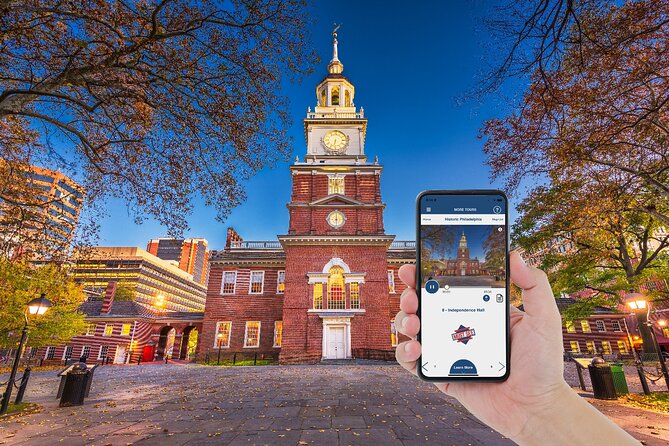
The app is built around location triggers. Once you reach the correct point, the next story begins automatically. That is useful when you want to keep your eyes on the buildings and streets rather than on a map.
There is one catch. If you walk quickly, the next segment may begin before the previous one has finished. The practical fix is simple: pause the audio when needed, finish the current story, then continue. You can also replay or skip material, and extra stories are available when a subject catches your interest.
The tour is advertised at one to two hours, though stopping at sites or listening to additional material can stretch it to about two and a half hours. That makes it easy to fit into a morning, an afternoon between museum visits, or a first evening in town.
More Audio Walking Tours in the USA
- Self Guided Classic Freedom Trail Location Aware (GPS) Walking Audio Tour
★ 4.5 · 258 reviews - Cape Cod & Provincetown Self-Guided Driving & Walking Audio Tour
★ 4.0 · 207 reviews - Santa Fe Historic Downtown Smart Phone Audio App Self Guided GPS Walking Tour
★ 4.5 · 112 reviews
From City Hall toward the historic district

The listed meeting point is Philadelphia City Hall at 1400 John F. Kennedy Boulevard. No guide meets you there. You open the Action Tour Guide app, select the correct tour version, and follow the first audio cue.
Because the tour instructions allow different starting points and directions, check the app before setting off. The supplied route information also lists the Liberty Bell Center as the first featured stop, so make sure the version you launch matches your planned starting point.
City Hall provides a useful orientation to Philadelphia’s central area. The nearby streets lead toward the historic district, where the stories shift from the city’s modern civic center to the colonial and revolutionary period.
You are not paying for entry to City Hall or for a guided interior visit. The value here is the narration and route planning, not access behind locked doors.
Liberty Bell and the meaning of liberty
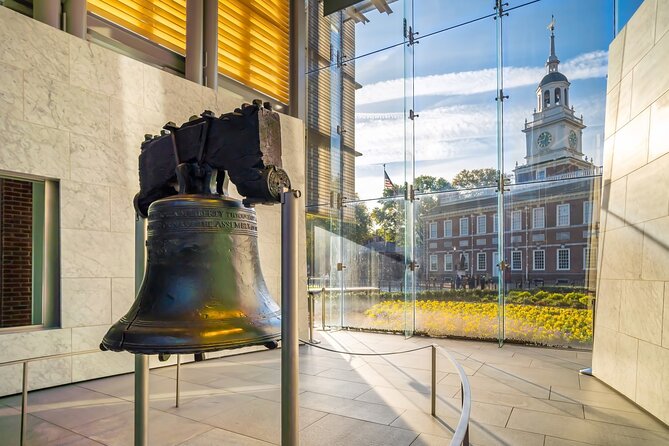
The Liberty Bell is the tour’s natural headline stop. The audio explains why the bell cracked, why the damage did not end its public life, and how the bell later became connected with movements for freedom from slavery and equal voting rights.
That last point matters. The bell is not only a Revolutionary-era object. Its meaning changed over time, becoming a public symbol used by Americans pressing for a broader definition of liberty.
The Liberty Bell Center is free to enter, according to the tour details. You should still allow time for the visit itself, since the audio segment is only about ten minutes and does not replace seeing the bell and displays in person.
If you are short on time, this is one of the stops where the tour earns its price quickly. It gives you historical context without requiring a scheduled guide.
Betsy Ross House and Christ Church
The story then turns to Betsy Ross and the early American flag. The Betsy Ross House is a paid attraction, so admission is separate. The exterior and surrounding streets can be visited as part of the walking route, while entering the house requires its own ticket.
The audio connects Ross with George Washington and a meeting associated with Christ Church. It also explains why the flag story remains so visible in American life, even though the Declaration of Independence and Constitution often receive more attention.
At Christ Church, the route points out the building’s connection with Washington, Ross, and other figures from the revolutionary period. The church’s architecture gives the history a physical setting rather than leaving it as a list of names.
Christ Church is listed as a free stop on the tour, but the audio tour does not include a special admission package. Check the site’s own operating details if you intend to go inside.
More History Audio Tours in the USA
- Savannah’s Historical District: A Self-Guided Audio Tour
★ 4.5 · 69 reviews - Self-Guided Walking Audio Tour of Historic Santa Fe
★ 4.5 · 43 reviews - Salida History Audio Tour l A Self-Guided Wild West Experience
★ 5.0 · 41 reviews - Historic Bar Harbor Self-Guided Walking Audio Tour Guide
★ 4.5 · 38 reviews
Philadelphia City Hall and Independence Square
The City Hall portion places Philadelphia in the political setting of the 1700s. The narration introduces figures such as George Washington and Benjamin Franklin, then moves toward the causes of the Revolutionary War, including anger over the Tea Tax.
This is a useful bridge between the city you see today and the political crisis that shaped the new nation. It also helps explain why Philadelphia became such an important meeting place.
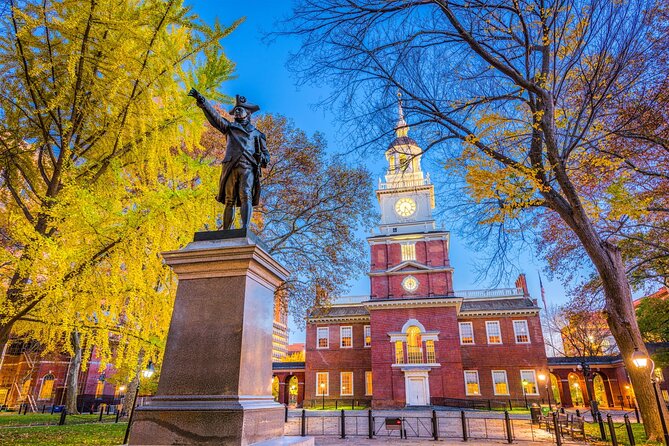
Independence Square and Independence Hall are the heart of the route. The audio covers the First Continental Congress, the Second Continental Congress, military planning, and the writing of the Declaration of Independence.
You also hear about John Hancock, Patrick Henry, John Adams, and George Washington. The best part of this stop is the shift between past and present. Independence Hall was once a working political site where colonial representatives argued over an uncertain future. Today, it is a carefully protected symbol of the United States.
The walking tour does not include an Independence Hall entry reservation. That is important. If you want an interior tour, you need to arrange that separately, and the self-guided audio should be treated as preparation rather than a substitute.
West Washington Square adds another layer. The narration identifies the area connected with the First Continental Congress and explains what followed that meeting before directing you toward Independence Hall.
Benjamin Franklin’s ideas, experiments, and grave

Benjamin Franklin receives several stops, which makes sense in a city where his work touched politics, science, publishing, education, and civic life.
At the Benjamin Franklin Museum, the audio presents more than a standard Founding Father portrait. It looks at his broad interests and his habit of testing ideas. The same section also introduces Benedict Arnold and his plan to betray the American cause, giving the route a change of mood.
The museum requires separate admission. If Franklin interests you, this is one of the places where you may want to pause the walking tour and spend extra time inside.
Franklin Square offers a break in the route and a chance to consider Franklin’s work outside independence. The audio refers to his books, ideas, and experiments, then leads to the Bolt of Lightning Memorial.
That memorial focuses on Franklin’s electricity experiments and the questions that drove him to test them. It is a compact stop, but it adds science to a route otherwise centered on politics and war.
The tour later passes Benjamin Franklin’s grave. The narration connects his legacy with the University of Pennsylvania and his hopes for education in the young nation. This is a good example of the tour’s wider purpose: it does not reduce Franklin to the man on the hundred-dollar bill.
The President’s House, Declaration House, and African American history
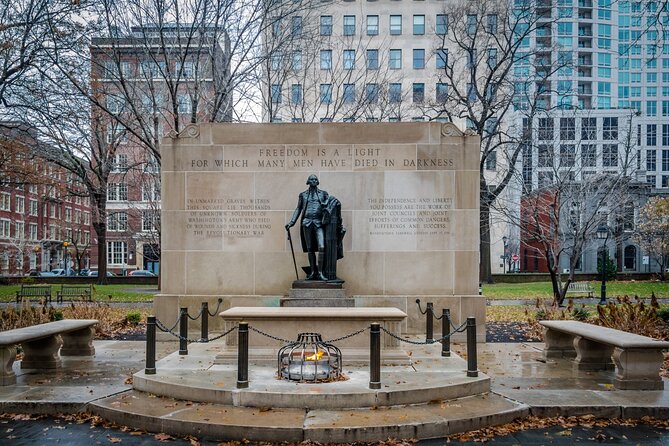
The President’s House site recalls the first presidential residence used by George Washington and John Adams. The stop helps you picture the early executive government before the White House became the familiar center of presidential life.
The Declaration House marks the location associated with Thomas Jefferson’s writing of the Declaration of Independence, along with Franklin’s editorial help. You do not need to enter a building to understand the importance of the site, but the narration gives the location a clear place in the story of American independence.
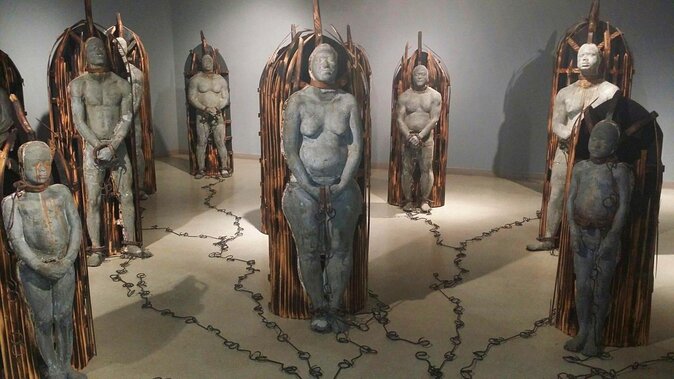
The African American Museum in Philadelphia changes the focus again. The tour points out the gap between the language of independence and the reality of slavery.
That contrast is essential. Philadelphia’s revolutionary story cannot be understood only through declarations and patriotic symbols. The route also references African American figures such as Crispus Attucks and the contributions of Black Americans to the country’s early story.
Admission to the museum is separate. Even if you do not go inside, the audio stop gives you a reason to include this part of the city in your walk instead of staying with the better-known Revolutionary sites.
Constitution Center and the United States Mint
The National Constitution Center represents the next stage after independence. The narration explains how the colonies worked toward a formal union and how the Constitution established basic rights and a structure for the new country.
This stop is especially useful if you are visiting Independence Hall and want the story to continue beyond 1776. The Declaration announced independence, while the Constitution addressed how the new nation would operate.
The Constitution Center is a paid attraction, and entry is not part of the $14.99 tour. You can treat the audio stop as an introduction, then decide if the exhibits fit your schedule.
The United States Mint adds an economic angle. The audio discusses early gold and silver coins, then connects them with the copper, nickel, and paper money used today.
The Mint is another exterior or nearby stop unless you purchase separate admission. It may not be the most dramatic location on the walk, but it broadens the tour beyond famous buildings and political speeches.
Elfreth’s Alley and the closing stretch
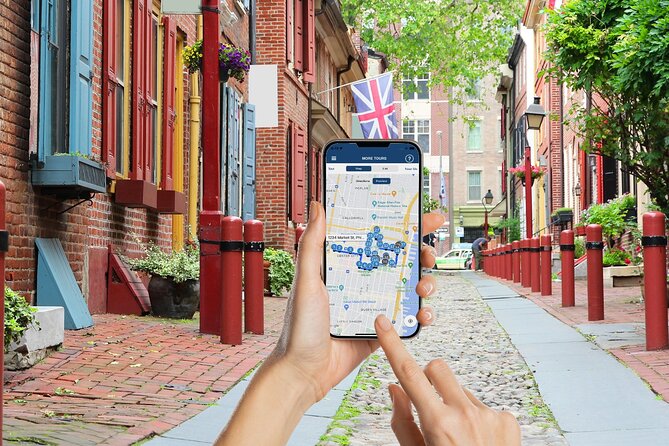
Elfreth’s Alley is one of the most photogenic parts of the route. Its narrow historic street and preserved colonial character offer a sharper sense of everyday urban life than the grand civic buildings do.
The audio presents it as an early center of Philadelphia. That makes this stop valuable even if you are mainly interested in architecture or photography. You get a glimpse of the city as a lived-in neighborhood, not only as a stage for famous events.
The final stop is near the Museum of the American Revolution at 101 South 3rd Street. The museum is not included, but the tour ends close enough for you to continue your history day if you still have time and energy.
The museum is a logical finish because it can pull together many of the people, conflicts, and political changes introduced along the walk. If your visit is already full, you can simply end the tour and return to the route later, since access does not expire.
Price, app setup, and practical value
At $14.99 per person, the tour costs less than many in-person sightseeing options. Its value is strongest when you want structure and context without paying for a private guide or joining a fixed departure.
Couples may be able to share one purchase by splitting headphones, though each booked traveler receives access on the corresponding number of devices. If your group plans to listen separately, enter the same password on each approved device.
Download the app and tour content before reaching Philadelphia. The tour works without Wi-Fi or cellular service after download, but setup requires a strong connection. Use an iPhone running iOS 15 or later, an Android device running version 9 or later, or an iPad or tablet with GPS and cellular capability.
Bring earbuds and a portable charger if you have one. One person lost phone power before finishing, though the lifetime access meant the tour could be completed later.
The main technical concern is access. Some people have struggled with the app or received a message that a password had already been used. If that happens, contact support promptly rather than buying another tour immediately. The provider lists support assistance and offers free cancellation up to 24 hours before the scheduled start time. Cancellations within 24 hours are not refundable.
Who should choose this Philadelphia walk?
I would choose this tour if you like deciding your own pace, want a quick introduction to central Philadelphia, or have only a short window between other plans.
It suits:
- First-time visitors who want the major historic locations in one walk
- Families who need freedom to stop and restart
- Solo visitors who prefer audio rather than group conversation
- Couples looking for a low-cost way to share a route
- History fans who want optional extra stories
- People returning to Philadelphia who want a refresher without repeating a formal tour
I would be more cautious if you expect long, detailed interpretation at every site. Some audio segments are brief, and one person found there was too much walking for the amount of information. The tour gives you a useful framework, but museums and interior visits provide more depth.
The route can also be awkward by car. Philadelphia’s one-way streets make it easy to circle the same blocks, and the audio is designed for walking. Rain is another reason to reconsider, since the experience depends on moving between outdoor locations.
Should you book it?
Book it if you want a flexible, inexpensive introduction to Philadelphia’s historic center and are comfortable using an app. The automatic GPS narration, offline maps, lifetime access, and pause-anytime format are the strongest reasons to choose it.
Skip it if you want a live guide, detailed museum interpretation, or guaranteed technical simplicity. For most people, the best plan is to download it at home, begin with a full phone battery, wear headphones, and pause each story before walking on.
At $14.99, it is a good-value orientation to Philadelphia, not a complete substitute for the city’s museums and reserved historic interiors.
FAQ
How long does the Philadelphia Historic Sites Self-Guided Walking Tour take?
The tour is designed to take about one to two hours. It covers more than 1.5 miles and includes over 30 audio stories. Stops, photos, museum visits, and extra stories can make it last about two and a half hours.
Where does the tour start and end?
The listed starting point is Philadelphia City Hall at 1400 John F. Kennedy Boulevard. The tour ends near the Museum of the American Revolution at 101 South 3rd Street.
Do I need an internet connection during the walk?
No. You need Wi-Fi or cellular service to download the tour first. After downloading, the app and offline maps work without an internet connection.
Are attraction tickets included?
No. The $14.99 price covers the self-guided audio experience, route, app access, and offline maps. Entry to places such as the Betsy Ross House, Benjamin Franklin Museum, Declaration House, African American Museum, National Constitution Center, United States Mint, Elfreth’s Alley, and the Museum of the American Revolution is not included.
Can I pause the tour or finish it later?
Yes. You can pause the tour, take breaks, explore side stops, and return later. The access is lifetime and does not expire.
Is a guide included?
No. This is a private, self-guided activity. No one meets you at the start. The app provides GPS-based narration and directions as you walk.
More Self-Guided Audio Tours in the USA
- Gettysburg Battlefield Self-Guided Driving Audio Tour
★ 4.5 · 910 reviews - Joshua Tree National Park Self-Guided Driving Audio Tour
★ 4.5 · 762 reviews - Ultimate Acadia National Park Self-Guided Driving Audio Tour
★ 4.0 · 521 reviews - Ultimate Lake Tahoe Self-Guided Driving Audio Tour
★ 4.5 · 435 reviews
Just added around the USA
- Self Guided Driving Audio Tour of Saguaro National Park★ 3.0 · 4 reviews
- Self-Guided Audio Driving Tour of Mount Lemmon★ 5.0 · 4 reviews
- Saguaro National Park Self-Guided Audio Tour★ 3.5 · 11 reviews
- A Self Guided Audio Tour in Tombstone★ 4.0 · 11 reviews
- Catskills Scenic Byway Self-Guided Driving Audio Tour★ 4.0 · 9 reviews
- Big Bend National Park Self Guided Audio Tour Guide★ 5.0 · 12 reviews
- Self-Guided Audio Driving Tour in Catskills Scenic Byway★ 4.5 · 7 reviews
- Shiloh Battlefield Self-Guided Driving Audio Tour★ 4.0 · 9 reviews
Self-Guided Tours, compared.

Acropolis Ticket & Optional Self-Guided Audio Tours
Read our review →


Ultimate Acadia National Park Self-Guided Driving Audio Tour
Read our review →

Santorini: Akrotiri Ticket with Optional Self-Guided Audios
Read our review →
Browse the lists this tour appears in