

REVIEW · PARIS AUDIO TOURS
Musée d’Orsay Skip The Queue Ticket with Audio Guide Tour
The old station is half the show. This Musée d’Orsay visit combines guaranteed, date-specific entry with a phone-based audio guide, giving you a useful way to explore Impressionist, Post-Impressionist, and Art Nouveau works at your own pace. I like the freedom to choose from several times during the day, and I like that you can stay inside until closing after your roughly one-hour suggested visit. The main drawback is the price: at $87.67 per person, this costs far more than a basic museum ticket, so the audio content and easier entry need to matter to you.
This is not a live guided tour. You meet at the Musée d’Orsay on the Esplanade Valéry Giscard d’Estaing, pass through security, and then follow a suggested route with digital commentary on your phone. The experience receives a mixed 3.7 rating from 12 reviews, including two serious complaints about missing tickets and queue confusion. The operator replied that those reservations were not found in its records, so check your confirmation and ticket delivery carefully before leaving for the museum.
Key points to know before booking
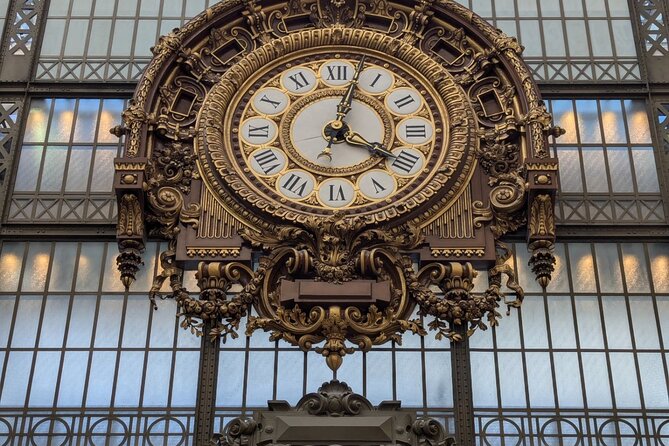
- The former railway station is part of the experience: The giant central hall, Beaux-Arts structure, and famous clock give your museum visit an impressive opening.
- Your entry time is fixed: Tickets are date and time specific and cannot be changed once issued, so choose your slot carefully.
- You skip the ticket-buying line, not security: Every visitor must still pass the mandatory security check.
- The audio guide is digital: You use your own phone rather than joining a live guide or a shared group.
- You can stay longer than the suggested hour: Once admitted, you may remain inside until closing time.
- The price pays for convenience and interpretation: At $87.67, this works best for visitors who value prearranged entry and help finding the museum’s key works.
Why the Musée d’Orsay makes a strong first stop
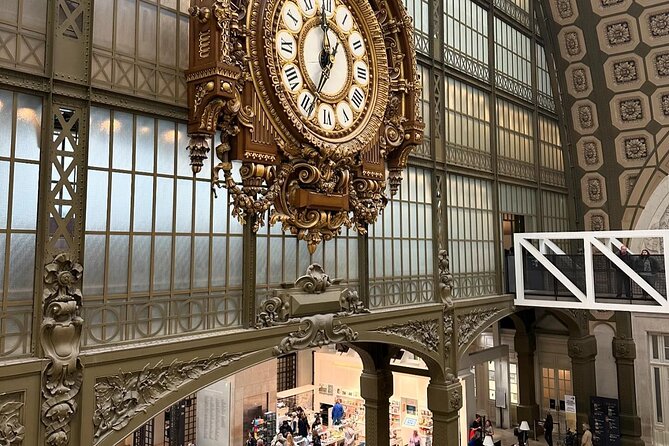
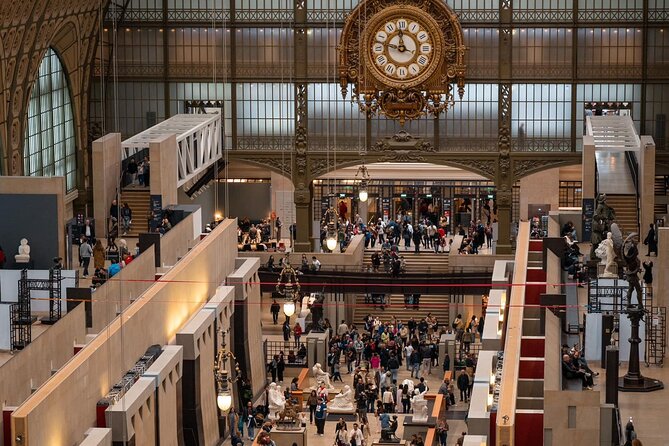
The Musée d’Orsay sits beside the Seine in a former Beaux-Arts railway station. That setting changes the mood before you even reach the paintings. Instead of entering a plain modern gallery, you walk into a broad central hall built for grand train travel, with a huge clock and sweeping views through the building.
I recommend taking a few minutes to look up and around before racing toward the art. The architecture gives you a clear sense of scale, and the giant clock is one of the museum’s most recognizable spots. It is also a useful meeting landmark if you need to regroup with someone in your party.
The museum is especially important for late 19th-century art. Its collection connects the formal traditions of earlier painting with the freer brushwork, stronger color, and new subjects associated with Impressionism and the years that followed. You can see how artists moved away from strict academic rules and began treating everyday life, changing light, and modern city scenes as serious subjects.
That context is one reason an audio guide can help. Without some direction, a large museum can become a parade of famous names and crowded rooms. A suggested route gives you a sensible path, while the commentary can explain why certain paintings matter rather than asking you to admire them simply because they are famous.
A few more audio tours around Paris worth a look
- Paris: Illuminations River Cruise with Audio Commentary
★ 4.3 · 12,340 reviews - Paris: Louvre Museum Hosted Entry and Mona Lisa Audioguide
★ 4.6 · 5,235 reviews - Paris: Orsay Museum Entry Ticket and Digital Audio Guide App
★ 4.4 · 3,170 reviews
Arriving at the Esplanade Valéry Giscard d’Estaing
The meeting point is the Musée d’Orsay itself, at Esplanade Valéry Giscard d’Estaing, 75007 Paris. The location is near public transportation, but the supplied information does not specify a particular station or route, so check your city map before setting out.
Your ticket is date and time specific. Treat the selected arrival time as a firm appointment, not a loose suggestion. Paris traffic, a long lunch, or a delayed train can turn a little lateness into a real problem when entry is tied to a particular slot.
The important distinction is between ticket queues and security queues. This arrangement lets you bypass the line to buy a ticket because admission is already included. You still need to pass the museum’s security check, and that line can vary. Arrive with enough time to handle that step without stress.
The visit is described as private, meaning only your group participates. That does not mean you receive a private human guide. It means you are not joining another party for a live tour. Your commentary comes through a digital audio guide on your phone.
The central hall and the giant clock
Start in the vast central hall. This is where the old station is easiest to understand. The scale is grand, but the open layout also helps you get your bearings before moving into the galleries.
The giant clock is more than a photo stop. It reminds you that this building was made for movement and schedules, while the museum now asks you to slow down and look closely. That contrast gives the visit some character. You are walking through a former transportation hub, yet the purpose today is patience.
The suggested route begins here because it provides a natural introduction to the building and its collection. I would not hurry through this first section. Look at the structure, orient yourself to the floors and gallery areas, and make sure your audio guide is working before you move on.
The digital format has one clear benefit: you can listen at your own speed. If a painting interests you, pause and look longer. If a section does not hold your attention, continue without waiting for a guide or a group. The tradeoff is that you are responsible for handling your phone, headphones, battery, and route.
Impressionist galleries with Renoir, Manet, Monet, and Degas
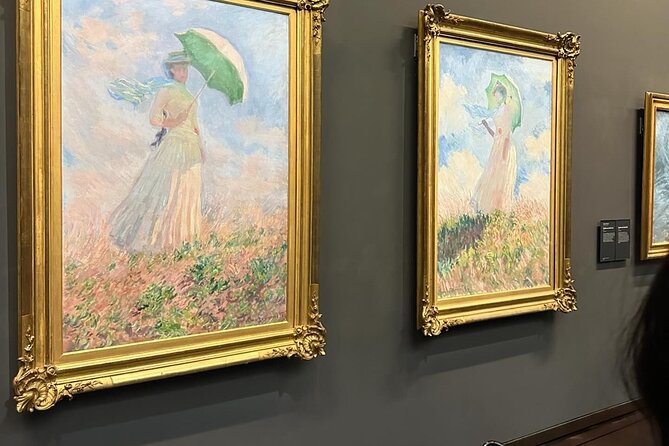
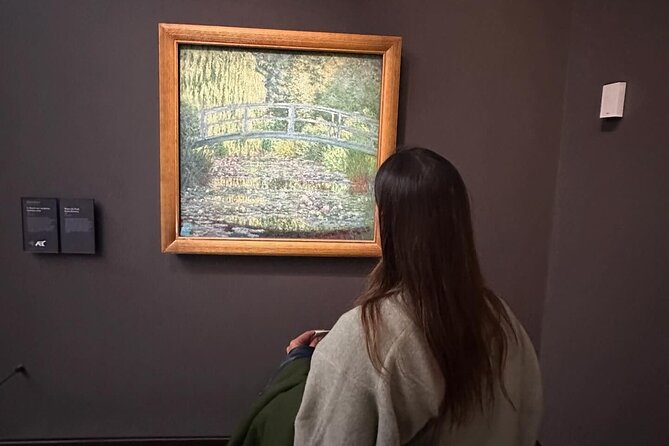
The Impressionist galleries are the main reason many people choose this museum. Here you can see works by Renoir, Manet, Monet, and Degas in the setting of a major Paris art museum rather than through isolated images in a book or on a screen.
The audio guide should be most useful in this section because familiar names can create false confidence. You may recognize a Monet or Renoir, but the commentary can help place the work within the larger shift taking place in 19th-century art. The point is not only to identify an artist. It is to notice how painters handled light, movement, modern life, and the act of looking itself.
Give yourself time with the paintings that catch your eye, even if they are not the ones you expected to like. The suggested route is a starting point, not a rule. You are free to pause, backtrack, or leave the recommended order.
The main limitation is time pressure created by the suggested one-hour duration. An hour can give you a sharp introduction, but it is not enough for a relaxed look at every major section. The good news is that the ticket does not force you out after an hour. Once inside, you may stay until closing, so I would treat one hour as the minimum useful visit rather than the maximum.
Same place, a different route to walk:
- From Paris: Giverny Day Trip with Audio Guide or Live Guide
★ 4.3 · 2,372 reviews - Paris: Eiffel Tower Access w/ Audioguide and Optional Cruise
★ 4.0 · 1,630 reviews - Giverny and Monet’s House Half Day Trip from Paris Guide or Audio
★ 4.0 · 1,319 reviews - Paris: Catacombs Entry & Seine River Cruise with Audio Guide
★ 4.4 · 1,150 reviews
Cézanne, Van Gogh, and Toulouse-Lautrec
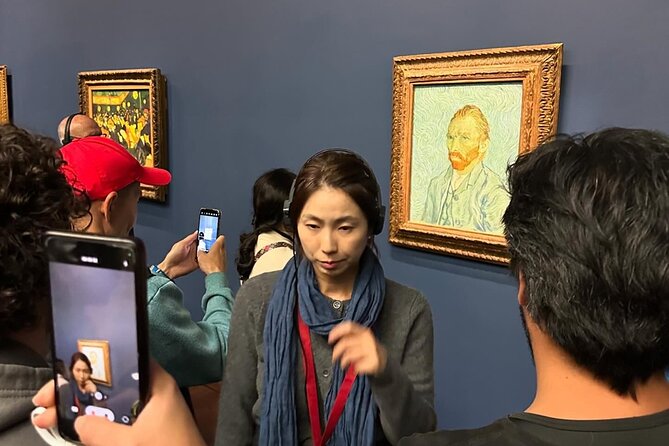
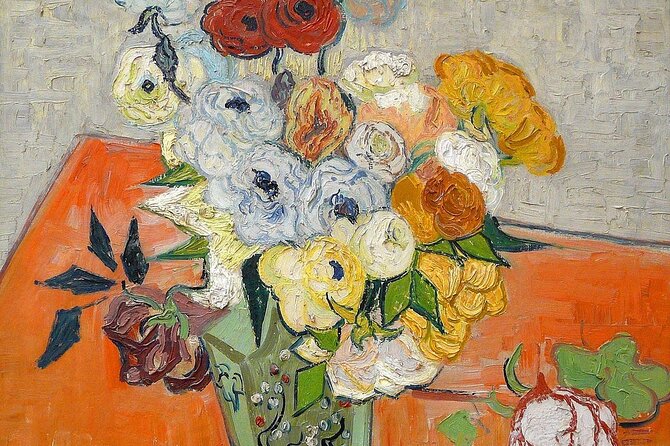
The visit continues beyond the core Impressionist rooms. Works by Cézanne, Van Gogh, Toulouse-Lautrec, and other late 19th-century artists broaden the story and show how quickly artistic ideas changed during this period.
These galleries are valuable because they prevent the museum from becoming a single-style stop. You can compare different approaches to color, line, composition, and subject matter. Even if you arrive mainly for Monet or Renoir, the works by Cézanne, Van Gogh, and Toulouse-Lautrec help show what came next and how artists pushed in different directions.
The audio guide may help you build those connections, but remember that this is not a live conversation. You cannot ask a question, request a shorter explanation, or have a guide adjust the route to your interests. If you prefer a personal discussion, this product will feel limited. If you prefer quiet independence, that same limitation becomes an advantage.
I would plan a pause somewhere in the middle if you intend to stay longer than an hour. The museum is large, and comfortable walking shoes are sensible. You will spend much of the visit on your feet, moving between rooms and stopping repeatedly to look.
The Art Nouveau section and decorative design

Do not leave after the best-known paintings. The Art Nouveau section adds a different type of experience, with decorative works and designs associated with artists such as Alphonse Mucha and Hector Guimard.
This area matters because it expands the idea of art beyond framed paintings. You encounter design, ornament, and objects shaped by the same period’s interest in flowing lines and decorative forms. It is a useful change of pace after several rooms of painting.
Mucha and Guimard also connect the museum to the wider visual culture of the era. The works are not simply extra material at the end of a painting route. They show how artistic ideas appeared in design and daily surroundings as well as on gallery walls.
If your time is short, follow the suggested route and keep moving. If you have several hours, slow down here. The open-ended format lets you give this section the attention it deserves without waiting for a tour group.
The audio guide on your own phone
The audio guide is the heart of the paid experience beyond basic admission. You use it on your phone, and it includes commentary about museum highlights, the building’s layout, and its place in art history.
That arrangement suits you if you like choosing your own pace. You can listen to a few key explanations, stop the audio when you want silence, and spend extra time with a painting that speaks to you. It also avoids the fixed rhythm of a live group.
There are practical tradeoffs. You need to make sure you can use the audio guide on your phone, and you will be managing the device while looking at art. The supplied information does not state whether headphones or a separate device are provided, so do not assume either. Bring whatever you normally use for listening, and make sure your phone is ready before entry.
The route is suggested rather than compulsory. That is important. You are paying for structure, not a strict march from room to room. I would use the route for your first pass, then return to any section you want to see again.
Is $87.67 a fair price?
At $87.67 per person, this is a premium way to visit the Musée d’Orsay. The value depends on what you need.
The price makes more sense if you want your entry arranged ahead of time, prefer a chosen time slot, and value explanatory audio while exploring independently. It can also suit a short Paris visit when you want to reduce uncertainty and go straight to the museum rather than figure out ticket purchase on arrival.
The value is weaker if you are comfortable buying a museum ticket yourself, do not need commentary, or plan to explore without a suggested route. The product does not include a live guide, and the visit can be done at your own pace once inside. You are paying for the packaged entry, the digital guide, and the convenience of prebooking.
The booking pattern suggests people reserve this experience well ahead, with an average of 33 days in advance. That does not guarantee that you need to book that early, but it is a useful warning for a tightly planned Paris itinerary. Popular times may not remain available close to your visit.
There is also no flexibility after the ticket is issued. It cannot be changed, and the experience is non-refundable. Pick your date and time only after checking your museum-day plans carefully.
Ticket delivery deserves careful attention
Two of the supplied complaints describe people who said tickets never arrived and that they had to buy admission separately. In both cases, the operator replied that it could not find a booking under the customer’s name and believed the reservation had been made with another company.
That exchange does not prove what happened in either case, but it gives you a practical lesson: confirm the provider name, booking reference, date, time, and ticket delivery before heading to the museum. Keep the confirmation easy to reach on your phone.
The operator says customers receive their tickets as promised and support is available. Still, because the ticket is required for the planned entry, do not leave this check until the last minute. A missing ticket can erase the very convenience you paid for.
Who should choose this Musée d’Orsay visit?
I would consider it a good fit for:
- You want a prearranged entry time and do not want to buy a ticket at the museum.
- You prefer exploring alone or with your own group.
- You enjoy Impressionist and Post-Impressionist art but want some help understanding the collection.
- You have a flexible amount of time after entry and may stay well beyond the suggested hour.
- You are comfortable using a digital audio guide on your phone.
- You want to focus on the central hall, Impressionist galleries, later 19th-century artists, and Art Nouveau design.
I would look elsewhere if you need a live art historian, want a flexible ticket, or feel the digital format does not justify the extra cost. A person seeking the cheapest possible museum entry should also compare the price with direct admission before booking.
Should you book it?
Book this experience if convenience matters more than the lowest price. The former railway station, famous clock, Impressionist galleries, Van Gogh and Cézanne works, and Art Nouveau displays give you plenty to see, while the audio guide provides a basic framework without tying you to a group.
I would not book it casually. The ticket is fixed, the price is high, and the product is self-guided rather than live. Check the ticket details as soon as you receive them, arrive prepared for security, wear comfortable shoes, and allow more than one hour if you want to enjoy the museum rather than simply collect its famous names.
For a first-time visit with limited planning time, this can be a useful package. For a flexible visitor who is happy to arrange admission independently, the extra $87.67 may be hard to defend.
FAQ
Is this a live guided tour?
No. This is a self-guided visit using a digital audio guide on your phone. There is no live guide leading your group through the museum.
What does skip the queue mean here?
You skip the line to purchase a ticket because admission is included. You must still pass through the museum’s mandatory security check.
How long does the visit last?
The suggested visit lasts about one hour, while the overall experience is listed as approximately one to two hours. Once admitted, you may stay inside until closing time.
Can I choose my entry time?
Yes. Times are offered throughout the day, but your selected ticket is date and time specific. It cannot be changed once issued.
Is the activity private?
Yes. Only your group participates. Private means you do not join another group, but it does not include a private live guide.
What does the ticket cost?
The listed price is $87.67 per person. The package includes museum admission and the digital audio guide.
Just added around Paris
- The Tuileries Garden’s Classic Sights: A Self-Guided Audio Tour★ 4.0 · 3 reviews
- Self-Guided Audio Tour -The Eiffel Tower, Exterior★ 4.0 · 9 reviews
- Audioguide – The Eiffel Tower and its secrets★ 4.0 · 4 reviews
- A Self-Guided Audio Tour Around Parc Montsouris★ 3.5 · 6 reviews
- The French Revolution: Self Guided Audio Tour of Paris★ 4.5 · 3 reviews
- Summit Eiffel Tower Audio Guide Tour with Unlimited Time Access★ 4.5 · 58 reviews
- Self-Guided Audio Tour – Montmartre: The heart of art and bohemia★ 3.5 · 7 reviews
- Latin Quarter, Paris Walking Tour with Audioguide★ 4.5 · 2 reviews
Paris Audio Tours, compared.
Illuminations River Cruise with Audio Commentary
Read our review →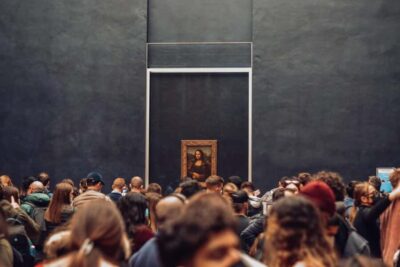
Louvre Museum Hosted Entry and Mona Lisa Audioguide
Read our review →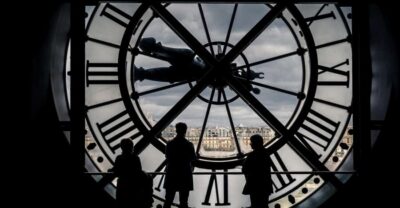
Orsay Museum Entry Ticket and Digital Audio Guide App
Read our review →
Giverny Day Trip with Audio Guide or Live Guide
Read our review →
Eiffel Tower Access w/ Audioguide and Optional Cruise
Read our review →
Giverny and Monet’s House Half Day Trip from Paris Guide or Audio
Read our review →
Catacombs Entry & Seine River Cruise with Audio Guide
Read our review →
Tootbus Panoramic by Night Bus Tour with Audioguide
Read our review →Browse the lists this tour appears in