

REVIEW · PARIS AUDIO TOURS
Napoleon’s Tomb and Army Museum Admission in Paris with Audio
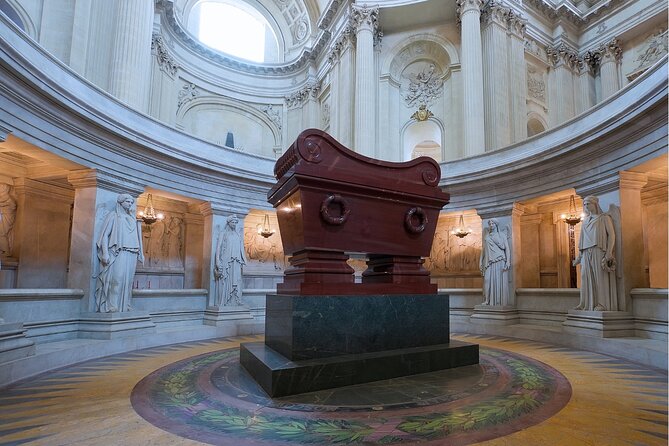
Napoleon’s tomb is only the beginning. This flexible visit gives you time to explore the Army Museum at your own pace, with access to permanent and temporary displays, the Museum of Plans-Reliefs, and the Museum of the Order of the Liberation. I especially like the chance to see more than 500,000 objects, from medieval armor to modern military photographs, and the included audio tour gives your phone a useful role as you walk.
The gilded Dome is the main event, but the World War sections can be just as affecting. I also like that you are not tied to a fixed tour departure or group schedule. The main drawback is the museum’s size. Two or three hours may feel rushed, especially if you stop often, and stairs, limited toilets, and a closed cafe can make the visit less comfortable than expected.
Key points before you go

- Napoleon’s Tomb sits beneath the gilded Dome, inside the former veterans’ hospital at Les Invalides.
- Your ticket covers several museum areas, including permanent galleries, temporary exhibitions, Plans-Reliefs, and the Order of the Liberation.
- The collection spans from the Middle Ages to today, with armor, weapons, uniforms, cannons, paintings, photographs, and personal objects.
- You enter anytime during the operating hours on your date, rather than joining a scheduled guided group.
- The museum is larger than it first appears, so allow more than two hours if military history interests you.
- Download the audio tour before or during your visit, and make sure your phone has enough battery for the galleries.
What the $26.61 admission really gives you
At $26.61 per person, this is not simply a ticket to Napoleon’s burial place. You are paying for access to a large museum complex with several distinct collections, plus an audio tour to use on your own phone.
That matters because the Dome alone would make for a short visit. The broader admission gives you a reason to stay. You can move from royal armor and historic weapons to modern photographs, wartime objects, and displays about France’s military past. If you enjoy museums and want one substantial indoor stop in Paris, the price is reasonable.
The value depends on your pace. If you only have time to glance at the Dome and leave, you will not make the best use of the ticket. If you can give the site two to three hours, the admission covers enough material to keep the visit worthwhile.
You receive anytime entry during the opening hours on your chosen date. This is useful if you want to fit the museum around lunch, another nearby sight, or a change in weather. It is not a timed guided visit, so you are responsible for planning your arrival and deciding how long to stay.
More Museum Audio Tours in France
- Paris: Louvre Museum Hosted Entry and Mona Lisa Audioguide
★ 4.6 · 5,235 reviews - Paris: Orsay Museum Entry Ticket and Digital Audio Guide App
★ 4.4 · 3,170 reviews - Louvre Museum Timed Entrance Ticket with Audio Guide
★ 3.0 · 453 reviews
Entering the former veterans’ hospital at Les Invalides

The Army Museum occupies the Hotel National des Invalides, a grand complex originally founded by Louis XIV as a refuge for veterans and wounded soldiers. That original purpose gives the visit more weight than a simple display of weapons behind glass.
As you move through the building, you are walking through a place designed around military service. The setting helps connect the objects to the people who used them. You can see how France presented its royal armies, how soldiers were equipped, and how war changed over the centuries.
You can access the site from the Esplanade des Invalides from 10 AM to 6 PM, or from Place Vauban from 2 PM to 6 PM. The published museum hours are 10 AM to 5:30 PM daily for the listed operating period. Since the tills close 30 minutes before the museum, do not arrive at the last possible moment and expect a full visit.
The museum is near public transportation, making it a practical stop during a day in central Paris. Cloakrooms are available on site, which helps if you have a coat or small items you do not want to carry through the galleries.
Royal armor, swords, cannons, and personal objects
The permanent collections provide the widest view of the visit. You can expect displays covering the Middle Ages through contemporary times, with more than 500,000 artifacts held across the museum’s collections.
The early galleries focus on royal military power. Armor and weapons show how soldiers fought and how status was displayed. Swords and cannons make the subject immediate, while uniforms, paintings, and personal belongings give the collection a more human scale.
I like this mix because it keeps the museum from becoming a long row of anonymous weapons. A uniform can tell you about rank and ceremony. A painting can show how a battle or leader was presented to the public. A personal object can make a famous figure feel less distant.
You will also find photographs and material linked to major figures in French history. These objects help connect the broad story of France to individual lives. If you prefer a clear chronological route, follow the museum’s main sequence. If you have limited time, choose the subjects that interest you most instead of trying to inspect every case.
The collection is extensive enough to reward repeat visits, but its size can also tire you. A museum of this scale asks you to make choices. You do not need to read every label to enjoy it, and you should not feel guilty about moving past a section that does not hold your attention.
Beneath the gilded Dome and Napoleon’s Tomb

The Dome is the visual centerpiece of Les Invalides. Its gilded exterior is hard to miss, but the interior is where the visit becomes especially memorable. Napoleon’s tomb has been here since 1861, and the setting gives his burial place a formal, grand scale.
The Dome is worth prioritizing even if you have only a short visit. The architecture provides a sharp contrast with the more practical military displays elsewhere in the museum. After looking at equipment and uniforms, you arrive at a space built for ceremony and memory.
Napoleon’s tomb also raises useful questions about how national figures are remembered. The museum does not present military objects in isolation. The building, the Dome, and the burial site all show how France has chosen to frame its military past.
Plan to visit the Dome before you become worn out by the larger galleries. It is easy to spend so long with the collection that you reach the most famous room when your attention is fading. If you arrive with a short list, put the Dome near the top.
More Museum Audio Tours in Paris
- Paris: Louvre Museum Ticket & Exclusive Immersive AudioGuide
★ 3.5 · 369 reviews - Paris: Louvre Museum Hosted Entry & Masterpieces Audio Guide
★ 4.2 · 281 reviews - Paris: Museum of Decorative Arts Ticket and City Audio Tour
★ 3.3 · 146 reviews - Paris: Rodin Museum Skip-the-line Entry Ticket with Audio
★ 4.0 · 102 reviews
World War displays and digital battle experiences

The World War areas provide a more modern and often more emotional part of the museum. Paintings and older weapons can feel distant, but uniforms, photographs, and personal objects from the world wars bring the subject closer to ordinary lives.
You may find these sections especially poignant if you take time with the photographs and individual items. They show war not just as a series of campaigns, but as something experienced by soldiers and civilians. The tone can also shift quickly, so give yourself a little space between the grander displays and the more personal wartime material.
Interactive digital experiences add another way to understand important battles. These tools are useful when a campaign feels confusing on a traditional map. They can help you see how movement, geography, and decisions shaped the outcome.
The digital material is best treated as a supplement, not the entire visit. The physical objects remain the museum’s strength, while the interactive displays help explain the events around them. If you are visiting with children or with someone who prefers visual learning, these features may help maintain interest.
Three additional collections included with admission

Your ticket also includes the temporary collections, the Museum of Plans-Reliefs, and the Museum of the Order of the Liberation. The specific temporary exhibition can change, so you should not assume a particular subject will be on display on your date.
The Museum of Plans-Reliefs offers a different way to think about military planning. Instead of focusing on individual weapons or uniforms, it presents information through large-scale relief models. These displays can help you understand how towns, forts, and terrain affected military decisions.
The Museum of the Order of the Liberation adds another important chapter to France’s wartime story. Its place within the wider Army Museum means you can connect national service, resistance, and military recognition with the objects seen elsewhere in the complex.
These smaller museums are easy to overlook if you focus only on Napoleon. I would check the layout when you enter and note where they are located. If you have two or three hours, they can make your visit feel much more complete.
Using the audio tour on your phone
The audio tour is downloaded to your phone rather than delivered by a live guide. That gives you freedom to stop, skip sections, and adjust your pace. It also means you should prepare your phone before you arrive.
The supplied information does not specify the audio tour’s languages, length, or exact download process. Check those details when booking and make sure your phone is charged. A weak battery can turn a helpful guide into a small nuisance halfway through the museum.
The audio tour is most useful when you want context without reading every label. Use it selectively. Listen to the sections that explain the Dome, Napoleon, the world wars, or objects that catch your eye. You do not need to follow every track in order.
Because there is no scheduled guide, the visit feels independent. That suits you if you like to linger over one display and pass quickly through another. It is less suitable if you want a person to answer questions or lead you through the museum’s main story.
How much time should you allow?

The stated visit length is approximately two to three hours. Two hours is enough for the Dome, Napoleon’s Tomb, and a focused look at the main galleries. Three hours gives you a better chance to include the wartime areas and at least some of the additional museums.
I would not plan this as a rushed stop between tightly scheduled attractions. The museum is larger than many people expect, and the number of objects can make the visit feel longer than the clock suggests.
Stairs are part of the experience and may be difficult if you have mobility concerns. One practical complaint is the limited number of toilets, with one general toilet and one accessible toilet serving the museum. Lines may form, so use facilities before you settle into a long gallery.
The cafe was closed during one visit, and the small vendor was considered expensive. Bring this into your planning. Do not count on a full cafe break inside the museum, especially if you are visiting during a busy sightseeing day.
Best arrival strategy and practical limits
Arriving earlier gives you more time before the tills close. Since the listed hours run to 5:30 PM and the tills close 30 minutes earlier, late afternoon is not the time to begin a full museum visit.
The two access points have different windows. The Esplanade des Invalides entrance is available from 10 AM to 6 PM, while Place Vauban opens from 2 PM to 6 PM. If you arrive earlier in the day, use the Esplanade access.
The museum closes on January 1, May 1, and December 25. Check your date carefully before buying. The admission is non-refundable and cannot be changed for any reason, so a change of plans means losing the amount paid.
Most people can participate, and the site is near public transportation. Still, I would wear comfortable shoes and plan a pause if you intend to explore the full complex. The combination of large rooms, stairs, and many exhibits can make a short visit surprisingly tiring.
Who will get the most from this visit?
This experience suits you if you like military history, French royal history, Napoleon, architecture, or museums with a large collection. It also works well for independent sightseers who prefer to choose their own pace instead of joining a fixed group.
Families may appreciate the cannons, armor, large displays, and digital battle features. The subject matter is serious, especially in the World War sections, so younger children may enjoy only selected areas.
You should think twice if you have little interest in military subjects or if you need a quick, simple attraction. The Dome is impressive, but the museum surrounding it is extensive. The visit rewards curiosity and patience more than speed.
Should you book Napoleon’s Tomb and the Army Museum?
Book it if you want a substantial museum visit rather than a quick photo stop. The $26.61 price includes several collections, Napoleon’s Tomb, the Dome, and an audio tour, making it a fair value when you allow at least two hours.
I would especially recommend it for first-time visitors who want a broad introduction to France’s military story. Prioritize the Dome, the World War areas, and the sections that match your interests. Do not try to see every object.
Skip it if your Paris schedule is already packed or if stairs and limited facilities would make a large museum uncomfortable. For everyone else, this is a flexible and worthwhile admission, provided you arrive early enough and accept that the museum is much bigger than Napoleon’s tomb alone.
FAQ
Where does this experience take place?
It takes place at the Hotel National des Invalides in Paris, which houses the Musée de l’Armée.
What does the admission include?
It includes anytime entry to the Army Museum’s permanent and temporary collections, Napoleon’s Tomb, the Museum of Plans-Reliefs, and the Museum of the Order of the Liberation during opening hours on your visit date.
Is an audio guide included?
Yes. An audio tour is included and can be downloaded to your phone.
How long does the visit take?
The approximate duration is two to three hours, depending on how much of the museum you explore.
When is the museum open?
The listed hours are Monday through Sunday from 10 AM to 5:30 PM for the stated operating period.
Can I enter at any time?
Yes. The ticket provides anytime entry during the opening hours on your selected visit date.
When do the ticket tills close?
The tills close 30 minutes before the museum closes.
Is the ticket refundable or changeable?
No. The experience is non-refundable and cannot be changed for any reason.
Just added around Paris
- The Tuileries Garden’s Classic Sights: A Self-Guided Audio Tour★ 4.0 · 3 reviews
- Self-Guided Audio Tour -The Eiffel Tower, Exterior★ 4.0 · 9 reviews
- Audioguide – The Eiffel Tower and its secrets★ 4.0 · 4 reviews
- A Self-Guided Audio Tour Around Parc Montsouris★ 3.5 · 6 reviews
- The French Revolution: Self Guided Audio Tour of Paris★ 4.5 · 3 reviews
- Summit Eiffel Tower Audio Guide Tour with Unlimited Time Access★ 4.5 · 58 reviews
- Self-Guided Audio Tour – Montmartre: The heart of art and bohemia★ 3.5 · 7 reviews
- Latin Quarter, Paris Walking Tour with Audioguide★ 4.5 · 2 reviews
Museums, compared.
Uffizi Priority Ticket & Masterpieces Audio App
Read our review →
Louvre Museum Hosted Entry and Mona Lisa Audioguide
Read our review →
St. Mark Basilica Ticket, Audioguide+History Gallery
Read our review →
Borghese Gallery Skip-the-Line Ticket & Audioguide
Read our review →
Borghese Gallery Ticket + Audioguide or Guided Tour
Read our review →
Orsay Museum Entry Ticket and Digital Audio Guide App
Read our review →
Uffizi Gallery Timed Entry Ticket & Audio Guide
Read our review →
Acropolis Museum Ticket with optional Audio Guide
Read our review →Browse the lists this tour appears in