
REVIEW · UK AUDIO TOURS
Discovering Cheltenham: A Self-Guided Audio Tour
Cheltenham rewards slow looking. This self-guided walk links the town’s Georgian terraces, spa gardens, churches, statues, and public buildings in about 90 minutes to two hours. I like the GPS-triggered narration, which begins at the right point as you walk, and the freedom to pause for lunch, photos, or a closer look. The main drawback is technical: you need to download the tour and allow location access before setting off.
The route is private to your group, costs $11.99 per person, and ends in Montpellier Gardens after starting at The Wilson. The audio is in English, and offline maps and sound make it a good choice for a day in town, but the app setup can be awkward if your phone has weak Wi-Fi or strict location settings.
Key points to know before walking
- The route connects two very different parts of Cheltenham: begin at The Wilson in the town centre and finish among the gardens and Regency buildings of Montpellier.
- GPS controls the storytelling: the audio starts and stops as you reach each point, so you can keep your phone in your pocket for much of the walk.
- The Wilson and Cheltenham Minster provide a useful opening: you get local context before the tour turns toward terraces, fountains, and spa architecture.
- Royal Crescent and Montpellier Walk are the architectural highlights: these stops help explain why Cheltenham is known for Georgian and Regency design.
- The tour is best downloaded before arrival: one family had trouble getting four devices ready without Wi-Fi or mobile data.
- At $11.99, lifetime access adds value: you can take your time, repeat sections, or use the tour again on a later visit.
Starting at The Wilson and getting the app ready
The walk begins outside The Wilson, Cheltenham’s art gallery and museum, at 51 Clarence Street. This is a sensible meeting point because the opening commentary introduces both the building and the town before the route gets properly underway.
You do not need to enter the museum for the tour. Any admission fee for The Wilson or other attractions is separate, and the walk itself is designed to be enjoyed from public streets and open areas.
Set aside a few minutes before starting to download the VoiceMap app and the tour content. You receive lifetime access in English, along with offline audio, maps, and geodata. That matters because you do not want the route to depend on a steady signal once you are walking.
The app uses your phone’s location to play the correct section at the correct place. This is one of the best features of the experience, but it also creates the main practical snag. Location access may need to be set to always on, rather than only while the app is open. If the app cannot track your position, the narration may not trigger as intended.
If you are setting up several phones, do it while connected to reliable Wi-Fi. One group could not download the tour because not everyone had Wi-Fi or mobile data. A café stop can solve that problem, but it is much nicer to prepare before you reach the starting point.
More Self-Guided Audio Tours in the UK
- Bristol: Self-Guided Sightseeing Audio Tour
★ 4.4 · 151 reviews - Essential Whitby: Discover the town’s legends on a self-guided audio tour
★ 5.0 · 47 reviews - Harry Potter’s Edinburgh: A Self-Guided Audio Tour
★ 4.5 · 42 reviews
Cheltenham Minster and the older town beneath the spa image
From The Wilson, the route passes Cheltenham Minster, also known as St Mary’s. The church and its graveyard offer a change of mood from the town’s polished Regency streets.
The audio explains the church as you walk around it and through the burial ground. This is useful because Cheltenham can initially seem defined by terraces, hotels, and gardens. The minster points to an older layer of the town, before its spa fame reshaped the centre.
I like this early stop because it gives the route some balance. You are not simply being led from one attractive façade to another. The church helps place the later Georgian development in time.
The walking is self-paced, so you can stop to look at the building or continue while listening. The tour does not require you to enter the church, and no attraction tickets are included.
Royal Crescent and the shape of Georgian Cheltenham
The next major architectural stop is Royal Crescent, described as the earliest important Georgian terrace built in Cheltenham. This is where the tour begins to explain the town’s design in a more focused way.
A terrace is easy to admire without understanding how significant it was. The commentary gives you a reason to look at the arrangement of the houses, the curve of the crescent, and the wider idea of planned Georgian development.
Royal Crescent is also a good test of the audio format. You can walk at a steady pace while the narration supplies the background, then pause when you want to study the buildings. You are not tied to a guide’s speed or a fixed group.
The tour is generally about 90 minutes to two hours, depending on how often you stop. If you take photographs or pause for coffee, allow the longer figure. The route works best when you do not rush from one GPS point to the next.
The Hare and the Minotaur, then Edward Wilson
The route passes The Hare and the Minotaur, a sculpture by local artist Sophie Ryder. This adds a modern, slightly playful note to a walk otherwise filled with churches, terraces, fountains, and Victorian or Georgian buildings.
The sculpture is a useful reminder that Cheltenham is not only a preserved spa town. The audio uses this point to continue the town’s story, linking the public art to the surrounding streets and local character.
Next comes the statue of Edward Wilson, one of Cheltenham’s most famous sons. The narration explains who Wilson was as you walk by, giving the stop a personal connection to the town rather than focusing only on architecture.
These brief stops are part of what makes the route feel more varied. You get public art, local figures, and buildings in the same walk. If you are interested mainly in grand architecture, these points may feel less substantial than Royal Crescent or the town hall, but they prevent the route from becoming a parade of façades.
Same place, a different route to walk:
- London: Emirates Stadium Entry Ticket and Audio Guide
★ 4.7 · 5,513 reviews - Westminster Abbey Entrance Ticket Including Audio Guide
★ 4.0 · 661 reviews - London: British Museum Audio Tour & Priority Entrance Ticket
★ 4.5 · 631 reviews - Golden Tours York Hop-on Hop-off Open Top Bus Tour with Audio Guide
★ 4.5 · 468 reviews
The Neptune Fountain and Cheltenham Town Hall
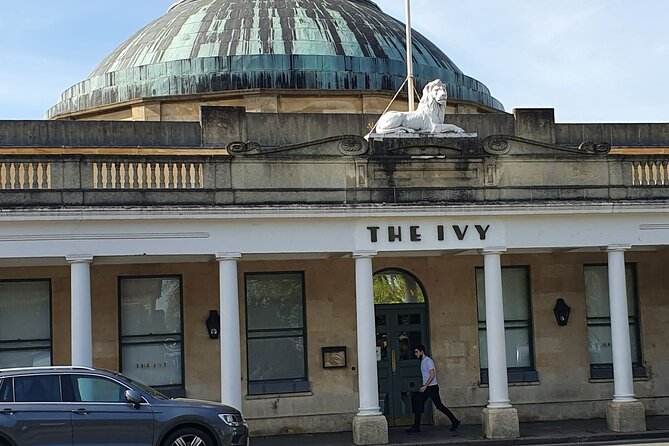
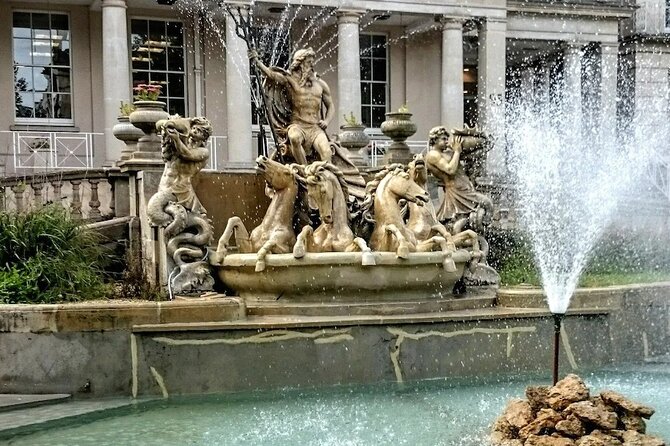
The Neptune Fountain is one of the route’s strongest visual stops. You hear who designed it, where its water comes from, and who made it. Those details give you something specific to look for instead of treating the fountain as a quick photo stop.
Water is central to Cheltenham’s identity as a spa town, so the fountain helps connect the town’s public decoration with its past as a place built around mineral springs and visitors seeking spa treatments.
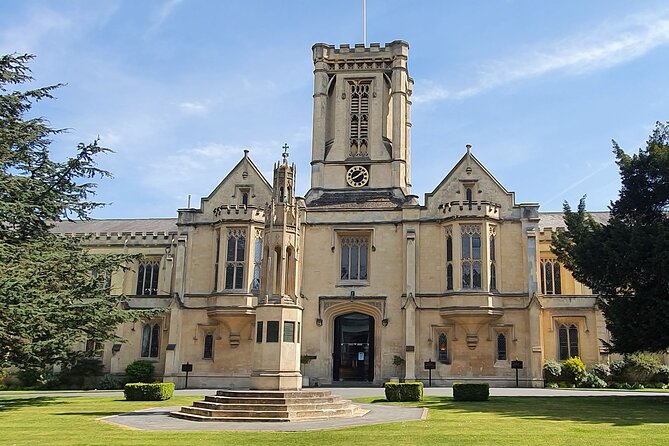
The route then passes impressive Cheltenham Town Hall. The audio explains that the building was once used as an entertainment venue for concerts, banquets, dances, and balls.
That history changes how you see the building. A town hall can look formal and civic from the outside, but its former role was social and lively. The narration helps you imagine the building as a place for public gatherings, not just official business.
You do not need an entrance ticket for the tour, and the itinerary only takes you past the building. If you want to attend an event or enter an attraction along the way, that is outside the $11.99 price.
Imperial Gardens and the spa-town story
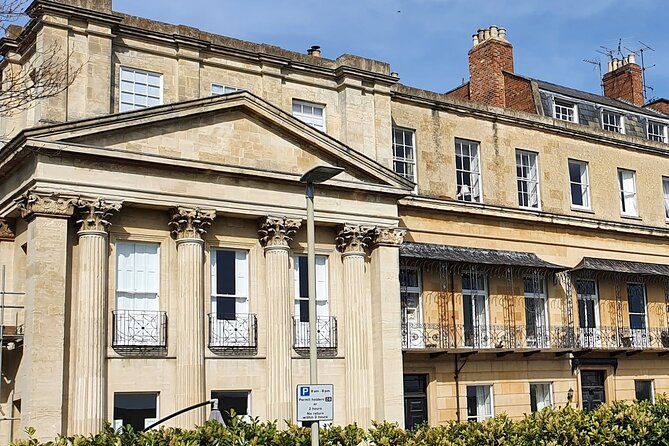
The walk continues through Imperial Gardens, once reserved for visitors to the Sherborne, later known as the Imperial Spa. This is one of the clearest places to understand Cheltenham’s appeal as a spa resort.
The gardens give the route room to breathe after the denser streets and architecture. The audio explains their former restricted use, which adds an interesting social detail: these were not always simply open public gardens for anyone passing through.
I find this section especially useful for connecting the town’s design to its visitors. Cheltenham’s terraces and hotels were not built in isolation. They supported a fashionable spa economy, with gardens, entertainment spaces, hotels, and promenades designed for people coming to stay.
The gardens may also be a good place to pause the tour. Because you have lifetime access and control over the pace, you can take a break without losing the route. You can resume when ready, then continue toward the next group of sights.
Gustav Holst and the musical side of town
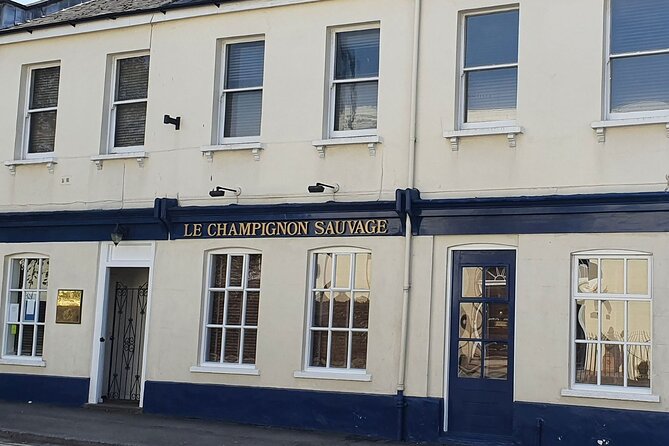
The tour passes the statue of Gustav Holst and introduces his life and music. This is another personal story that broadens the route beyond architecture.
Holst gives Cheltenham a cultural connection that may not be obvious from its streets alone. The statue is a compact stop, but the audio provides a reason to pay attention and consider the town’s links with music and education.
The narration has been praised for getting the amount of information about right. It gives enough detail to make each stop meaningful without turning a short town walk into a lecture. That balance matters if you are walking with family or want a pleasant introduction rather than an academic course.
Queens Hotel and the practical side of grand hotels
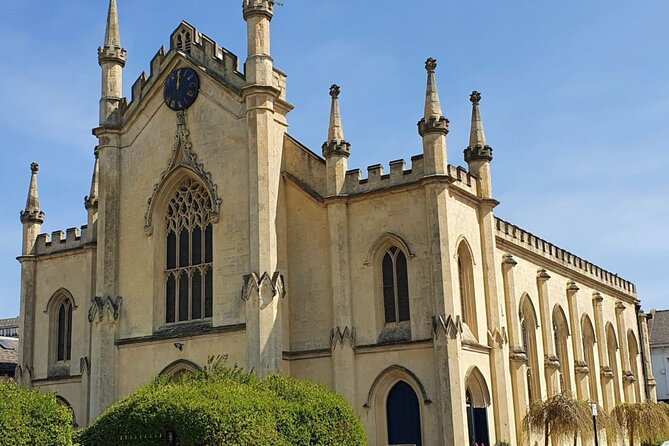
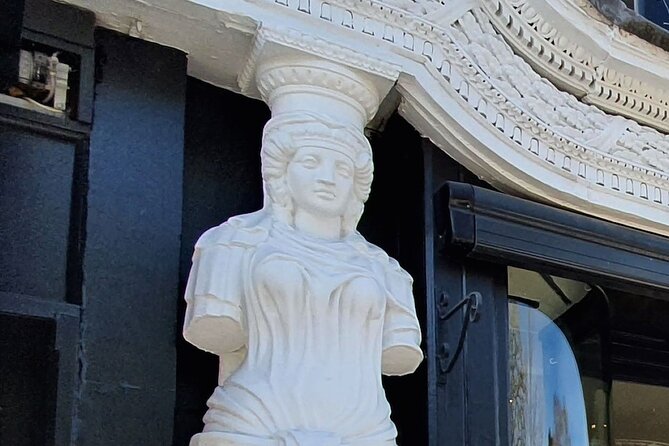
Queens Hotel Cheltenham is described as one of the first purpose-built hotels in Europe. The tour points out architectural features and explains the hotel’s place in the town.
This stop helps you understand how spa tourism shaped Cheltenham’s buildings. A purpose-built hotel is different from a house later converted for visitors. Its design, position, and scale were tied to the needs of people arriving for a stay.
Look up as you walk. The audio is meant to draw your attention to features you might otherwise pass without noticing. This is a recurring strength of a GPS audio walk: you receive information at the place where it has the most meaning.
The hotel also helps bridge the route from central Cheltenham toward Montpellier. By now, the walk has moved through religious buildings, public art, a fountain, civic spaces, gardens, music, and hospitality. That variety keeps the experience from feeling like a single-theme architecture tour.
Montpellier Walk and the move toward the spa quarter
The route follows part of Montpellier Walk, designed by Cheltenham architect William Hill Knight. The audio discusses the retail strip while you walk.
This is a practical section of the tour because it shows how the town’s commercial life fitted into its spa setting. Montpellier is not only a collection of elegant buildings. It was also a place for shopping and strolling, with architecture designed to make ordinary movement part of the experience.
You may want to pause here if you plan to eat. One family stopped for lunch in Montpellier and then continued at its own speed. That flexibility is a real benefit over a fixed walking group, especially if you have only one day in Cheltenham and want to combine sightseeing with a meal.
The tour does not include food or drinks, so budget separately for a café or restaurant stop. Since the route length is flexible, lunch can fit naturally into the walk rather than requiring a separate detour.
Cheltenham College Chapel and the final garden walk
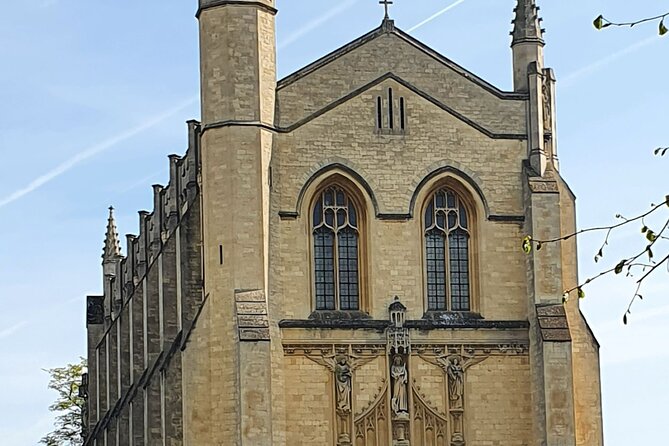
The route passes Cheltenham College Chapel, designed by Henry Prothero. You hear about the chapel and a famous day pupil of the college.
This stop adds education to the tour’s running themes. Cheltenham’s identity is tied not only to spa visitors and public gardens, but also to institutions and people who shaped the town’s cultural life.
The walk ends in Montpellier Gardens at 24 Montpellier Spa Road. The final commentary returns to the gardens and offers closing thoughts about Regency-era Cheltenham.
Ending here works well. The route moves from the central museum and older church toward the spa quarter, then finishes in an open garden setting. You can stop listening at the end and continue enjoying the gardens, or use the nearby area as the basis for the next part of your day.
The endpoint is not the same as the starting point, so plan for a walk back, a local connection, or onward sightseeing. No transportation is included.
How good is the GPS narration?
The strongest feature is the way the app ties the commentary to your location. You hear about a place when you reach it, rather than trying to match a long recording to a paper route.
Several parts of the walk are easy to follow, and the directions tell you when to move, stop, or listen. The audio also leaves you free to look around instead of staring at your screen.
There can be an occasional awkward moment. St Stephen’s Square was a little hard to follow for one party, and the app itself may not feel intuitive at first. The fix is simple but important: download everything in advance, check the location permissions, and test that the tour starts before walking away from The Wilson.
The tour is private to your group, but it is not a live private guide. You will not have someone beside you to answer questions or correct your route. In exchange, you can pause, repeat, or skip sections as you choose.
Is $11.99 good value?
At $11.99 per person, the walk is fairly priced for a self-guided town introduction. You are paying for the prepared route, narration, GPS guidance, maps, and lifetime access rather than for entry into attractions.
The value improves if you use the flexibility. You can pause for lunch, stop for photographs, or repeat the tour during a later visit without buying access again. If you are visiting Cheltenham for only a day, the route can help you see key places you might miss by wandering without a plan.
The price is less attractive if you want a personal guide, detailed conversation, or interior visits. You will need to pay separately for museums, food, drinks, and any other attraction tickets.
Who should choose this Cheltenham walk?
I would choose this tour if you like history in manageable portions, prefer independent sightseeing, or want a clear route through the town centre and Montpellier. It suits couples, families, and small groups who do not want to match a guide’s timetable.
It is also a good option if you have already walked around Cheltenham and feel you may be missing the story behind the buildings. The audio points out details that are easy to pass without context.
I would be cautious if your phone setup is unreliable, if you cannot download the tour before walking, or if you need step-by-step help from a person. The experience depends on a smartphone, headphones, battery power, and location access. Those are small requirements, but they matter.
Should you book Discovering Cheltenham?
Book it if you want a low-cost, flexible introduction to Cheltenham’s Georgian and Regency character, with enough local stories to give the streets meaning. The route covers a strong range of sights, from The Wilson and Cheltenham Minster to Royal Crescent, Imperial Gardens, Montpellier Walk, and Montpellier Gardens.
Skip it if you want guided conversation or indoor access included. For most independent visitors, though, the combination of GPS narration, offline access, lifetime use, and a 90-minute to two-hour route makes this a sensible way to get your bearings and see more than you would by simply wandering.
FAQ
Where does the Cheltenham audio tour start?
It starts in front of The Wilson Art Gallery and Museum at 51 Clarence Street, Cheltenham GL50 3JT, UK.
Where does the tour finish?
The tour ends in Montpellier Gardens at 24 Montpellier Spa Road, Cheltenham GL50 1UL, UK.
How long does the tour take?
The estimated duration is about one hour and 30 minutes to two hours.
What language is the tour offered in?
The tour is offered in English.
What is included in the price?
The price includes lifetime access to the self-guided tour, the VoiceMap app for Android and iOS, and offline access to the audio, maps, and geodata.
Are attraction entrance fees included?
No. Museum tickets and entrance fees for attractions along the route are not included.
Do I need a smartphone and headphones?
Yes. A smartphone and headphones are not included, so you need to provide your own.
Can I cancel for a full refund?
Yes. You can cancel for a full refund if you do so at least 24 hours before the experience start time. Cancellations or changes made within 24 hours are not refunded or accepted.
Just added around the UK
- Stratford-upon-Avon: River Cruise and City Audio Tour★ 5.0 · 9 reviews
- Shakespeare’s Stratford-Upon-Avon: A Self-Guided Audio Tour★ 5.0 · 26 reviews
- Warwickshire & Stratford-Upon-Avon Self-Guided Audio Tours★ 5.0 · 6 reviews
- Rebels, Romance & Raisins St. Andrew’s Walking Audio Tour★ 5.0 · 2 reviews
- Stonehenge Private Immersive Audio Guide★ 4.5 · 15 reviews
- Oxford’s literary legends and landmarks: A Self-Guided Audio Tour★ 3.0 · 4 reviews
- A Guide to the City of Dreaming Spires: A Self-Guided Audio Tour of Oxford★ 5.0 · 2 reviews
- Hadrian’s Wall: A Self-Guided Audio Tour along the Ruins★ 3.5 · 4 reviews
Self-Guided Tours, compared.

Acropolis Ticket & Optional Self-Guided Audio Tours
Read our review →


Ultimate Acadia National Park Self-Guided Driving Audio Tour
Read our review →

Santorini: Akrotiri Ticket with Optional Self-Guided Audios
Read our review →
Browse the lists this tour appears in