
REVIEW · USA AUDIO TOURS
Napa Valley & Sonoma Self-Guided Audio Driving Tour
Wine country has more stories than tasting rooms. This 76-mile self-guided drive links Sonoma and Napa with 82 audio stories, covering vineyards, volcanic geology, quirky local history, and scenic detours. I like the freedom to stop whenever you want, and I like that one $24.99 purchase covers a carload of up to four people.
The main tradeoff is the app and starting point. You must download the tour over strong Wi-Fi or cellular service, and the official start is in Sonoma, even if you are already closer to Napa. The route takes about 2 to 4 hours of driving, but winery visits and paid attractions will add time.
Key points at a glance
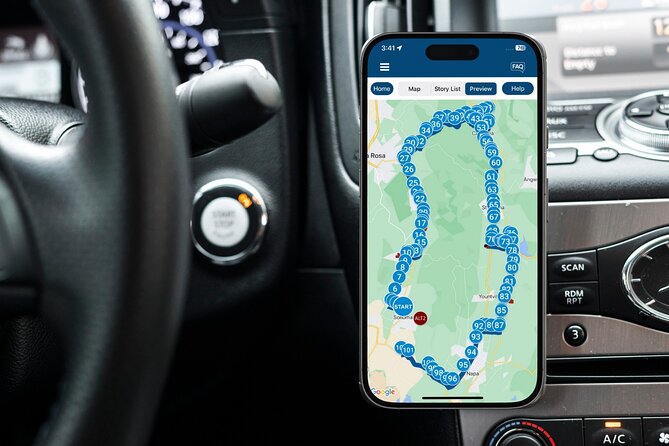
- A 76-mile route from Sonoma to Napa: Start at Sonoma Plaza and finish near Shellville Colony.
- More than wine: The route includes Jack London connections, a petrified redwood forest, Mount Saint Helena, and California’s Old Faithful geyser.
- 82 location-triggered stories: Audio starts as you reach points along the road, so you can keep your attention on driving.
- Strong value for groups: At $24.99 per group of up to four, the price is modest compared with a guided private tour.
- Offline use after setup: Download the route before leaving reliable service, then use it without Wi-Fi or cellular data.
- No tasting fees included: Winery visits, attraction tickets, food, and reservations are your responsibility.
Why this drive works better than a fixed tour
A guided bus tour gives you a schedule. This one gives you a road map with a voice in the background. You can pause for lunch, stop at a winery, skip a story, or spread the route over several days.
That flexibility is the strongest reason to consider it. The app is designed to trigger stories by location, so you do not need to keep checking a list of stops. One review even noted that the narrator continued to play without the phone screen needing to remain on, which is useful when you are driving.
The price also makes sense for couples, families, or a group of friends sharing one car. At $24.99 for up to four people, the cost works out to about $6.25 each for a full group. You are not paying for a guide, vehicle, tasting fees, or admission, but you are paying for a ready-made route and a large amount of narration.
The route is not only a parade of wineries. That matters because Napa and Sonoma can blur together after several tasting rooms. Here, the audio adds variety with geology, farming, local characters, Prohibition, architecture, and odd stories about cults and ghosts.
More Self-Guided Audio Tours in the USA
- Gettysburg Battlefield Self-Guided Driving Audio Tour
★ 4.5 · 910 reviews - Joshua Tree National Park Self-Guided Driving Audio Tour
★ 4.5 · 762 reviews - Ultimate Acadia National Park Self-Guided Driving Audio Tour
★ 4.0 · 521 reviews
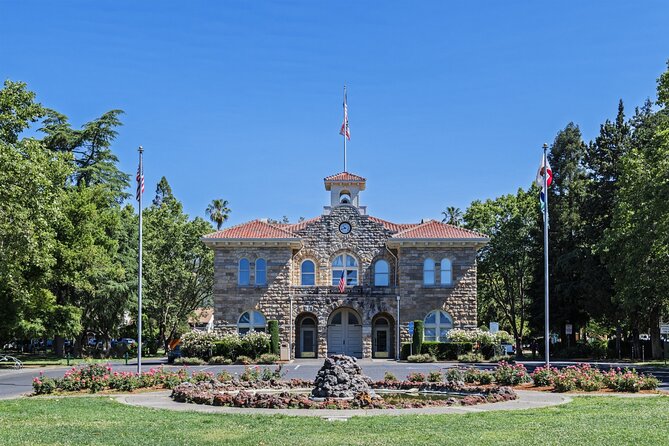
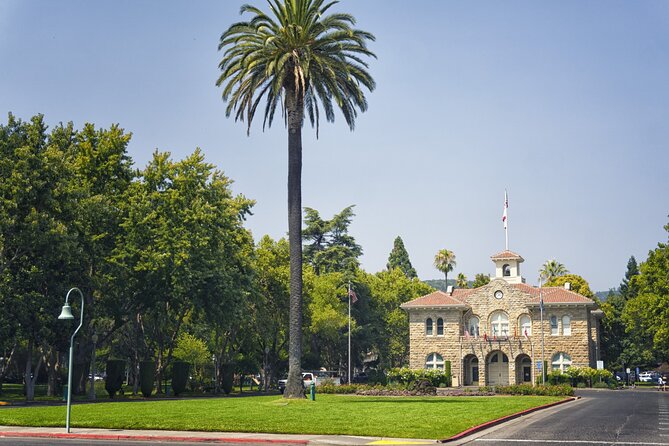
Starting at Sonoma Plaza and the Valley of the Moon
The official starting point is 31 East Napa Street at Sonoma Plaza. No guide meets you there. You open the Action’s Tour Guide app, enter the password sent by email and text, and begin when you reach the first story point.
Sonoma Plaza is a sensible opening. It places you in the middle of the town’s historic center and gives the tour a clear starting line before the route heads into the valley. The first stories also explain the many wineries along the road, including their opening hours when that information is available.
The tour is not affiliated with the wineries it mentions. That is worth remembering when deciding where to stop. Winery access, reservations, tasting fees, and opening times can change, so treat the audio as helpful direction rather than a guarantee.
The Valley of the Moon story adds a bit of local folklore. Mariano Vallejo, the statesman who founded Sonoma, claimed the name referred to the moon appearing to bob between the sharp peaks east of the valley. The tale says the moon could seem to rise and vanish several times in a single night.
It is a good early example of the tour’s style. You get a short story tied to the place outside your window, rather than a general lecture about California wine.
Glen Ellen, Jack London, and vineyard stories
The road continues toward London Ranch Road and Glen Ellen. You can hear about Jack London’s ranch and the nearby Benziger Winery, giving this section a useful mix of literary history and modern winemaking.
The Benziger story focuses on the family’s move to Sonoma in the 1970s and its later shift toward biodynamic farming. That makes the winery stop more than a name on a roadside sign. If you are interested in how vineyards are farmed, this is one of the more useful audio segments.
Glen Ellen Village gets its own pause. Today it may look quiet, but the narration asks you to picture the village in the 1800s. I like this sort of time shift because it helps you see a small town as a working settlement, not just a place between tastings.
Several winery stories follow. Kunde Winery is linked to volcanic caves formed by lava millions of years ago. The volcanic material also affected the soil, which the audio connects to the character of Kunde wines.
Kenwood Vineyards has a Jack London connection too. Some of its land once belonged to his ranch, so the story brings the author back into the route even after you leave London Ranch Road.
You will also hear about a grand chateau built in 1920 by Michigan mining and lumber magnates. Prohibition ended their hopes of making wine, so they turned to prunes and walnuts instead. Barker Ledson’s story takes a different path, from English nobility and railroad surveying in the Mojave to ranch ownership and vineyard building.
These short profiles are useful if you are driving past wineries without planning to visit them. They give each property a distinct identity. The limitation is that the tour can only tell you so much from the car. If you want a tasting or a close look at a winery, you will need to stop and handle the visit yourself.
Santa Rosa and the unusual Brotherhood of the New Life
The route passes through Santa Rosa, where the audio turns to Thomas Lake Harris and the Brotherhood of the New Life. Harris led a religious movement in the late 1800s and claimed, among other unusual beliefs, that he could communicate with fairies.
This is exactly the kind of unexpected material that keeps the drive from feeling like a sales pitch for wine. You get local oddities alongside famous estates. For families and mixed-interest groups, that variety can be more appealing than a route built entirely around tastings.
The stop is listed as about ten minutes of suggested audio time, but you control the pace. You can keep driving, pause the tour, or use the story as background while deciding where to stop next.
More Driving Audio Tours in the USA:
- Ultimate Lake Tahoe Self-Guided Driving Audio Tour
★ 4.5 · 435 reviews - Scenic Newport, RI Self-Guided Driving Audio Tour
★ 4.5 · 325 reviews - Arches National Park Self-Guided Driving Audio Tour
★ 4.5 · 288 reviews - Yellowstone National Park Self-Guided Driving Audio Tour
★ 4.5 · 249 reviews
Petrified Forest and Mount Saint Helena
One of the route’s strongest surprises is the Petrified Forest. About a mile ahead, the audio points you toward ancient redwood trees preserved as stone. The story explains that volcanic activity created the conditions for these enormous remains to harden and survive.
This is a real change of pace from vineyards. If you have already visited several tasting rooms, the chance to walk among petrified trees gives the day a different shape. Admission is not included, so check the attraction’s current arrangements before making it a stop.
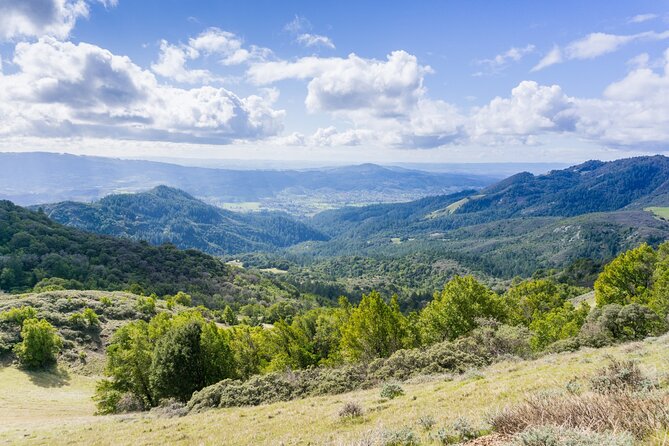
The route then explains Mount Saint Helena through the same volcanic past. Ash hardened into welded tuff, and later tectonic pressure pushed the rock upward to form the mountain.
The geology stories are short but well placed. You do not need specialist knowledge to follow them, and they help explain why the region has such varied soil and terrain. I would give these stops priority if your group includes anyone who wants more than wine.
Old Faithful of California and Calistoga
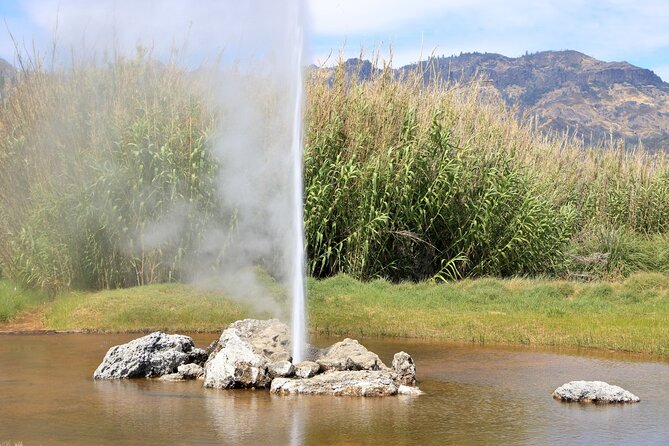
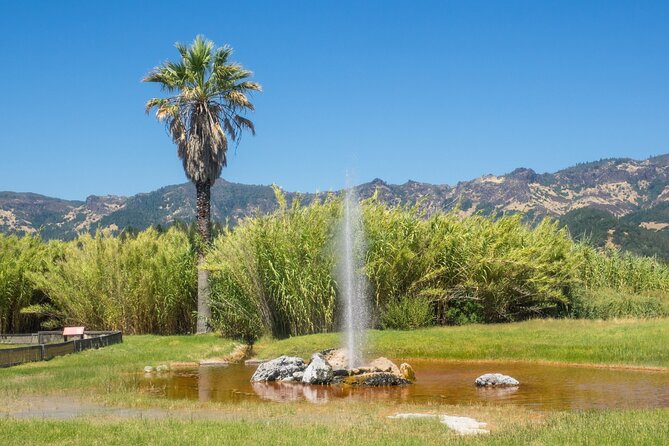
The Old Faithful Geyser of California is another unusual detour. The audio explains that its eruptions can slow in the weeks before an earthquake, giving the geyser a reputation as a rough natural warning system.
The route does not include admission, so you should budget separately if you choose to enter. One useful detail is that the geyser area can also include animal encounters, including goats and llamas, according to the tour experience described by one customer. That may appeal to families, though the exact offerings can change.
Nearby Chateau Montelena connects the scenery to one of the most important moments in California wine. Its Chardonnay won the white wine category at the 1976 Judgment of Paris, helping put Napa on the international stage.
Calistoga adds a town story about Samuel Brannan, an early Mormon leader who became California’s first millionaire during the Gold Rush. This is a good place to consider a break, especially if you want to separate the northern Napa portion from the rest of the route.
Other winery suggestions add different styles:
- Sterling Vineyards is known for a hilltop tasting room reached by gondola.
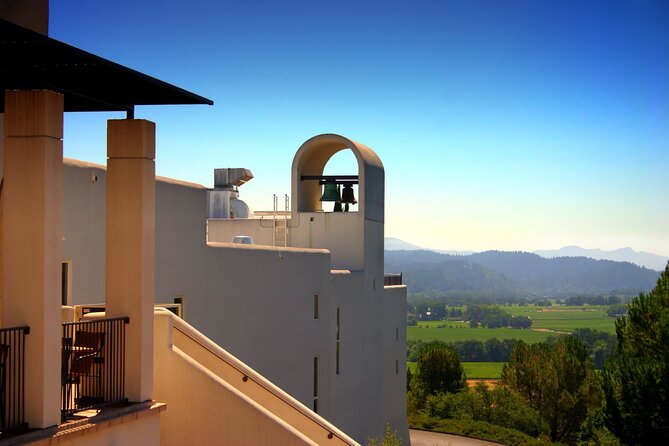
- Clos Pegase uses a Roman-inspired design with walls, columns, and porticos.
- V. Sattui has a marketplace where you can buy food and wine for a picnic on its three-acre property.
- Charles Krug Winery is tied to Peter’s legendary punch and the Mondavi family.
- Merryvale Vineyards connects to Cesare Mondavi and his sons, Peter and Robert.
- Louis Martini’s Prohibition story explains how sacramental wine offered a legal path during a period when most wine sales were forbidden.
- Grgich Hills Estate and Frog’s Leap provide more options for wine-focused stops.
You cannot realistically visit every place mentioned in one short outing. Think of these as a menu. Pick one or two that match your interests, then keep moving.
St. Helena and the Silverado Trail
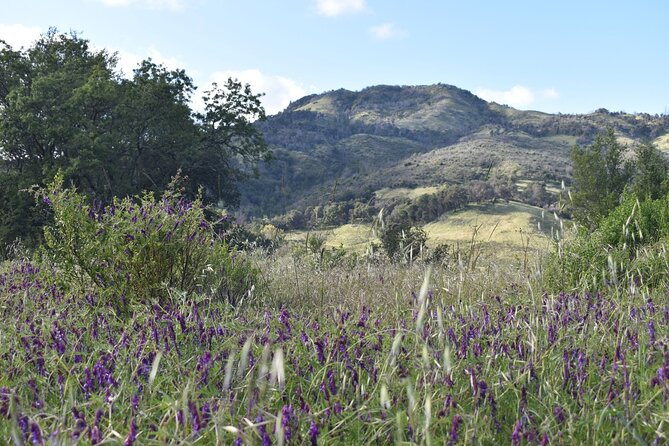
The St. Helena section gives the route more wine-industry context. You hear about the Mondavi family’s early connection to Merryvale, Louis Martini’s business during Prohibition, and the importance of food and wine pairing.
The Frog’s Leap segment is especially specific. It points you toward Sauvignon Blanc and recalls the praise given to the winery’s first bottle in 1982. If you want one tasting centered on that grape, the audio provides a clear suggestion, but you still need to check hours and arrange access yourself.
The Silverado Trail follows an old wagon route from the mid-1800s. The road once connected Calistoga with San Francisco, and today it gives the tour a quieter alternative to major highways.
That route choice is one of the better practical features. You are not simply being sent from one commercial stop to the next. The drive uses a road with its own role in the region’s past, which makes the journey feel more connected from one point to another.
Sparkling wine, Stags’ Leap, and the Napa River
Mumm Napa provides a change from still wine. The audio explains the basics of sparkling wine and points out the winery on the right side of the road.
Stags’ Leap Winery has an unusual property history. Before becoming a vineyard, the estate served as a resort, a stopover for Navy sailors, and a rooming house. The narration also hints at stories involving guests who overstayed their welcome. It is a small touch of mystery amid the vineyard views.
The Napa River section looks beyond wine to environmental repair. Local mismanagement led to pollution and the loss of native species. The disappearance of beavers caused particular harm because beavers are a keystone species in the ecosystem.
That story adds welcome depth. Napa is not only tasting rooms and elegant estates. It is also a river system that has been damaged and is still tied to local conservation.
You will also hear about a winery designed around gravity. The Goodman brothers crushed grapes on the top floor, then sent them through a chute to the level below for fermentation. It is a practical example of how early winemakers used a building’s design to move wine through production.
Near the end, Cuvaison Winery introduces Los Carneros, a cooler part of Napa. If you notice the temperature dropping, the audio explains why this area can feel chilly compared with other parts of the valley.
Using the app without losing your patience
Download the separate Action’s Tour Guide app before you start. The tour content must be downloaded while you have strong Wi-Fi or cellular service, and you should enter the password from the confirmation email or text before heading out.
Once downloaded, the route works offline. That is important because cell service can be inconsistent on a long rural drive. Connect your phone to the car stereo by Bluetooth, USB, or AUX. Apple CarPlay is supported, while Android Auto support is still developing.
Use an iPhone with iOS 15 or later, an Android device with version 9 or later, or an iPad or tablet with GPS and cellular capability. Keep the driver focused on the road. A passenger should handle pauses, skips, and side-trip decisions.
The best results come from following the route and posted speed limits. If you begin far from Sonoma, do not assume the app will automatically provide the intended experience from your current position. The starting point is clearly set in Sonoma, and one customer had trouble after trying to begin about 40 minutes away.
You can use the tour on any day and over multiple days. It has lifetime access with no expiry, so you can revisit it on a later trip. That is a real benefit if you want to split the route rather than rush through it.
Price, timing, and who should book
At $24.99 per group of up to four, this is good value for a self-guided drive. A private guide would cost far more, while a standard winery visit would usually charge separately for each person.
The value depends on how you use it. If you only want a straight drive from Sonoma to Napa, the audio may be more than you need. If you want context, side-trip ideas, and the freedom to shape the day yourself, the low group price works well.
The listed driving time is 2 to 4 hours, but you should not confuse that with a full day on the road. Add time for tasting appointments, attraction admission, food, photos, and waiting. The route contains enough material for a relaxed day if you stop often, or a shorter drive if you listen while continuing through.
I would recommend it most strongly for:
- Couples or friends sharing a car
- Families who want history and odd local stories mixed with wine
- Independent drivers who dislike fixed tour schedules
- Repeat visitors who want more than the usual tasting-room circuit
- Budget-conscious groups that want a low-cost guide
I would be more cautious if you dislike phone apps, cannot download content before leaving service, or expect admission and tasting fees to be included. You also need a sober designated driver. The tour itself gives the right warning: never drink and drive.
Should you book the Napa and Sonoma audio drive?
Book it if you want a flexible road day with a clear route and plenty of short stories. The best parts are the mix of wine, geology, local characters, the petrified forest, Old Faithful, and the freedom to stop when you choose.
Skip it if you want a guide who handles reservations, winery entry, transportation, and timing. This is an audio companion, not a hosted tour.
For most small groups with a car, the price is easy to justify. Download everything before you leave, begin at Sonoma Plaza, choose only a few winery stops, and leave room for the unexpected. That is when this route works best.
FAQ
How long does the Napa and Sonoma audio tour take?
The drive takes approximately 2 to 4 hours, depending on your speed and stops. Winery visits, meals, photos, and paid attractions will make the outing longer.
Where does the tour start?
The tour starts at 31 E Napa Street, Sonoma, California, at Sonoma Plaza.
Where does the tour end?
The listed end point is 6HXQ+25V in Shellville Colony, California.
How many people can use one purchase?
One purchase covers a group of up to four people in the same car.
Does the tour include winery tastings or attraction admission?
No. Winery tastings, attraction tickets, reservations, food, and other entry costs are not included.
Does the tour work without cellular service?
Yes. You must download the app and tour content while you have strong Wi-Fi or cellular service. After that, the tour works offline.
How does the audio begin?
After you reach the starting point, open the Action’s Tour Guide app and launch the correct tour version. The first story begins at its location, and later stories play automatically as you reach their points.
Can I use the tour more than once?
Yes. The tour provides lifetime access with no expiry, so you can use it on another trip or split the route across multiple days.
Just added around the USA
- Self Guided Driving Audio Tour of Saguaro National Park★ 3.0 · 4 reviews
- Self-Guided Audio Driving Tour of Mount Lemmon★ 5.0 · 4 reviews
- Saguaro National Park Self-Guided Audio Tour★ 3.5 · 11 reviews
- A Self Guided Audio Tour in Tombstone★ 4.0 · 11 reviews
- Catskills Scenic Byway Self-Guided Driving Audio Tour★ 4.0 · 9 reviews
- Big Bend National Park Self Guided Audio Tour Guide★ 5.0 · 12 reviews
- Self-Guided Audio Driving Tour in Catskills Scenic Byway★ 4.5 · 7 reviews
- Shiloh Battlefield Self-Guided Driving Audio Tour★ 4.0 · 9 reviews
Driving Audio Tours, compared.
Ultimate Acadia National Park Self-Guided Driving Audio Tour
Read our review →

Browse the lists this tour appears in