
REVIEW · JAPAN AUDIO TOURS
Discover Stunning Nagasaki: Self-Guided Audio Tour
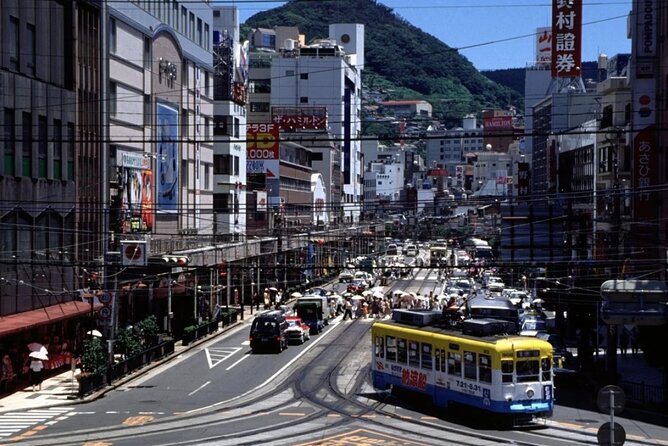
Nagasaki makes history feel close. This walking tour links the city’s foreign trading past, religious heritage, Chinese architecture, and atomic-bomb memorials in one thoughtful route. I like the complete freedom to set your own pace, and I like the way the walk moves from the calm of Glover Garden to the solemnity of Peace Park. The main caution is the technology: downloading and opening the audio may take patience.
You pay $15.29 per person for the audio files and GPS map, with entrance fees separate. The route takes about two to three hours, but you can stop longer at the museum, church, temple, or gardens. It is available only in English, and the current rating is 3 out of 5 from four posted reviews, largely because the app setup can be awkward.
Key points to know before you go
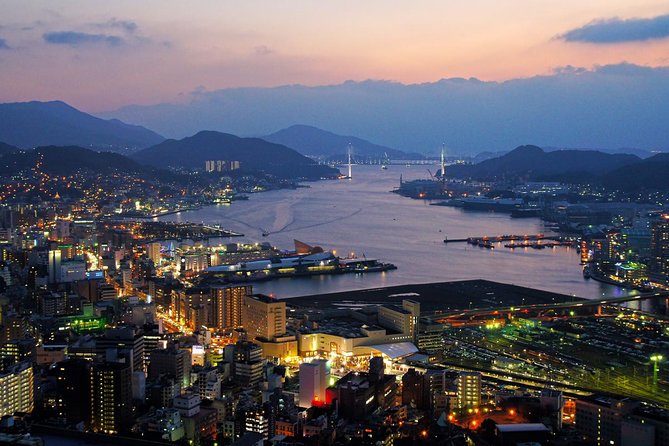
- Glover Garden begins the route: You start among hillside gardens tied to Thomas Glover, a Scottish entrepreneur who helped shape modern Nagasaki.
- Six major stops connect different eras: The walk covers foreign trade, Christianity, Chinese culture, the city’s heritage, and the atomic bombing.
- Peace Park is the final stop: The route ends at a place built around remembrance, peace, and the hope that nuclear war never happens again.
- You control the schedule: There is no physical guide and no fixed group departure, so you can pause, reroute, or linger at your own pace.
- The audio is English only: You need a phone, headphones, and the downloaded files ready before you begin.
- Admission costs are extra: Oura Church, the Nagasaki Museum of History and Culture, and Sofukuji Temple list separate entrance fees.
A walking route through Nagasaki’s many pasts

This is not a simple sightseeing loop. Nagasaki has several identities layered on top of one another, and this route tries to connect them on foot.
You begin in the southern part of the city at Glover Garden and finish north of the atomic-bomb hypocenter at Nagasaki Peace Park. Along the way, you pass through places linked to European trade, Catholic worship, Japan’s period of national isolation, Chinese influence, local culture, and nuclear history.
That range gives the tour its value. For $15.29, you are not paying for admission to a single major attraction or for a live guide. You are paying for a prepared route and commentary that helps give meaning to the places in front of you. I find that useful in Nagasaki, where a building or street can look attractive without immediately revealing why it matters.
The route is described as taking two to three hours. The individual stop estimates add up to about 90 minutes, so the full time allows for walking between sights, finding the next location, and spending longer at places that catch your attention. You should not treat the timing as a strict schedule.
More Self-Guided Audio Tours in the world:
- Athens: Acropolis Ticket & Optional Self-Guided Audio Tours
★ 4.1 · 2,542 reviews - Gettysburg Battlefield Self-Guided Driving Audio Tour
★ 4.5 · 910 reviews - Joshua Tree National Park Self-Guided Driving Audio Tour
★ 4.5 · 762 reviews
Glover Garden and Nagasaki’s foreign connection
Glover Garden is a fitting starting point. It is named for Thomas Glover, a Scottish entrepreneur who arrived in Japan at age 21 and remained there. His work touched several areas of Japanese business, including mining, and he was eventually awarded the Second Class Order of the Rising Sun.
The tour gives you about 15 minutes here, though that is enough only for a quick introduction. If you want to appreciate the gardens and buildings at a relaxed pace, you may need longer. The setting offers a gentle beginning to a route that later becomes much heavier in tone.
Glover is also associated with Gunkanjima, or Battleship Island, a mining island connected with Nagasaki’s industrial past. That detail helps you see the city as more than a memorial destination. It was also a major point of contact between Japan and the outside world, with businessmen, missionaries, merchants, and new industries all shaping its story.
Admission to Glover Garden is listed as free for this tour. Even so, check the current conditions before you go, since attractions can change their access rules or operating arrangements.
Oura Church and the return of Christianity
At the bottom of Glover Garden, you reach Catholic Oura Church. The church was built by French Jesuits and is considered the oldest church in Japan.
Its location makes sense in the flow of the route. Glover Garden introduces Nagasaki’s international business links, while Oura Church brings in the religious side of foreign contact. The stop also gives you a chance to think about how unusual Christian worship once was in Japan, especially during the period when the country restricted contact with foreign powers.
The audio portion is scheduled for about 15 minutes. Admission is not included, so you will need to budget separately if you want to enter. The supplied information does not give an admission price, so you should check before arrival rather than assume the $15.29 covers the church.
I like the pairing of these first two stops. You see the city’s international past in two different forms: commercial and religious. The drawback is that the tour’s short suggested time may feel rushed if you want to look closely at the church or spend more time in Glover Garden.
Dejima and Japan’s period of isolation
Next comes Dejima, an artificial island built in 1634 by local merchants. Its purpose was to allow foreign traders to do business while Japan maintained its policy of national isolation, known as Sakoku.
This is one of the route’s most useful history stops because it explains how Japan managed limited foreign contact instead of simply cutting itself off from the world. Nagasaki was a controlled gateway, and Dejima became one of the key places where goods, information, and people passed through.
The tour allows about 15 minutes here, with no admission fee listed. That makes Dejima an easy stop to fit into your day, though the audio cannot replace taking time to study the site itself. If the history interests you, you may want to pause the recording and read any available information at your own pace.
For me, Dejima adds needed context between the European influence of the opening stops and the later cultural sights. It reminds you that Nagasaki’s foreign connections developed under strict limits. Contact was permitted, but it was controlled carefully.
A few more audio tours around the world worth a look
- Barcelona: Sagrada Familia Entry Ticket with Audio Guide
★ 4.6 · 105,312 reviews - Rome: Pantheon Fast-Track Ticket and Official Audioguide
★ 4.5 · 27,353 reviews - Barcelona: Casa Batlló Entry with Self-Audioguide Tour
★ 4.7 · 25,359 reviews - Rome: Colosseum & Forum with Audio Guide App -Optional Arena
★ 4.2 · 24,770 reviews
Nagasaki Museum of History and Culture
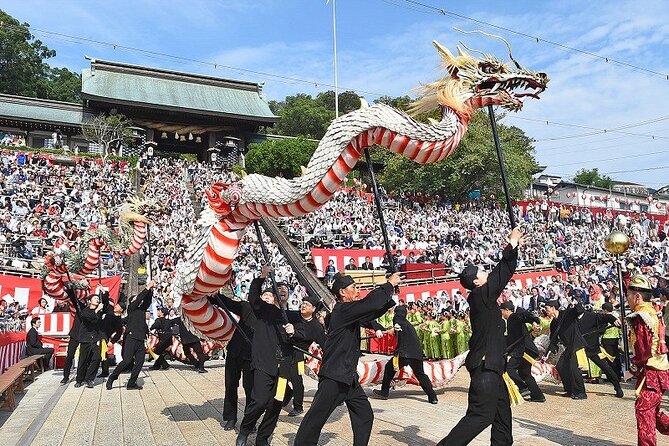
The Nagasaki Museum of History and Culture is a larger stop in terms of what it offers. It displays almost 50,000 items connected with the culture and heritage of Nagasaki, making it one of the most extensive museums of its kind in Japan.
The audio route assigns about 15 minutes, but that is more of an introduction than a full museum visit. If you enter, plan on spending extra time. The museum has enough material to reward a slower visit, especially if you want to connect the objects and displays with the other places on the walking route.
Admission is not included. The tour price covers the audio files and GPS map, not museum entry, food, drinks, or a physical guide.
This is the point where the tour can become flexible. You can follow the recording’s suggested pace, or you can pause the walk and make the museum a larger part of your day. I prefer the second option for anyone with a strong interest in local culture. The route gives you the framework, but the museum is likely to need more than a quick stop.
Sofukuji Temple and Chinese influence
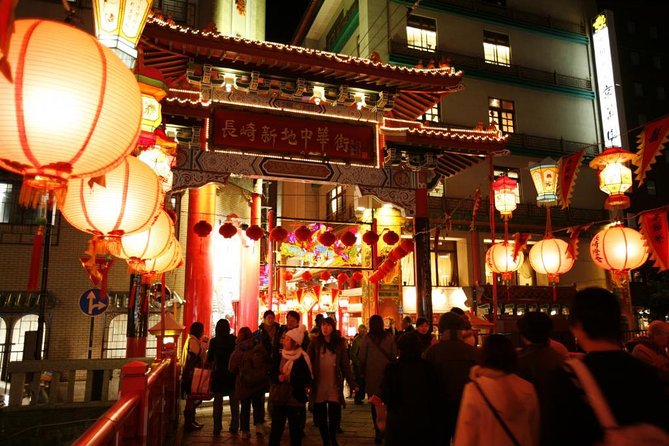
Sofukuji Temple offers a different architectural and cultural perspective. Although it is a Chinese temple, it is regarded as one of the best-preserved full examples of Ming Dynasty temple architecture, even when compared with Chinese temples in China itself.
That is a striking claim, and it makes this stop more than a quick photo break. Nagasaki’s international character was not limited to European visitors. Chinese connections also shaped the city, and Sofukuji gives you a visible reminder of that influence.
The tour allows around 15 minutes, with admission separate. As with Oura Church and the museum, you should be ready to pay an additional entrance fee if you want to go inside. The route description does not provide current ticket prices.
I would not rush this stop. Fifteen minutes may be enough to orient yourself, but the temple’s importance comes from its details and its place in the city’s wider story. The audio can point you in the right direction, while your own pace lets you appreciate the architecture.
Nagasaki Peace Park and the weight of the final stop
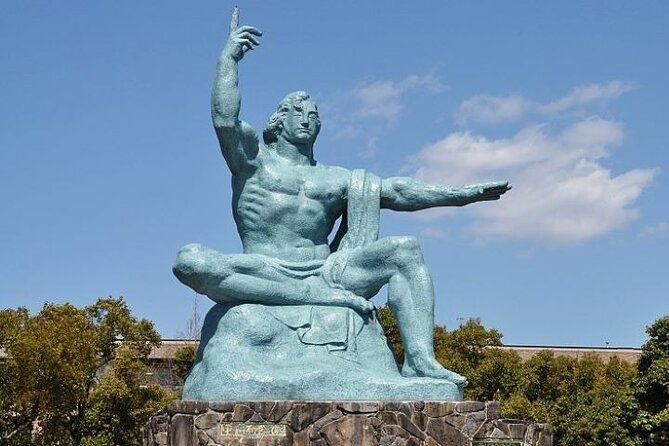
The final destination is Nagasaki Peace Park, located north of the atomic-bomb hypocenter. The park was designed as a plea for world peace and a hope that another war will never occur.
The tour’s tone changes here. Earlier stops focus on trade, religion, architecture, and culture. Peace Park asks you to confront the destructive power of nuclear weapons and the human cost of war. The route’s title promises a beautiful city, but this ending reminds you that Nagasaki’s beauty cannot be separated from its painful history.
The park itself is listed as free to enter. You should give it time and avoid treating it as a quick endpoint. The supplied route suggests about 15 minutes, but the subject deserves a slower, quieter visit if your schedule permits.
I appreciate ending here rather than beginning with the bombing. Starting among gardens and historic buildings allows you to see Nagasaki as a living city before reaching its most difficult chapter. You finish with a message about resilience and the city’s continuing hope for peace, not simply with a list of wartime facts.
How the self-guided audio format works
You receive audio files and a GPS map, then walk between the stops using your phone and headphones. There is no physical guide, and there are no specific group departure times despite the listed 9:00 a.m. start information. You decide when to begin, where to pause, and how long to stay.
That flexibility is the best reason to choose this format. You can start at the suggested point, Glover Garden, or choose another starting point according to your schedule. You can also finish somewhere other than Peace Park, although the route is designed to end there.
The main practical issue is preparation. Download the audio before you set out and have the files ready on your phone. One user had trouble getting the suggested links to open in the app and eventually found the material in the phone’s Files folder after spending hours trying to sort it out. That is a serious warning, not a minor technical quirk.
I would test the audio and map at your accommodation before leaving. Make sure you know which app or folder contains the files, and use headphones that let you hear the recording while remaining aware of your surroundings. The tour is small by design, with a maximum of 15 people, but because it is self-guided, you may not be walking as one organized group.
Physical effort, language, and daily planning
You should have a moderate level of physical fitness. The route is designed for walking, and the starting point at Glover Garden leads through several parts of Nagasaki before finishing at Peace Park. The information provided does not give an exact distance or detailed terrain notes, so you should allow extra time rather than race from stop to stop.
Public transportation is nearby, which helps with reaching the route and leaving it afterward. The tour is also suitable for service animals.
English is the only available language. That is important if you are choosing this for a mixed-language group. The commentary may work well for an English-speaking visitor who wants context without committing to a live guide, but it will not solve a language barrier for someone who does not understand English.
Start times are flexible in practice, even though 9:00 a.m. appears with the meeting information. The operator says there are no specific starting times because the tour is self-guided. Read the instructions on your ticket carefully, then download everything in advance.
Is $15.29 a fair price?
The price is reasonable if you want a structured route and audio commentary but do not need a person walking beside you. It is especially useful for solo visitors or couples who value independence. You pay once for the route, GPS map, and recordings, then decide how much time to spend at each attraction.
The value drops if you expect admission to be included. Oura Church, the Nagasaki Museum of History and Culture, and Sofukuji Temple list separate entrance fees. Food, drinks, and an audio device are also excluded, so your phone is essential.
I would compare the cost with your plans for the day. If you already intend to visit these places and feel comfortable researching the route yourself, the tour may add limited value. If you want a ready-made sequence that connects the sites with historical commentary, $15.29 is a modest fee for convenience.
The free cancellation policy also reduces the risk of booking early. You can receive a full refund if you cancel at least 24 hours before the local start time. Cancellations or changes inside that window are not refundable.
Who should book this Nagasaki walk?
I think this tour suits independent visitors who want structure without a fixed group. It works well for someone with two or three hours, an English-speaking phone, and enough energy for a city walk.
It is also a good fit for visitors who want more than the atomic-bomb story. The route gives equal attention to Nagasaki’s foreign merchants, Christian heritage, Chinese architecture, museum collections, and peace memorials.
I would be more cautious if you dislike phone-based tours or want immediate help when technology fails. The app problem described above can turn a low-cost walk into a frustrating morning. A live guide or a tour with a supplied device may be a better choice for you if technical setup is not your strength.
Families and mixed-age groups may appreciate the freedom to pause, but the route’s serious subject matter requires some preparation. Peace Park is not a casual final stop, and the history deserves respectful attention.
Should you book it?
Book this tour if you want an affordable English-language route that ties six important Nagasaki sights together and lets you move at your own speed. Its best feature is the connection between the city’s international past and its peace message.
Before booking, make sure you are comfortable downloading files, using a GPS map, and paying separate entrance fees. Test the audio before leaving your hotel. If the files work properly, this can be a useful, thoughtful way to understand Nagasaki on foot. If the setup fails, the lack of a physical guide leaves you on your own, which is the tour’s biggest weakness.
FAQ
Where does the tour begin?
The suggested starting point is Glover Garden at 8-1 Minamiyamatemachi, Nagasaki.
Where does the tour end?
The suggested ending point is Nagasaki Peace Park at 9 Matsuyamamachi, Nagasaki.
How long does the tour take?
The expected duration is about two to three hours.
Is the tour guided in person?
No. It is a self-guided audio tour with audio files and a GPS map. No physical guide is included.
Is the tour available in languages other than English?
No. The tour is available only in English.
Is the audio device included?
No. You need to use your own phone or audio device.
Are attraction admission fees included?
No. Admission fees are separate. Oura Church, the Nagasaki Museum of History and Culture, and Sofukuji Temple list admission as not included, while Glover Garden, Dejima, and Nagasaki Peace Park are listed as free stops.
Do I need to download the audio before starting?
Yes. You should download the files and make them ready before beginning the walk. Downloading instructions are provided in the Before You Go section of the ticket.
Can I choose my own starting time?
Yes. Since the tour is self-guided, you choose when to begin according to your schedule. The listing also shows 9:00 a.m. with the meeting information, so read your ticket instructions carefully.
Can I cancel for a full refund?
Yes, if you cancel at least 24 hours before the experience’s local start time. Cancellations or changes made less than 24 hours in advance are not refundable.
Just added around the world
- Coba Ruins: Self-Guided Walking Audio Tour in Mexico★ 3.5 · 2 reviews
- Self Guided Driving Audio Tour of Saguaro National Park★ 3.0 · 4 reviews
- Torino Walking Tour with Audio and Written Guide by a Local★ 4.5 · 35 reviews
- Self-Guided Audio Driving Tour of Mount Lemmon★ 5.0 · 4 reviews
- Trondheim’s Inner Circle: A Self-Guided Audio Tour★ 4.0 · 15 reviews
- A Tromsø Introduction: A Self-Guided Audio Tour★ 3.5 · 19 reviews
- Panorama Bus Tour with Audio Guide★ 4.0 · 3 reviews
- Saguaro National Park Self-Guided Audio Tour★ 3.5 · 11 reviews
Self-Guided Tours, compared.
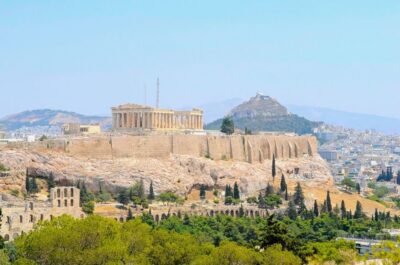
Acropolis Ticket & Optional Self-Guided Audio Tours
Read our review →

Ultimate Acadia National Park Self-Guided Driving Audio Tour
Read our review →

Santorini: Akrotiri Ticket with Optional Self-Guided Audios
Read our review →
Browse the lists this tour appears in