
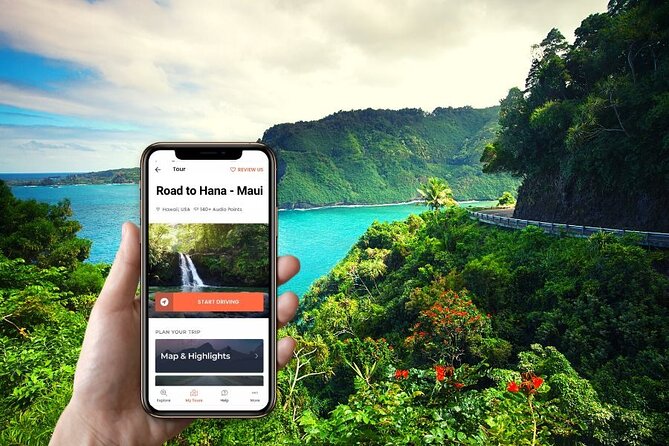
REVIEW · MAUI AUDIO TOURS
Self-Guided Audio Driving Tour in Road To Hana
The Road to Hana rewards a slow start. This GPS-based audio tour makes the winding drive easier to manage, with directions and commentary that begin automatically as you approach each point of interest. I especially like the freedom to stop for five minutes, stay for an hour, skip a place entirely, or return another day without losing access to the tour.
The price is another strong point. At $19.99 for an entire vehicle of up to eight people, it costs far less than a guided bus outing and still gives you cultural stories, practical advice, and route guidance. The main drawback is the setup process, which requires redeeming a code, downloading the GuideAlong app, and downloading the tour before you leave. That is simple for most people, but not quite as quick as pay and play.
- GPS-triggered commentary: Stories, directions, and stop advice play automatically as you drive.
- One purchase covers eight people: A useful bargain for families and groups sharing a rental car.
- 140 audio points: The tour covers major sights, optional stops, local tips, and stories for the return drive.
- Works without cell service: Download it before departure, then use it offline along the highway.
- Waiʻānapanapa requires advance planning: You need a timed reservation to enter the black sand beach park.
- Plan a full day: The route can take eight to sixteen hours, especially if you hike and stop often.
What the $19.99 Road to Hana tour really provides
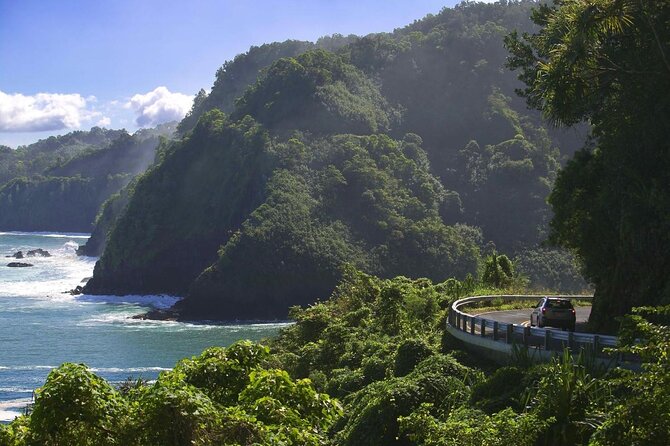
This is not a guided excursion with a driver. You rent the car, make the decisions, and handle the road yourself. The audio tour acts as a calm voice in the passenger seat, telling you what is coming up, where to turn, what a stop is known for, and how much time you might want to allow.
That distinction matters. You still need to pay attention to the road, manage one-lane bridges, and pull over safely before checking your phone. The app is there to support your drive, not replace good judgment.
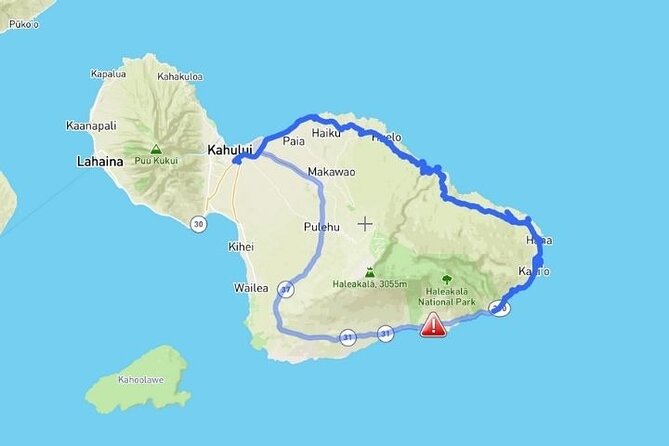
The tour covers about 140 points and can be started anywhere along the route. The commentary follows your GPS position, so you do not have to begin at one fixed meeting point. You can also pause and resume the route, which is useful if you are staying in Hana or planning the drive over more than one day.
The narration is one of the most praised parts of the experience. It combines directions with Hawaiian history, local traditions, jokes, food suggestions, and small stops that are easy to miss. Several people found the voice friendly and personal, with some affectionately calling the narrator Uncle George. That informal tone helps during a long day of curves and bridges.
Begin early, then let the highway set the pace

The Road to Hana is not a short scenic loop. The suggested duration is eight to sixteen hours, and that range makes sense. You can drive the main route in less time, but the point is to stop for waterfalls, beaches, short walks, fruit stands, and views.
An early departure is good advice. One audio-tour user suggested leaving by 8 a.m. at the latest, especially if you want time for the Pipiwai Trail and a safe return before dark. The road is much less enjoyable when you are rushing, and driving it in darkness makes the curves and narrow sections harder to handle.
The app lets you create your own schedule, but its trip planners also offer half-day, full-day, and multi-day suggestions. I would use those planners before departure. Decide in advance which stops matter most, then treat the rest as optional. Otherwise, every waterfall can begin to feel like a command rather than a choice.
More Self-Guided Audio Tours in the USA
- Gettysburg Battlefield Self-Guided Driving Audio Tour
★ 4.5 · 910 reviews - Joshua Tree National Park Self-Guided Driving Audio Tour
★ 4.5 · 762 reviews - Ultimate Acadia National Park Self-Guided Driving Audio Tour
★ 4.0 · 521 reviews
Ho‘okipa and Twin Falls: an easy first taste of Maui’s east coast
Ho‘okipa is a strong early stop for a quick view of the coast. It is known for powerful wind and world-class windsurfers, not for swimming. The currents and wind make the beach unsuitable for a casual swim, but the overlook gives you a good place to watch the action.
Turtles may rest at the far right side of the beach. Give them plenty of room, and never touch them. Restrooms, showers, and picnic areas add practical value, especially at the start of a long day.
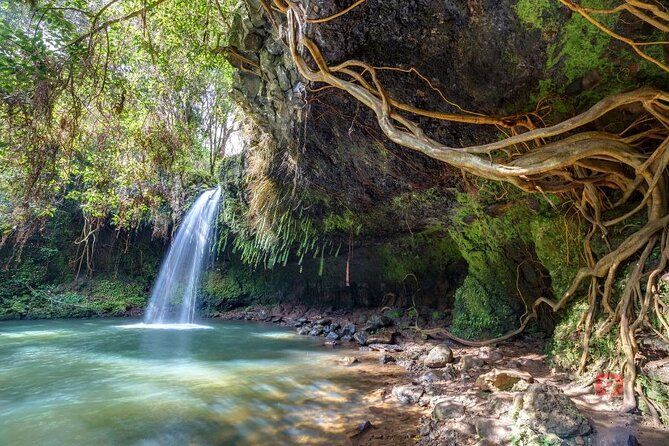
Twin Falls is often the first place where you will want to leave the car for a proper walk. The trail offers bamboo, stream crossings, and picturesque falls, with options for a shorter or longer outing. Expect mud, particularly after wet weather, and wear shoes that can handle an uneven trail.
The farmstand is useful for breakfast or a tropical fruit smoothie. This is exactly the sort of small practical detail an audio guide can add. You do not just hear that a stop exists. You get a better idea of how it fits into the day.
Ke‘anae Arboretum and Ke‘anae Point: plants, taro, and rough water
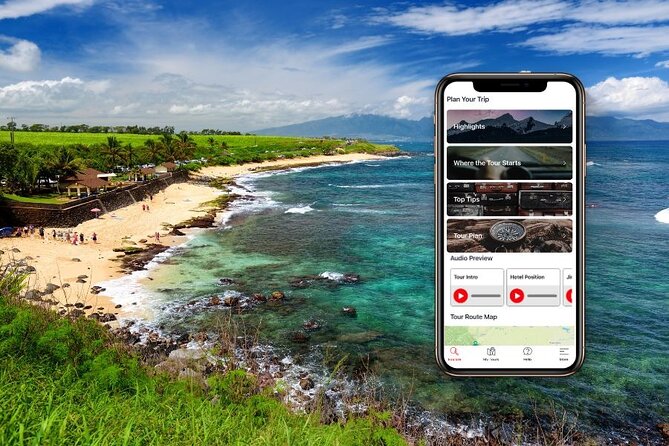
The Ke‘anae Arboretum is free and easy to visit. You can see much of it in less than half an hour, though allowing about an hour gives you time for photographs and the walk beside Pi‘inaau Stream.
The main attraction is the collection of tropical plants, including golden-stemmed bamboo, ginger, papaya, and hibiscus. The rainbow eucalyptus trees are the visual prize. Their multicolored bark can look almost painted, and the trees are a good reason to keep this stop on your plan.
Continue along the trail if you want more than a quick photo. Ancient Hawaiian terraces used for taro cultivation give the area a stronger sense of place than a simple roadside viewpoint. The audio commentary helps explain why the land matters, rather than treating it as just another scenic stop.
Ke‘anae Point has a different mood. The flat peninsula reaches into the sea on land formed by volcanic lava from Haleakalā. Waves strike the sharp coastal rocks, and the setting feels exposed and dramatic.
Look for the small church built from coral and lava rock. It is more than 150 years old and provides a quiet human detail among the coastal views. Allow about 20 minutes, though you may want longer if the surf is active. The area is also tied to taro farming and Hawaiian stories, which makes the narration especially useful here.
Upper Waikani Falls and the short waterfall stops
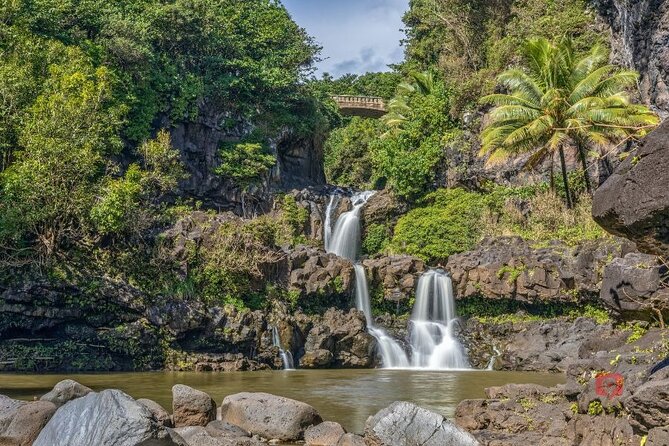
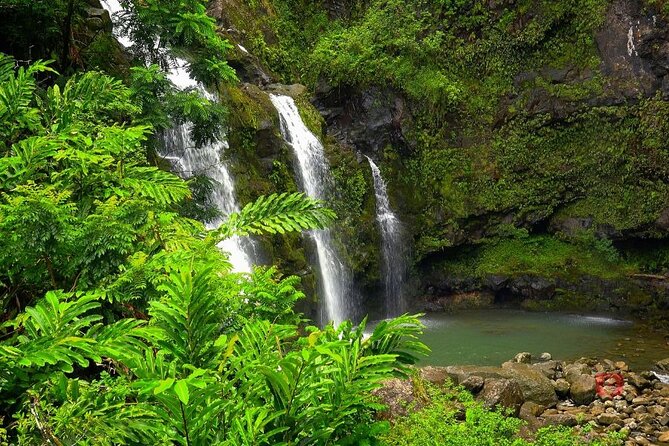
Upper Waikani Falls is also called Three Bears Falls. The name comes from the way the water changes. After heavy rain, the falls may appear as one thick stream. With less water, three separate streams create a large, medium, and small fall.
The stop itself may take only about 20 minutes, but conditions matter. Water flow changes the appearance, and roadside viewing can be brief. The audio guide helps you know when to look and what the nickname means, so you are less likely to pass the falls without understanding what you saw.
You will encounter many possible waterfall stops along the road. The smart approach is to avoid trying to visit every one. Choose a few that fit your time and energy, then keep moving. The app gives you permission to skip stops without losing the overall route.
More Driving Audio Tours in the USA:
- Ultimate Lake Tahoe Self-Guided Driving Audio Tour
★ 4.5 · 435 reviews - Scenic Newport, RI Self-Guided Driving Audio Tour
★ 4.5 · 325 reviews - Arches National Park Self-Guided Driving Audio Tour
★ 4.5 · 288 reviews - Yellowstone National Park Self-Guided Driving Audio Tour
★ 4.5 · 249 reviews
Hana Lava Tube: a short adventure with an easy escape
The Hana Lava Tube is Maui’s most accessible lava tube and offers a change from waterfalls and ocean views. You can enter only as far as you feel comfortable. If enclosed spaces make you uneasy, you do not need to go all the way inside.
That flexibility makes it a reasonable stop for mixed groups. Some people can explore while others wait nearby. Admission is not included, so check the current entry cost when planning your day.
This is also a good example of the tour’s value. A regular map may show a cave, but the audio commentary gives you a reason to consider it and helps you decide if it fits your interests.
Koki Beach and Hamoa Beach near Hana
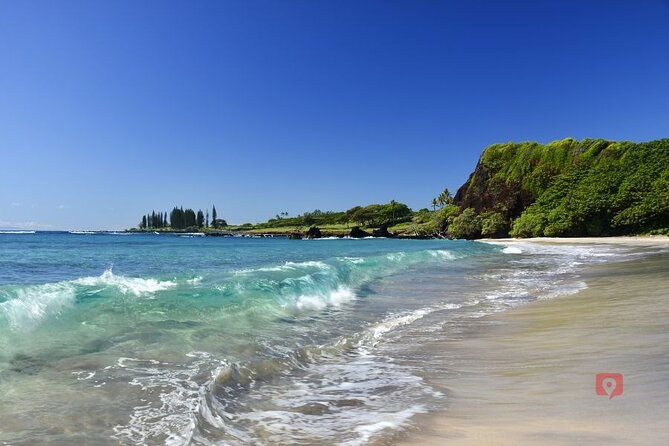
Koki Beach offers a striking view of Alau Island, an offshore cinder cone about a quarter mile from shore. The site also connects with Hawaiian legends involving Pele, the goddess of volcanoes, and the demigod Maui.
You can reach the Koki and Hamoa area from the same turnoff. Koki is more about the view and the story, while Hamoa is a useful place to stretch your legs, cool off, or rest under a tree.
Hamoa Beach is a crescent of sand with public bathrooms and showers. There are no lifeguards, so swimming depends on conditions and requires close attention, especially with children. When the water is calm, it can be a pleasant break, but do not treat the beach facilities as a guarantee of safe swimming.
The timing works well here. After hours of driving, Hamoa gives you a place to pause before deciding how much farther you want to go.
Waiʻānapanapa State Park and the black sand beach
Waiʻānapanapa State Park is one of the most important stops on the route. The black sand beach is the headline attraction, but the park also includes volcanic coastline, a sea arch, and a blowhole.
Allow about two hours if you want to explore rather than take one photograph and leave. Follow the signs along the shore and give yourself time to look at the different volcanic formations.
There is one major practical warning: advance reservations are required for entry. The park admission is not included in the audio tour price, and buying the audio tour does not reserve your time. If you fail to arrange entry, you may have to admire the park from the outside.
This stop is a good reason to plan before you leave Maui’s main resort areas. Several people specifically wished the need for a permit or timed entry had been made more prominent. Take that advice seriously. Check the reservation requirement before building your day around the black sand beach.
Pipiwai Trail and the long return drive
At the far end of the route, the Pipiwai Trail is the major hiking choice. It is in the Kīpahulu area of Haleakalā National Park, so you need an NPS pass or must buy one on arrival.
The full trail is a four-mile loop with about 650 feet of elevation gain. It is rated moderate, but heat and humidity can make it feel harder. Allow at least two hours, and more if you walk slowly or stop often.
Along the way, you may reach views of Makihiku Falls. If the climb is tiring, that is a sensible place to turn around. Continuing leads into bamboo forest and eventually to Waimoku Falls, the trail’s farthest point and main reward.
The itinerary lists this stop at two minutes, but the actual hike is expected to take two or more hours. Treat the hike as a major time commitment, not a quick add-on. Arriving by about 2 p.m. gives you more room to walk and still drive back, but an earlier arrival is better if you want a relaxed day.
The return journey is another strength of the audio tour. The commentary does not simply repeat every story from the outward drive. It provides additional oral history and fresh observations, which helps make the long return feel like part of the experience.
Why offline GPS guidance matters here
Cell service can be limited along parts of the Road to Hana. The tour is designed to work after you download it, using your phone’s GPS rather than a live internet connection. That is important because you cannot rely on a map loading at every bend.
Download the app and the tour over Wi-Fi or cellular data before setting out. You receive an email and text with instructions, then sign in with your preferred Apple or Google account and redeem the voucher code. The only serious setup complaint in the feedback involved trouble finding the actual tour after downloading the apps, so give yourself time to test it before departure.
Bring a fully charged phone and a USB car charger. Sound connection also matters, so check how your phone will play through the vehicle before you begin. Keep the phone mounted or handled by a passenger, and let the narrator do the searching.
Who gets the best value from this tour?
I would recommend it most strongly to independent drivers who want guidance without joining a bus. It works well for couples, families, solo drivers with a passenger handling the phone, and groups sharing one rental car.
The price is particularly good for a group of up to eight. Even a couple pays less than many live guided options, while a full vehicle can split the cost into almost nothing per person. You also keep control of your stops and do not have to follow a guide’s fixed timetable.
It is less suitable for someone who wants a completely effortless day. You still need to reserve Waiʻānapanapa, pay park or attraction fees, choose your stops, handle the driving, and watch the clock. The audio guide reduces guesswork, but it does not remove the demands of the road.
The tour is available in English only. It has no expiry date and includes free updates, so you can buy it before your trip, change your driving day, or use it on a later visit.
Should you book the Road to Hana audio tour?
Book it if you plan to drive yourself. The GPS timing, offline operation, cultural commentary, and practical stop advice give you much more than a standard navigation app. At $19.99 per vehicle, the cost is low enough that the main risk is technical setup, not financial loss.
Download and test it before the morning of your drive. Reserve Waiʻānapanapa separately, start early, carry water and suitable shoes, and accept that you will not see every stop in one day. If you want the freedom of a private itinerary with a friendly voice guiding the way, this is one of the better-value tools for the Road to Hana.
FAQ
How much does the self-guided Road to Hana audio tour cost?
The tour costs $19.99 per group, and one purchase covers up to eight people in the vehicle.
How long does the Road to Hana audio tour take?
The suggested duration is approximately eight to sixteen hours. Your total time depends on how many stops you choose, how long you hike, and your return plans.
Can I start the tour at any point along the Road to Hana?
Yes. The audio commentary is location-based, so you can begin and end anywhere along the tour route.
Does the tour require cell service?
No. Download the GuideAlong app and the tour before departure. Once downloaded, the audio uses your phone’s GPS and works without internet or cellular service.
Is admission included for Waiʻānapanapa State Park?
No. Park admission is not included, and timed reservations are required for entry.
Do I need to pay for Haleakalā National Park at the Pipiwai Trail?
Yes. You need to show an NPS pass or purchase one on arrival. The pass is not included in the audio tour price.
Is the tour available in languages besides English?
No. The tour is offered in English.
Can I cancel for a full refund?
Yes, if you cancel at least 24 hours before the experience start time. Cancellations made within 24 hours are not refunded, and changes within that period are not accepted.
Just added around the USA
- Self Guided Driving Audio Tour of Saguaro National Park★ 3.0 · 4 reviews
- Self-Guided Audio Driving Tour of Mount Lemmon★ 5.0 · 4 reviews
- Saguaro National Park Self-Guided Audio Tour★ 3.5 · 11 reviews
- A Self Guided Audio Tour in Tombstone★ 4.0 · 11 reviews
- Catskills Scenic Byway Self-Guided Driving Audio Tour★ 4.0 · 9 reviews
- Big Bend National Park Self Guided Audio Tour Guide★ 5.0 · 12 reviews
- Self-Guided Audio Driving Tour in Catskills Scenic Byway★ 4.5 · 7 reviews
- Shiloh Battlefield Self-Guided Driving Audio Tour★ 4.0 · 9 reviews
Driving Audio Tours, compared.



Ultimate Acadia National Park Self-Guided Driving Audio Tour
Read our review →



Browse the lists this tour appears in