
REVIEW · MADRID AUDIO TOURS
Manzanares River’s Story: A Self-Guided Audio Tour in Madrid
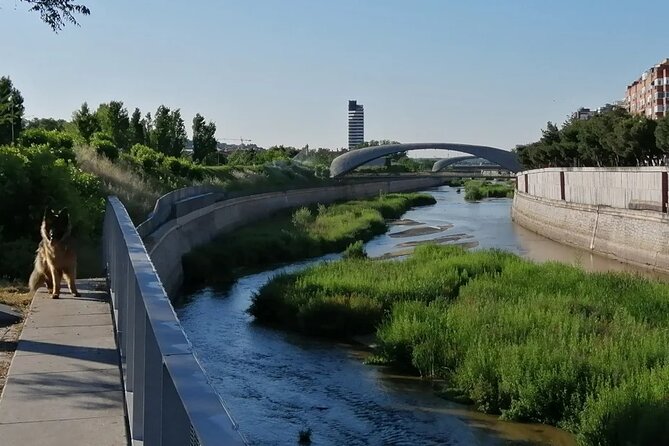
Rivers tell Madrid’s oldest stories. This inexpensive audio walk follows the Manzanares from the former industrial area of Matadero Madrid through Madrid Rio Park to Toledo Bridge. I like the mix of urban culture and open parkland, along with the unusual stories of woolly mammoths, meat markets, washerwomen, and Madrid’s patron saint. The route also points out less familiar sights, including the Obelisco de la Castellana and Arganzuela Footbridge.
I also like the freedom of a self-guided tour. You can pause for a drink at Cafe Rio, rest beside the river, and continue when ready. The main drawback is the length: an hour to an hour and 15 minutes may feel like a long walk if you have limited fitness, and the starting point near the water tower can be confusing.
The $7.99 price is fair for lifetime access to an English audio tour, maps, and route data. You will need your own smartphone and headphones, and the experience does not include entry to museums, cultural sites, food, drinks, or transport.
Key points to know before you go

- The walk ends at Toledo Bridge: The final stop is beside statues of San Isidro and Santa Maria, not back at the starting point.
- Matadero Madrid sets the tone: The route begins near a former slaughterhouse and market now used as a cultural centre.
- Madrid Rio Park is the main event: Much of the experience is an easy-to-follow riverside promenade through one of Madrid’s newer public spaces.
- The route covers unusual history: Expect stories about woolly mammoths, washerwomen, meat markets, and 300,000 years of local history.
- The start can be hard to find: Go to the water tower, and remember the entrance is not through a gate, according to practical advice from the experience provider.
- You can stop and resume: The VoiceMap app works offline, so you can take a break at Cafe Rio or in the park without losing the route.
Why the Manzanares River makes a good Madrid walk
Madrid is often sold through its grand museums, royal buildings, and central squares. This walk takes a different route. It uses the Manzanares River as a thread through the southern part of the city, connecting public parks, old working areas, monuments, and local legends.
The river itself is not just scenery. The audio explains how the area reflects roughly 300,000 years of human history. That gives the walk a wider frame than a simple park stroll. You are not only looking at trees, paths, and bridges. You are hearing how people worked, washed clothes, traded meat, and built a city around this part of Madrid.
I like that the subject matter is varied. A story about woolly mammoths has a very different feel from one about washerwomen or San Isidro. That variety helps keep the route from becoming a long string of dates and names.
Still, the historical detail depends on the audio holding your attention. If you prefer a guide who responds to questions or points out details in real time, this format may feel limited. The route gives you information, but you set the pace and manage the experience yourself.
More Self-Guided Audio Tours in Spain
- Madrid: El Retiro Park Self-Guided Audio Tour
★ 3.8 · 134 reviews - Madrid Self-Guided Audio Tour
★ 3.0 · 11 reviews - Self-Guided Audio Tour – Ghosts of Madrid: History and terror
★ 3.5 · 9 reviews
Starting near the Antiguo Depósito de Agua
The walk begins beside the Antiguo Depósito de Agua, an old water tower. The listed meeting point is M-612, 1, El Pardo, 28048 Madrid, Spain. The practical directions deserve attention because the start is not immediately obvious.
The entrance is not through a gate. You should go to the water tower, or walk past the gate and around the corner to the right. That small detail could save you from wasting time at the beginning, especially if you arrive expecting a clear tour meeting place.
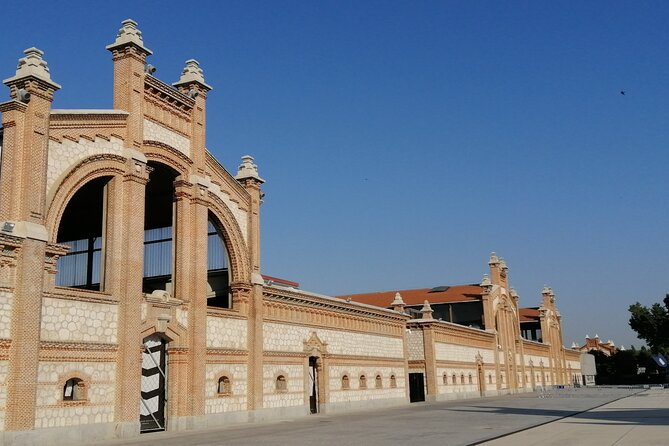
The route information also places the opening section at Matadero Madrid, an old slaughterhouse and market that has been converted into a cultural centre. This is one of the most interesting aspects of the walk. Matadero gives you a direct link between Madrid’s working past and its current cultural life.
You should allow a little extra time to get your bearings before pressing play. Since this is a private, self-guided activity, there is no guide waiting to gather the group or correct a wrong turn. The app supplies maps and location data, but you still need to watch the route and follow the instructions.
Matadero Madrid and the city’s working past
Matadero Madrid is a strong opening because it is not a polished royal monument. Its earlier purpose was practical and industrial. Meat was processed and sold here, and the site now serves a very different role as a cultural centre.
The audio links this setting with stories of meat markets and washerwomen. That connection helps explain how the Manzanares area supported everyday life. The river was not simply a pleasant backdrop. It was part of the city’s work, trade, washing, and movement.
You are not guided inside museums or attractions along the way. If you decide to enter Matadero Madrid or another cultural site, you pay separately. That is important to remember when planning the hour. The $7.99 covers the audio route, not admission to anything you may see on the walk.
For me, the value of this section comes from the contrast. You begin with a former industrial complex, then move toward a long green corridor beside the river. The story feels more grounded than a standard central Madrid sightseeing route.
Madrid Rio Park turns the route into a real stroll
The walk then follows Madrid Rio Park, which winds through the southern part of the city like a green ribbon. It is one of Madrid’s newer public spaces and gives the experience room to breathe.
This is the point where the tour becomes more than an audio history lesson. You promenade beside the river, pass through parkland, and listen while the city changes around you. The setting should appeal to you if you want a slower hour away from Madrid’s most crowded central sights.
The park is also very large. That is part of its appeal, but it explains why the route can feel long. One person found the walk beautiful but too demanding for their fitness level. I would take that comment seriously if you are not comfortable walking for an hour, or if you have already spent the day on your feet.
The route is not a race. You can pause at Cafe Rio for refreshments or stop in the park to rest. The VoiceMap app lets you resume the tour when you are ready. That flexibility makes the walk more manageable, but it does not change the total distance.
More Self-Guided Audio Tours in Madrid:
- Self-Guided Audio Tour – Cervantes Literary Experience in Madrid
★ 4.0 · 6 reviews - Self Guided Tours Madrid With 100 Captivating Audio Stories
★ 5.0 · 2 reviews - Athens: Acropolis Ticket & Optional Self-Guided Audio Tours
★ 4.1 · 2,542 reviews - Gettysburg Battlefield Self-Guided Driving Audio Tour
★ 4.5 · 910 reviews
Obelisco de la Castellana and Arganzuela Footbridge
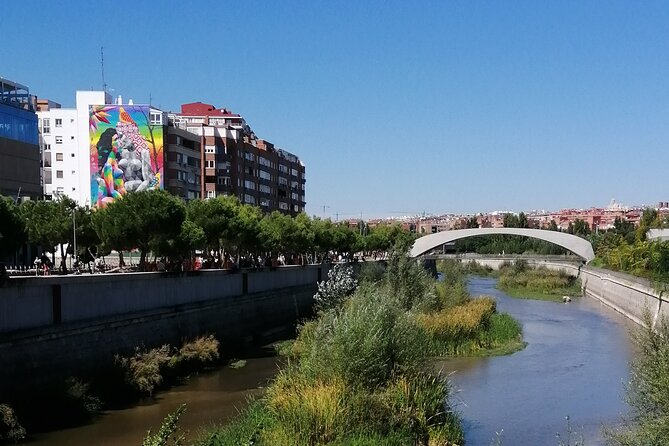
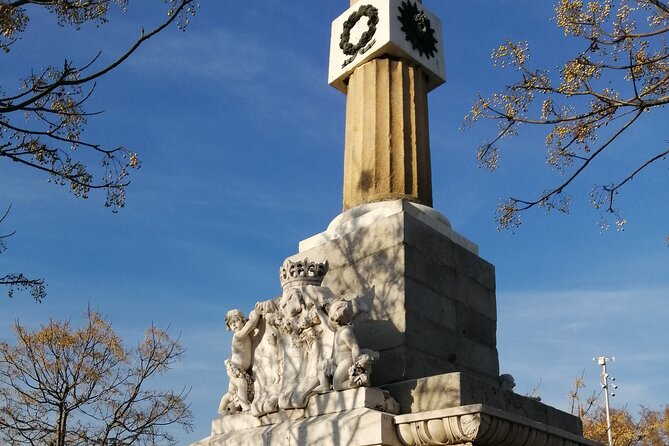
The audio points out two lesser-known landmarks: the Obelisco de la Castellana, also called the Obelisk of the Arganzuela, and the Arganzuela Footbridge.
These stops give the walk some visual punctuation. Without them, a riverside route could blur into a continuous sequence of paths and trees. The monuments help you notice how Madrid has shaped and decorated its river corridor.
The Arganzuela Footbridge is especially useful as a pause in the route. Its name may sound unfamiliar if you have focused your Madrid sightseeing around the historic centre, which is exactly why this audio tour can add something new to a return visit.
The experience does not promise a formal guided visit inside any attraction. Think of these places as points of interest along the route. You hear their story, see them in context, and decide how long to stop.
Stories of mammoths, washerwomen, and San Isidro
The unusual stories are the tour’s strongest feature. The audio reaches far beyond modern park design and explains the area’s long past, including tales of woolly mammoths and a history stretching back about 300,000 years.
That kind of subject matter works well on a walk. You can look at the river while hearing about the people and animals connected to it over time. The result is less predictable than a tour focused only on buildings and famous names.
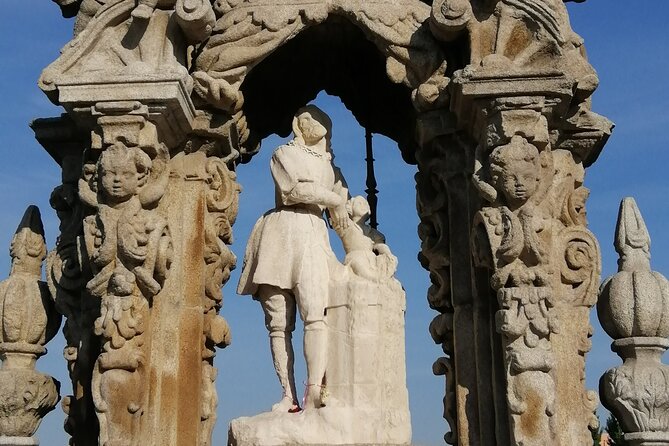
The route also introduces San Isidro, Madrid’s patron saint, who is associated with more than 400 miracles. His wife, Santa Maria, is part of the story as well. These figures bring local religious tradition into the final part of the walk.
I appreciate that the tour includes ordinary workers and local legends in the same route. Meat sellers, washerwomen, prehistoric animals, saints, bridges, and public parks all belong to different chapters of Madrid. That makes the audio feel broad without requiring a full day.
The one caution is that the content may not satisfy you if you want dense historical commentary at every step. One piece of feedback found the information less interesting than expected. The route’s appeal is strongest if you enjoy short stories and local context rather than an academic lecture.
Reaching Toledo Bridge and the San Isidro statues
The walk finishes at Toledo Bridge, also called Puente de Toledo, in Carabanchel. The endpoint is beside statues of San Isidro and Santa Maria.
This is a useful ending because the bridge provides a clear final landmark. You do not finish in an anonymous stretch of park. You end with a direct connection to Madrid’s religious and local identity.
You should plan your next move before starting. The tour is one-way, and transportation is not included. Since it does not return you to the water tower, you will need to arrange your onward transport independently.
The route takes about one hour to one hour and 15 minutes. That estimate includes a fairly direct walk, but your own time will vary if you pause for coffee, rest in the park, or spend longer at Matadero and the landmarks.
What the $7.99 price really buys you
At $7.99 per person, this is a low-cost way to add a focused walk to a Madrid visit. You receive lifetime access in English, the VoiceMap app for Android and iOS, and offline access to the audio, maps, and location data.
The offline feature matters. You do not have to rely on a steady mobile connection while following the river. You still need to download or prepare the tour in the app and bring a charged smartphone, along with headphones.
The price is less attractive if you expect a live guide, transport, or admission to Matadero Madrid and other attractions. None of those are included. You are paying for the route and narration, not a complete half-day outing.
For me, the strongest value comes from the freedom to use it more than once. Lifetime access means you can pause, return to the route, or listen again later. That is useful if you want to break the walk into sections, though the experience itself is designed as a single outing.
Who will enjoy this self-guided route
I would recommend this experience to you if you like local history, open-air walking, and the ability to set your own pace. It is also a smart choice if you have already seen Madrid’s central highlights and want a different side of the city.
It suits independent visitors who are comfortable using a phone for directions. You need to find the starting point yourself, follow the map, and manage breaks without a guide.
It may not suit you if you want a short, tightly packed sightseeing stop. The route is longer than its $7.99 price might suggest, and the park section can be tiring. It is also not ideal if you want to enter cultural attractions along the way, since admission is separate and there is no guided visit inside them.
The experience is private because only your own group participates. That gives you control over the pace and volume, but it also means you cannot ask a guide to explain a confusing point or lead you back if you lose the route.
Practical advice for a smoother walk
Bring headphones, a charged smartphone, and water. Food and drinks are not included, though Cafe Rio offers a place to stop for refreshments along the route.
Wear shoes suited to a walk of at least an hour. The distance may feel easy to one person and tiring to another, so I would avoid scheduling it after a packed day of museums unless you are happy to take breaks.
Start by locating the water tower rather than searching for a conventional tour gate. The directions around the meeting point can be confusing, and finding the correct spot is the one part of the experience that deserves extra preparation.
Download the audio, maps, and route data before you set off. Offline access is included, and using it should make the walk less dependent on your phone signal.
Finally, leave room for stops. The route works best when you treat it as a flexible promenade, not a timed march from one marker to the next.
Should you book the Manzanares River audio tour?
Book it if you want a low-cost, English-language walk through a less familiar part of Madrid, and if stories about working life, saints, prehistoric animals, and public parks appeal to you. The mix of Matadero Madrid, Madrid Rio Park, unusual monuments, and Toledo Bridge gives the hour a clear shape.
Skip it if you dislike long walks, need a live guide, or expect museum entry and transport to be included. The starting point requires care, and the one-way route demands some planning.
For most independent visitors, the $7.99 price makes this an easy addition to a Madrid itinerary. Just arrive prepared for the confusing start and give yourself permission to stop along the river.
FAQ
How long does the Manzanares River audio tour take?
The tour takes approximately one hour to one hour and 15 minutes. Breaks at the park or Cafe Rio can make your total outing longer.
Where does the tour start?
It starts beside the Antiguo Depósito de Agua, with the listed address M-612, 1, El Pardo, 28048 Madrid, Spain.
Where does the tour end?
The tour ends on Toledo Bridge, or Puente de Toledo, in Carabanchel. The endpoint is beside the statues of San Isidro and Santa Maria.
Is the tour guided in person?
No. It is a self-guided audio tour using the VoiceMap app. Only your own group participates.
What language is available?
The tour is offered in English.
Is transport included?
No. Transportation is not included, and the route does not return you to the starting point.
Do I need to bring a smartphone and headphones?
Yes. A smartphone and headphones are not included, so you need to bring your own.
Can I enter Matadero Madrid or other attractions during the tour?
You can choose to enter attractions mentioned along the route, but the tour does not guide you inside them. Any admission cost must be paid separately.
Just added around Madrid
- Self-Guided Audio Tour – Cervantes Literary Experience in Madrid★ 4.0 · 6 reviews
- Self-Guided Audio Tour – Ghosts of Madrid: History and terror★ 3.5 · 9 reviews
- Self Guided Tours Madrid With 100 Captivating Audio Stories★ 5.0 · 2 reviews
- Royal Palace of Madrid Entry Ticket with Audioguide★ 3.0 · 68 reviews
- Skip-the-line entrance to the Prado Museum with Digital Audio Guide★ 3.0 · 91 reviews
- Madrid National Archaeological Museum with Audio Tour★ 4.5 · 11 reviews
- Madrid Las Ventas Bullring and Museum Tour with Audio Guide★ 4.5 · 8 reviews
- Madrid Self-Guided Audio Tour★ 3.0 · 11 reviews
Self-Guided Tours, compared.

Acropolis Ticket & Optional Self-Guided Audio Tours
Read our review →


Ultimate Acadia National Park Self-Guided Driving Audio Tour
Read our review →

Santorini: Akrotiri Ticket with Optional Self-Guided Audios
Read our review →
Browse the lists this tour appears in