
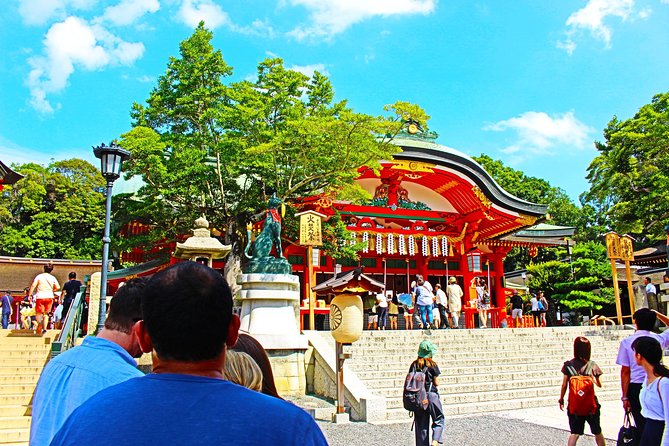
REVIEW · JAPAN AUDIO TOURS
Fushimi Inari Shrine: Explore the 1,000 Torii Gates on an audio walking tour
The gates tell only half the story. This self-guided audio walk gives you a clearer way to understand Fushimi Inari Shrine, from fox statues and Shinto hand-washing rituals to the famous Senbon Torii, or thousand torii gates. I like the easy pace and the chance to pause whenever you want. I also like that the tour points out small details many people pass without noticing. The main drawback is simple: you need your own charged smartphone, headphones, and a little preparation before arriving.
At $5.99 per person, this is a modest add-on for one of Kyoto’s most photographed sights. It lasts about 45 minutes to an hour, though you can keep walking after the official ending. Download the audio, map, and route before you reach the shrine, since one user specifically found that preparation made the experience much smoother.
Key points to know before you go

- Starts beside Inari Station: Find the fox statue at the entrance to Fushimi Inari Taisha Shrine.
- Explains the rituals: Learn how hand-washing works and why fox figures appear throughout the shrine.
- Uses the famous Senbon Torii: The route takes you through the bright red gate corridor that fills most visitors’ photo collections.
- Includes quieter details: The Okusha shrine, Root up Pine Tree, and Kumataka Shrine add more depth beyond the main entrance.
- Works at your pace: Audio, maps, and geodata are available offline through the VoiceMap app.
- Ends near a pond: The route finishes at Kumataka Shrine, where you can pause or continue exploring.
Why an audio tour helps at Fushimi Inari
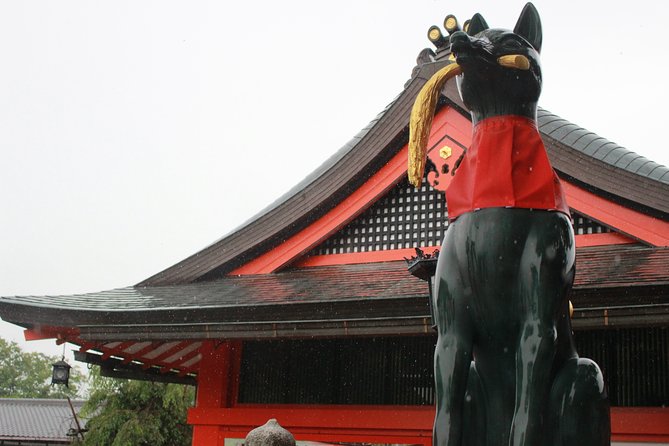
Fushimi Inari is easy to visit and surprisingly easy to misunderstand. You can arrive by train, follow the crowds, walk through red gates, take photographs, and leave without knowing what the statues, gestures, and offerings mean.
That is where this tour earns its small price. Instead of simply guiding you uphill, it gives you a story to follow. The audio explains Shinto beliefs and rituals while you move between the shrine buildings and forest paths. You are not tied to a guide’s schedule, and you do not need to stay with a group.
I especially like the self-guided setup for Fushimi Inari. The shrine attracts large numbers of people, but everyone moves at a different speed. You might want to stop for photographs at one gate, listen again to a point about a ritual, or take a short rest. The app lets you do that without holding anyone up.
The tour is listed as a private activity because only your group participates, but this does not mean a personal guide is walking with you. It is an audio tour delivered through the VoiceMap app. That distinction matters if you are hoping to ask questions in real time.
More Audio Walking Tours in the world:
- Sofia: City Monuments Guided Walking Tour with Audio Guide
★ 4.5 · 825 reviews - Florence: 2.5 hour Audio Guided Walking Tour led by Host
★ 4.6 · 293 reviews - Self Guided Classic Freedom Trail Location Aware (GPS) Walking Audio Tour
★ 4.5 · 258 reviews
Finding the fox statue at Inari Station
The route begins opposite Inari Station, in front of a fox statue at the entrance to Fushimi Inari Taisha Shrine. This is a useful starting point because the station places you close to the shrine complex, and the meeting point gives you a clear visual marker.
Foxes are central to the shrine’s identity. The tour uses the statues as an early lesson in the beliefs connected with Fushimi Inari. You will see fox figures in several parts of the shrine, and the audio helps explain why they appear here.
Starting near the station also makes this easy to fit into a Kyoto day. You do not need separate transportation during the walk, and the experience is close to public transportation. The published opening hours cover all day, every day, so the audio route can fit around your plans.
Still, do not treat the all-day hours as a promise that every visit will feel equally calm. The experience is built around an active shrine visited by many people. If you want the easiest listening conditions, arrive with your phone ready and avoid trying to manage downloads at the entrance.
Learning how a Shinto shrine works
The second stop begins the explanation of the shrine itself. This is an important transition. The first stop introduces the fox imagery, while the next gives you the broader meaning behind the place and its religious practices.
I like this order because it keeps the information connected to what you are seeing. You are not listening to a long history lecture before reaching anything interesting. Instead, the audio points your attention toward features already around you.
The shrine has influenced people’s lives for more than 1,300 years, according to the tour description. The experience uses that long span to explain why Fushimi Inari is more than a pretty corridor of gates. You begin to see the shrine as a living place of belief, prayer, and repeated ritual.
The information is best suited to visitors who want context without committing to a full guided day. At 45 minutes to an hour, the route gives you a focused introduction rather than an exhaustive study of every corner of the complex.
Hand Water, a small ritual with purpose
One stop covers a ritual called Hand Water. This is the kind of detail many people notice but do not understand. The audio gives you a way to connect the physical action with the shrine’s religious customs.
The value here is practical as well as cultural. When you encounter a ritual at a Japanese shrine, you may not be sure what to do or why it matters. The tour does not merely point out the water area. It explains its place within the visit.
You should still pay attention to the people around you and follow any posted instructions. The audio can provide background, but it does not replace the shrine’s own signs or local customs. Keep your listening volume low enough to remain aware of your surroundings.
A few more audio tours around the world worth a look
- Barcelona: Sagrada Familia Entry Ticket with Audio Guide
★ 4.6 · 105,312 reviews - Rome: Pantheon Fast-Track Ticket and Official Audioguide
★ 4.5 · 27,353 reviews - Barcelona: Casa Batlló Entry with Self-Audioguide Tour
★ 4.7 · 25,359 reviews - Rome: Colosseum & Forum with Audio Guide App -Optional Arena
★ 4.2 · 24,770 reviews
The main hall and the idea of wabi-sabi

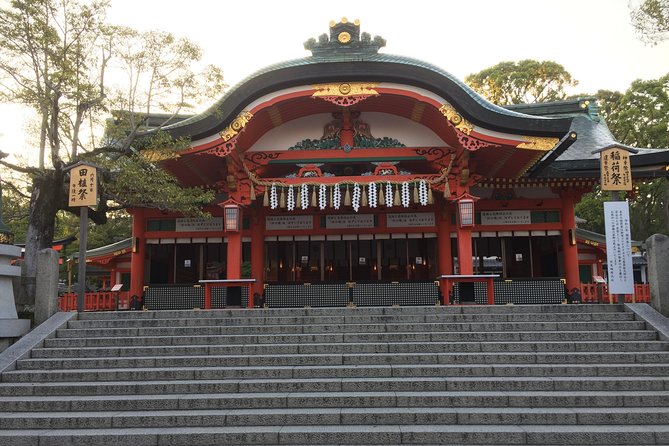
The route pauses at the beautiful main hall, giving you a chance to take in one of the shrine’s most important buildings. This is a natural place to stop the audio briefly if you want photographs or a quiet look.
After that, the tour introduces wabi-sabi. The idea is associated with beauty in simplicity, age, and imperfection. At Fushimi Inari, this subject gives you a different way to look at the shrine. The experience is not only about the strong color of the torii gates. It also asks you to notice atmosphere, texture, weathering, and the calm forest setting.
That makes the tour more thoughtful than a basic point-to-point recording. You are encouraged to look beyond the most obvious image. The drawback is that an audio explanation can only do so much. If you prefer a detailed art or religious history discussion, this short walk may feel introductory.
Walking through the Senbon Torii
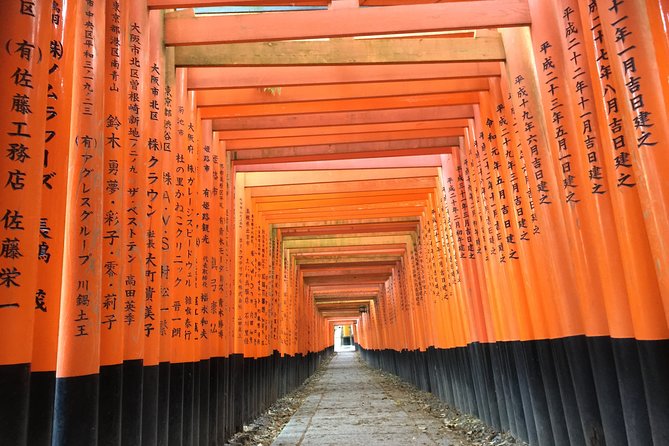
The central part of the route takes you through the Senbon Torii, the thousand torii gates. This is the moment most people come to see, and the audio gives the famous passage a clearer setting.
The gates form a striking red-orange corridor through the wooded shrine grounds. Their repeated shape creates a strong visual effect, but the tour helps you think about what the gates represent rather than treating them as decoration alone.
There are two audio stops listed for this section, which suggests the gate walk receives more than a quick mention. That is helpful because the Senbon Torii is the part most likely to slow you down. You will want time for photographs, and the route allows the story to continue as you move through the gates.
The audio does not remove the possibility of crowds. You may need to pause, let people pass, or wait for a clearer photograph. That is not a flaw in the tour, but it is a reason to allow more than the minimum 45 minutes if you plan to take your time.
The route is described as an easy stroll, not a demanding hike. Even so, you are walking through a shrine complex with an uphill section and forest paths. The experience is better for people who can comfortably manage a walking tour rather than those looking for a seated attraction.
The Okusha shrine and a quieter change of mood

After the main gate corridor, the tour continues to the Okusha shrine. This stop broadens the visit beyond the most famous section and gives you another religious landmark to consider.
The Okusha is useful in the route because it prevents the experience from becoming a simple entrance, photograph, and return walk. You are taken farther into the complex, where the shrine’s religious character can feel more important than its postcard appeal.
This is also where the audio format works well. A guide leading a large group might need to keep moving, but you can stop at the Okusha, listen again, or take a break. The tour’s flexibility is one of its best features.
The Root up Pine Tree and the Heavy-Light Stone
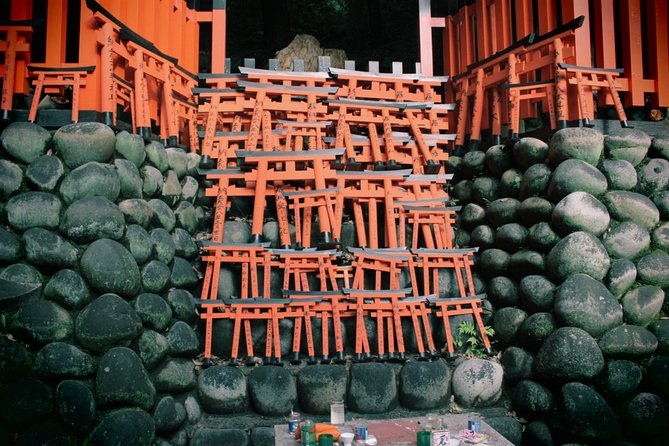
The route makes a short stop near the Root up Pine Tree, where you learn more about this unusual feature. The supplied details do not explain the full story in advance, which is a good reason to listen rather than rush past it.
The experience also highlights the Heavy-Light Stone, where you can make a wish. This gives the walk a participatory moment. You are not only receiving information. You have a chance to connect with one of the shrine’s customs in your own way.
I would approach this part with an open mind and respect for the setting. The tour explains the significance, but it does not promise that a wish will come true. Its value is in showing you how belief and personal hope remain part of the shrine visit.
Ending at Kumataka Shrine and its pond
The official route ends at Kumataka Shrine, beside a lovely pond deeper inside the shrine complex. This is a pleasant place to pause after the torii gates and the main stops.
You can take a quick break here or continue exploring on your own. That open ending is useful because Fushimi Inari is larger than a one-hour walk. The audio route gives you a planned introduction, but it does not force you to leave when the recording finishes.
The end point is not the same as the starting point at Inari Station. Keep that in mind when planning your next stop. The route finishes within the shrine complex, so you may need to retrace your way or continue onward rather than expecting to be delivered back to the station.
What the $5.99 price really buys you
At $5.99 per person, the cost is low compared with a private guided tour. You are paying for a focused audio explanation, route guidance, offline maps, and lifetime access in English. You are not paying for transportation, food, a live guide, or admission to another attraction.
The strongest value comes from independence. You can use the tour on your own schedule, stop when you want, and return to the audio later. One user described the app as simple and effective, with the freedom to move according to a personal schedule and notice less obvious places.
The price is less attractive if you only want a quick photograph of the red gates. In that case, you may not need an audio route at all. The tour earns its keep when you want to understand the shrine’s rituals, symbols, and smaller landmarks.
The current rating is 4.8 from eight published ratings, which points to a strong response but is still a small sample. I would treat that as encouraging rather than conclusive.
How to prepare your phone before arrival
The VoiceMap app is available for Android and iOS. The purchase includes lifetime access to the English tour, plus offline access to the audio, map, and geodata.
Download everything before you reach Fushimi Inari. This is the most useful practical tip attached to the experience. Depending on mobile service, trying to load the route at the shrine could waste time or leave you without part of the tour.
Bring your own smartphone and headphones. Neither is included. Food, drinks, transportation, and tickets for museums or other attractions are also excluded, though no separate entrance fee for the shrine is identified in the supplied information.
The tour is suitable for most people, but you should be ready for an outdoor walking route. Wear shoes you can walk in comfortably, keep your phone charged, and leave enough time to pause at the gates and shrines.
The experience is non-refundable and cannot be changed after booking. That makes it especially important to check your date, download the app, and confirm that an English audio tour is what you want before paying.
Who will enjoy this Fushimi Inari walk
I would recommend this tour to you if you like exploring independently but still want a clear thread connecting the sights. It suits first-time visitors who want an introduction to Shinto customs without joining a large group.
It is also a good choice if you already visited Fushimi Inari quickly and felt you missed the meaning behind the photographs. One user returned after rushing through the shrine as part of a wider Kyoto and Nara outing, then found the audio format a better way to take the site at a calmer pace.
You may want something else if you need a live guide, personal recommendations, or answers to questions as they arise. You should also skip it if you do not want to use your phone or listen through headphones while walking.
Should you book this audio tour?
Book it if you want more than the classic red-gate photograph. For $5.99, you get a relaxed route through Fushimi Inari with explanations of fox statues, hand-washing, wabi-sabi, the Senbon Torii, Okusha Shrine, the Root up Pine Tree, the Heavy-Light Stone, and Kumataka Shrine.
Skip it if your visit is extremely short or you prefer to wander without narration. For everyone else, download the route before arriving, begin at the fox statue opposite Inari Station, and give yourself more than the minimum hour if you want photographs and pauses. This is a small, practical purchase that can turn a famous walk into a more meaningful one.
FAQ
How long does the Fushimi Inari audio tour last?
The tour lasts approximately 45 minutes to one hour.
Where does the tour start?
It starts at the fox statue at the entrance to Fushimi Inari Taisha Shrine, opposite Inari Station in Kyoto.
Where does the tour end?
It ends at Kumataka Shrine, beside a pond within the shrine complex.
Is this a guided group tour?
No. It is a self-guided audio tour, and only your group participates.
What app do I need?
You need the VoiceMap app, which is available for Android and iOS.
Is the tour available offline?
Yes. The audio, maps, and geodata can be accessed offline after downloading them.
Is the tour available in English?
Yes. The purchase includes lifetime access to the English tour.
Do I need to bring headphones?
Yes. A smartphone and headphones are not included.
Does the price include transportation or food?
No. Transportation, food, drinks, and tickets or entrance fees for museums or other attractions are not included.
Can I get a refund or change my booking?
No. The experience is non-refundable and cannot be changed for any reason.
Just added around the world
- Coba Ruins: Self-Guided Walking Audio Tour in Mexico★ 3.5 · 2 reviews
- Self Guided Driving Audio Tour of Saguaro National Park★ 3.0 · 4 reviews
- Torino Walking Tour with Audio and Written Guide by a Local★ 4.5 · 35 reviews
- Self-Guided Audio Driving Tour of Mount Lemmon★ 5.0 · 4 reviews
- Trondheim’s Inner Circle: A Self-Guided Audio Tour★ 4.0 · 15 reviews
- Panorama Bus Tour with Audio Guide★ 4.0 · 3 reviews
- Saguaro National Park Self-Guided Audio Tour★ 3.5 · 11 reviews
- A Tromsø Introduction: A Self-Guided Audio Tour★ 3.5 · 19 reviews
Walking Tours, compared.

City Monuments Guided Walking Tour with Audio Guide
Read our review →

Self Guided Classic Freedom Trail Location Aware (GPS) Walking Audio Tour
Read our review →
Self-Guided Historical Walking Tour (Audio Guide)
Read our review →
Cape Cod & Provincetown Self-Guided Driving & Walking Audio Tour
Read our review →
Verona Walking Tour with Audio and Written Guide by a Local
Read our review →
Royal Walking Tour and Buckingham Palace Audio Tour
Read our review →
Bologna Walking Tour with Audio and Written Guide
Read our review →Browse the lists this tour appears in