REVIEW · USA AUDIO TOURS
Yellowstone and Grand Teton Self-Guided Audio Tour Bundle
Yellowstone rewards patience, and this tour gives you time. The Yellowstone and Grand Teton Self-Guided Audio Tour Bundle turns your own car into a private guide, using GPS-triggered narration, directions, music, and offline maps across two huge national parks. I especially like the freedom to skip stops and the excellent value for a whole vehicle, not just one person. The main drawback is the sheer amount of driving: the suggested Yellowstone route is ambitious, and you will need to manage road conditions, parking, meals, and park entry fees yourself.
I also like that the tour does more than point out famous sights. It connects the Madison River, geyser basins, wildlife areas, old homesteads, conservation history, and mountain viewpoints into one long story. The app has earned a perfect 5.0 rating from seven reviews, with particular praise for its accurate GPS, pleasant narration, music, and flexibility. Still, this works best if you download everything before leaving strong Wi-Fi and are comfortable making your own decisions on the road.
Key points to know before you go
- One price covers the whole vehicle: The $19.19 cost applies to a group of up to 15 people, making it far cheaper than most private guided options.
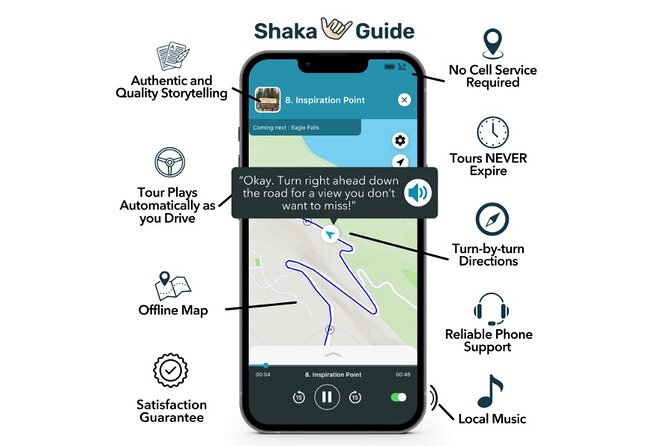
- GPS starts the stories automatically: The app provides hands-free narration, turn-by-turn directions, and music as you drive.
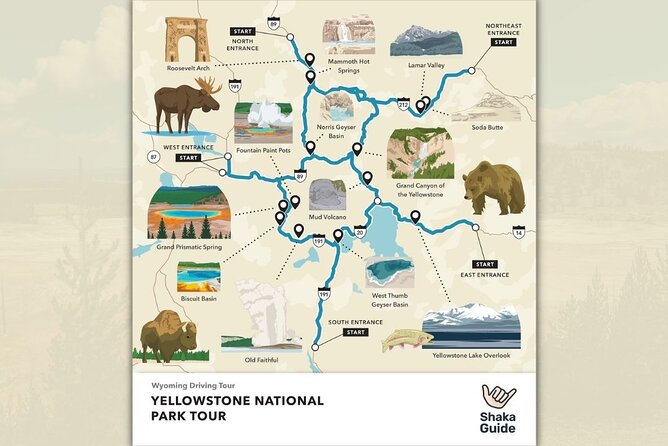
- Yellowstone’s route is extremely full: The first day includes geysers, waterfalls, the Grand Canyon of the Yellowstone, Mammoth Hot Springs, wildlife country, and many optional side trips.
- Grand Teton feels more relaxed: The second day focuses on Jackson Lake, the Snake River, historic homesteads, Jenny Lake, and Signal Mountain.
- You pay park fees separately: Yellowstone and Grand Teton each list a $35 entrance fee per booking.
- The tour does not expire: You can pause it, resume it, or spread the route over more than two days if needed.
How this self-guided tour works in your car
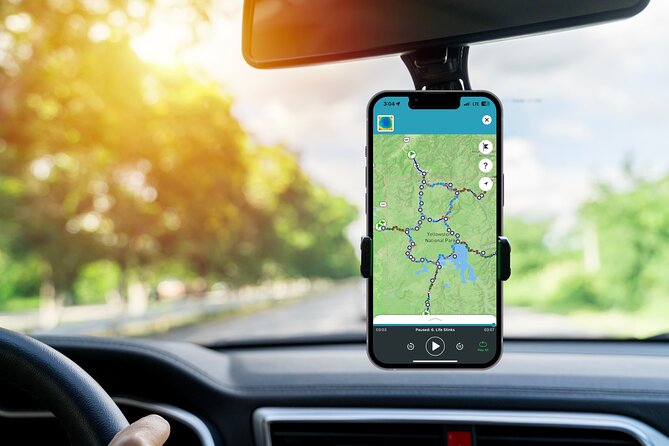
This is not a bus tour or a fixed group excursion. You receive instructions by email, download the Shaka Guide app, redeem your code, and load the tour under the My Stuff tab. The important step is downloading the route, audio, and map while you have strong Wi-Fi.
Once you start from Jackson Hole, the app uses your phone’s GPS to trigger stories and directions. The map and GPS work offline, so you do not need continuous Wi-Fi or mobile data inside the parks. That matters in Yellowstone and Grand Teton, where phone service can be limited.
The experience is private to your group. You decide when to stop, how long to stay, and which optional roads or hikes fit your day. The app is designed to play automatically as you drive, so you do not need to keep reaching for your phone.
I would still download the route early, charge your phone, and carry a backup charging cable. The tour is a helpful guide, not a replacement for paying attention to road signs, park notices, weather, or closures.
More Self-Guided Audio Tours in the USA
- Gettysburg Battlefield Self-Guided Driving Audio Tour
★ 4.5 · 910 reviews - Joshua Tree National Park Self-Guided Driving Audio Tour
★ 4.5 · 762 reviews - Ultimate Acadia National Park Self-Guided Driving Audio Tour
★ 4.0 · 521 reviews
Yellowstone begins with rivers, forests, and hot water
The route starts around the Madison River, a Blue Ribbon Fishery known for fly fishing. As you drive, the narration points out Talus Mountain, Mount Haynes, and National Park Mountain. This is a gentle opening because it lets you settle into the road before the geyser country begins.
At Madison Junction, you can pause for a restroom break and choose the loop that leads through the park. Firehole Canyon Drive is a short, scenic road along the Firehole River, with volcanic scenery and places to stop. The nearby Fountain Flat Drive adds a meadow, small hot springs, trout-filled river views, and Maiden’s Grave.
The three-mile Firehole Lake Drive is one of the better short detours. Roadside pullouts and short boardwalks bring you near White Dome, Pink Dome, and Great Dome geysers. You do not need a major hike to see interesting thermal features here, which makes this section useful for families or anyone saving energy for later.
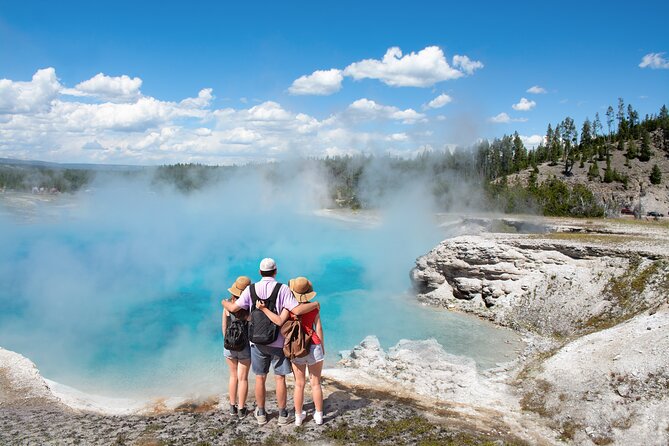
At Midway Geyser Basin, a boardwalk circles Grand Prismatic Spring, a massive 370-foot hot spring. The colors and scale make this one of the tour’s essential stops. If you have extra time, the Fairy Falls Trailhead offers a 0.6-mile one-way walk to the Grand Prismatic Overlook, with Fairy Falls another mile beyond that.
Old Faithful is only one part of the Upper Geyser Basin
Old Faithful is the headline stop, and the tour gives you time to see it properly. Eruptions generally occur every 60 to 110 minutes, so you may arrive between shows. That is not a problem. Use the waiting time to visit the visitor center, walk the Geyser Loop Trail, browse the gift shop, or take a break at the historic Old Faithful Lodge.
The nearby hydrothermal features help put the famous geyser in context. Old Faithful is memorable, but the wider basin shows how many different forms hot water can take. I would avoid treating this as a quick photo stop.
Kepler Cascades offers another easy reward, with a short boardwalk and several drops reaching about 50 feet. At Isa Lake on the Continental Divide, water drains toward both the Atlantic and Pacific oceans. It is a small stop, but the drainage story makes it unusually interesting.
West Thumb Geyser Basin is one of the best places to combine geothermal features with a broad lake view. Look for Fishing Cone Geyser and consider the 1.7-mile Yellowstone Lake Overlook Trail if time allows. Gull Point works well for a picnic, while Fishing Bridge has a ranger station, general store, and a bridge where cutthroat trout gather below.
Wildlife country and the Grand Canyon of the Yellowstone
The road through Hayden Valley is one of the day’s most important scenic stretches. The marshy terrain attracts grazers, which in turn can attract predators. The tour can explain what you are seeing, but you will need to slow down and watch carefully. Wildlife sightings are never guaranteed, and traffic can become complicated when animals appear near the road.
LeHardy Rapids adds a short walk to the Yellowstone River. In early spring, spawning cutthroat trout can make the rapids especially interesting. Mud Volcano is another strong stop, with highly acidic thermal features and Dragon’s Mouth Hot Spring, known for its sloshing, bubbling activity.
The Grand Canyon of the Yellowstone deserves real time, not just a quick pullout. Upper Falls View and Artist Point show different sides of the canyon, while Uncle Tom’s Trail offers an optional walk. The viewpoint at the brink of Upper Falls requires a little more than a quarter-mile walk on an easy trail and gives you a close look at the water’s force.
Canyon Village has food, lodging, shops, restrooms, and a visitor center. I would make the visitor center a priority because its displays and illuminated diorama help explain the canyon and the Yellowstone caldera.
Same place, a different route to walk:
- Los Angeles: Hop-On Hop-Off Bus Tour with Audio Guide
★ 3.7 · 2,030 reviews - City Sightseeing Hop-On Hop-Off Bus Tour with Audio Guide
★ 3.0 · 1,083 reviews - Medieval Torture Museum Ticket with Audio Guide and Ghost Hunting
★ 5.0 · 962 reviews - San Francisco: Alcatraz, Ferry & Audio Tour w/ Night Option
★ 4.4 · 617 reviews
The northern loop adds waterfalls, fossils, and Mammoth Hot Springs
Washburn Hot Springs Overlook is a useful pause for a restroom break and a look across the caldera. Mount Washburn offers far-reaching views, but the road can feel narrow, and the drive may not suit anyone uneasy with steep mountain roads.
Tower Falls drops 132 feet, with short walks leading to overlooks. Soda Butte is an inactive hot spring cone now used by cliff swallows, and Tower Junction offers a chance to refuel or stop at Roosevelt Lodge.
The Petrified Tree is a quick side trip to a fossilized remnant from a time when warm-weather forests covered Yellowstone. Blacktail Drive is an optional gravel road with a more private feel and possible wildlife viewing, but it is one-way back toward Tower Junction and requires extra attention after rain.
Undine Falls, Rustic Falls, and the Golden Gate viaduct keep the northern route varied. Sheepeater Cliffs displays tall geometric basalt columns named for the Sheepeater people, one of the Native American groups known to have lived in Yellowstone year-round.
At Mammoth Hot Springs, the Lower Terrace boardwalk reveals the white travertine formations often seen in Yellowstone photographs. Minerva Terrace, Jupiter Terrace, Liberty Cap, and the full 2.2-mile boardwalk are the main rewards. Upper Terrace Drive adds another 1.5 miles of thermal scenery, including Orange Spring Mound, Angel Terrace, and Aphrodite Terrace.
The Hoodoos area is a short loop through boulders that rolled from Terrace Mountain. They are not true hoodoos, but the odd formation is still worth a brief stop.
The quieter hydrothermal stops complete Day 1
Sheepeater Cliffs, Obsidian Cliff, Roaring Mountain, and the Museum of the National Park Ranger provide a change from the biggest attractions. Obsidian Cliff is viewed from designated areas because visitors are not allowed to walk directly to the formation. The nearby exhibit and short walk offer a safer look at the black volcanic glass.
Roaring Mountain is heard as much as seen. Fumaroles hiss and steam from the slope, while sulfur-reducing bacteria help create its gray appearance. At the Museum of the National Park Ranger, you can watch a film, see historical exhibits, and possibly speak with a current or retired ranger.
Norris Geyser Basin is one of the day’s major choices. It is Yellowstone’s hottest and oldest geyser basin, with a 2.9-mile boardwalk and the tallest geyser in the world. Artists’ Paintpots provides a shorter 0.6-mile boardwalk through colorful mud pots and is a good option if you want unusual thermal features without another long walk.
Beryl Spring, Gibbon Falls, Tuff Cliffs Picnic Area, and West Yellowstone close the route. The first day may take much longer than the suggested stop times once you add meals, traffic, photographs, boardwalks, and wildlife pauses. I would treat the itinerary as a menu, not a command.
Grand Teton trades geysers for mountain views
Day 2 begins at Jackson Lake Overlook, where the Teton Range rises behind the lake. Colter Bay Village is a practical base for fuel, food, groceries, restrooms, souvenirs, and activities such as kayaking, canoeing, motorboats, lake cruises, horseback riding, fishing, swimming, and hiking.
Oxbow Bend is one of the park’s famous four viewpoints. The Snake River curves through the foreground with the Tetons behind it. It is especially popular at sunrise and sunset, so you should expect more people and limited space at those times.
Cunningham Cabin offers a short walk through local settlement history. Schwabacher Landing combines Snake River reflections, mountain views, forest, and possible wildlife viewing. Snake River Overlook is the fourth of the famous four and was made famous by Ansel Adams photographs. The view looks calm, but the river once earned the nickname The Accursed Mad River from fur trappers because of its unpredictable water.
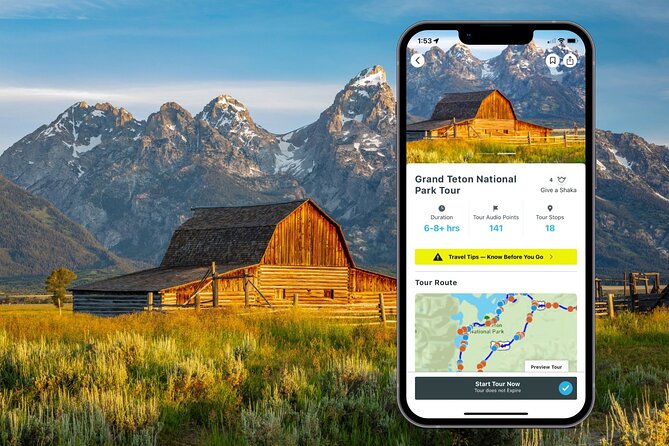
Mormon Row adds a human story to the day. The Moulton Barn, Chambers Homestead, and other surviving structures belonged to a self-sufficient community established in the early 1920s. The Moulton Barn is widely known as one of the most photographed barns in the United States, and you can walk among these historic buildings.
Moose, Jenny Lake, and the conservation story
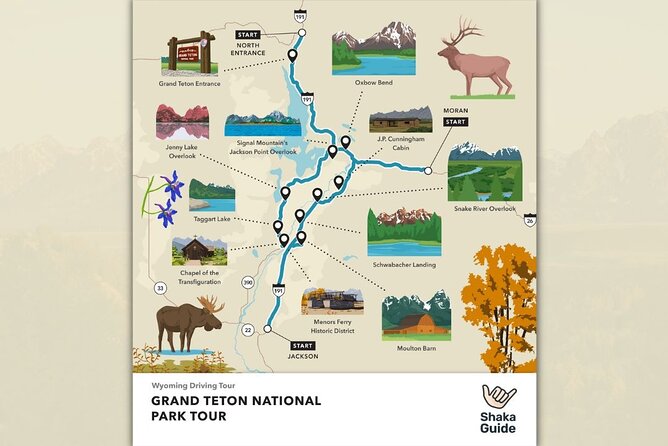
The Craig Thomas Discovery and Visitor Center in Moose is worth an hour. Its exhibits cover place, people, preservation, and mountaineering. You can see Native American artifacts from the Vernon Collection, study a raised relief map, watch the 24-minute park film, check ranger program schedules, and get permits or backpacking information.
The Murie Ranch introduces the work of the Muries, often called grandparents of the conservation movement. From there, the Chapel of the Transfiguration offers a quiet interior and a frame of the Teton peaks. Built in 1925, it remains an active Episcopal congregation.
Menors Ferry Historic District shows the work of William Menor, an early homesteader who built a ferry and opened a trade route across the Snake River. These stops help balance the mountain views with the people and ideas that shaped the park.
Taggart Lake Trail is a 3.8-mile loop near Moose Junction, rated moderately easy in the supplied tour details. If you want a shorter break, Cottonwood Creek Picnic Area is known for wild burros in the field across the road. Keep a safe distance and do not treat the animals as photo props.
Jenny Lake is the largest stop on Day 2, with up to two hours suggested. You can choose among hiking, biking, cycling, swimming, scenic driving, and learning about the area’s tragic history. The tour gives you choices rather than forcing one activity, which is useful here because the recreation area can fill a large part of your day.
Signal Mountain finishes with a wide view
Signal Mountain Summit Road climbs nearly 1,000 feet over seven miles. The road is narrow, with sharp switchbacks and steep sides, but the summit gives you broad views across Teton Valley. I would check your comfort level before committing, especially if you dislike mountain roads.
Signal Mountain Lodge is the final stop and offers dining, lodging, shopping, and a marina for boating and kayaking. From there, you can return toward Jackson Hole or make your way back to West Yellowstone.
The two-day plan makes sense geographically, but I would not force every stop into exactly two calendar days. Yellowstone alone contains enough walks, scenic pullouts, and unexpected delays to fill more than a day. The tour’s ability to pause and continue later is one of its most practical features.
What the $19.19 price really buys you
At $19.19 per group of up to 15 people, the value is excellent if you are already driving your own vehicle. A couple pays the same as a larger family group, and you avoid the cost of a private guide. The audio includes stories, directions, music, stop suggestions, and restaurant or activity ideas rather than just a static map.
You still need to budget separately for the listed Yellowstone entrance fee of $35 per booking and the Grand Teton entrance fee of $35 per booking. Meals, drinks, lodging, fuel, and optional activities are also on you.
The strongest value is personal control. You can spend an hour at Old Faithful, skip a minor pullout, stop for a picnic at Gull Point, or pause the tour when the day gets too long. The app has been praised for knowing the car’s location accurately and giving timely turn instructions, which reduces the need to keep checking a paper map.
Who should book this audio tour?
I would choose this for couples, families, and friends who want structure without joining a group. It is especially good for first visits because the narration gives context to places that can otherwise blur together: one hot spring, one waterfall, one historic cabin after another.
It also suits people who value privacy. One couple used it specifically to avoid being with large groups at every stop, while another used it across five days rather than limiting the experience to the suggested two. Those details point to the tour’s real strength: flexibility.
I would be more cautious if you want a live guide who can answer questions, adjust the route in real time, or handle every detail for you. You must still watch the road, decide how long to stay, find food, and respond to park conditions.
Free cancellation is available up to 24 hours before the experience start time. The tour is offered in English, service animals are allowed, and most people can participate.
FAQ
How much does the Yellowstone and Grand Teton audio tour cost?
The price is $19.19 per group, with up to 15 people included in one vehicle.
Are Yellowstone and Grand Teton entrance fees included?
No. The listed fee is $35 per booking for Yellowstone and $35 per booking for Grand Teton.
Does the tour work without Wi-Fi or mobile data?
Yes. You download the tour, map, and audio using strong Wi-Fi before starting. The map and GPS work offline.
Can I start the tour on a different day?
Yes. The tour does not expire, and you can choose the day that works for you. You can also pause and resume it.
Where does the tour start and finish?
The listed start is Jackson Hole, Wyoming. The final stop is Signal Mountain Lodge in Grand Teton National Park, after which you can continue to Jackson Hole or return toward West Yellowstone.
Is this a private tour?
Yes. Only your own group participates, and the tour runs through your vehicle and phone.
What language is the narration offered in?
The tour is offered in English.
Should you book it?
Book it if you want an affordable, private way to understand two enormous parks while keeping control of your day. The accurate GPS directions, pleasant narration, music, offline access, and option to skip stops make it much more useful than a simple audio recording.
Do not book it expecting a fully escorted trip or a perfectly realistic two-day checklist. Yellowstone’s route is packed, and you will enjoy it more if you choose the stops that matter most to you. For a self-directed road trip, though, $19.19 for the whole car is an easy value, especially when the app helps turn a complicated park drive into a clear, story-filled route.
Just added around the USA
- Self Guided Driving Audio Tour of Saguaro National Park★ 3.0 · 4 reviews
- Self-Guided Audio Driving Tour of Mount Lemmon★ 5.0 · 4 reviews
- Saguaro National Park Self-Guided Audio Tour★ 3.5 · 11 reviews
- A Self Guided Audio Tour in Tombstone★ 4.0 · 11 reviews
- Catskills Scenic Byway Self-Guided Driving Audio Tour★ 4.0 · 9 reviews
- Big Bend National Park Self Guided Audio Tour Guide★ 5.0 · 12 reviews
- Self-Guided Audio Driving Tour in Catskills Scenic Byway★ 4.5 · 7 reviews
- Shiloh Battlefield Self-Guided Driving Audio Tour★ 4.0 · 9 reviews
Self-Guided Tours, compared.

Acropolis Ticket & Optional Self-Guided Audio Tours
Read our review →
Ultimate Acadia National Park Self-Guided Driving Audio Tour
Read our review →

Santorini: Akrotiri Ticket with Optional Self-Guided Audios
Read our review →