

REVIEW · UK AUDIO TOURS
Canterbury Cathedral: Entry Ticket with Audio Guide
History is alive under these high ceilings. I like the way the audio guide brings royals, monks, and martyrs into focus, and I love the chance to move at my own pace through the cathedral, cloisters, gardens, and exhibitions. The main drawback is simple: the route can be confusing, and the guide does not always make it clear where to go next.
Canterbury Cathedral rewards slow looking. Its stained glass, crypt, Chapter House, and Great Cloister each tell a different part of the story, while the included handset gives the visit useful shape. At $31 per person, I consider it good value if you allow at least two hours, though you should check the audio equipment at collection and confirm that no extra fee is being requested.
Key points to know before you go
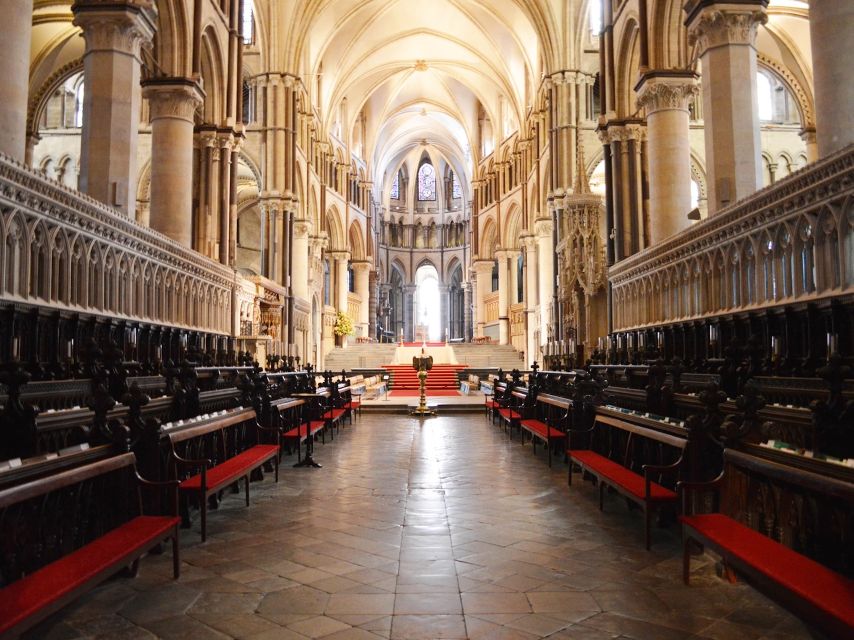
- Fourteen centuries in one visit: Canterbury Cathedral traces its story to Augustine’s arrival in 597 A.D. and remains the mother church of the worldwide Anglican Communion.
- The audio guide is worth using: It explains the building’s architecture and links the spaces to kings, monks, pilgrims, and martyrs.
- The stained glass is a major highlight: Some windows date from among the oldest surviving examples in the world.
- The ticket covers more than the main church: You can visit the Chapter House, Great Cloister, three gardens, and up to three exhibitions.
- Plan for two to three hours: You can move faster, but the cathedral rewards pauses, especially in the crypt, cloisters, and gardens.
- Allow extra time to get oriented: The audio stops can be hard to match to the building, and some visitors have had equipment trouble.
Why Canterbury Cathedral matters
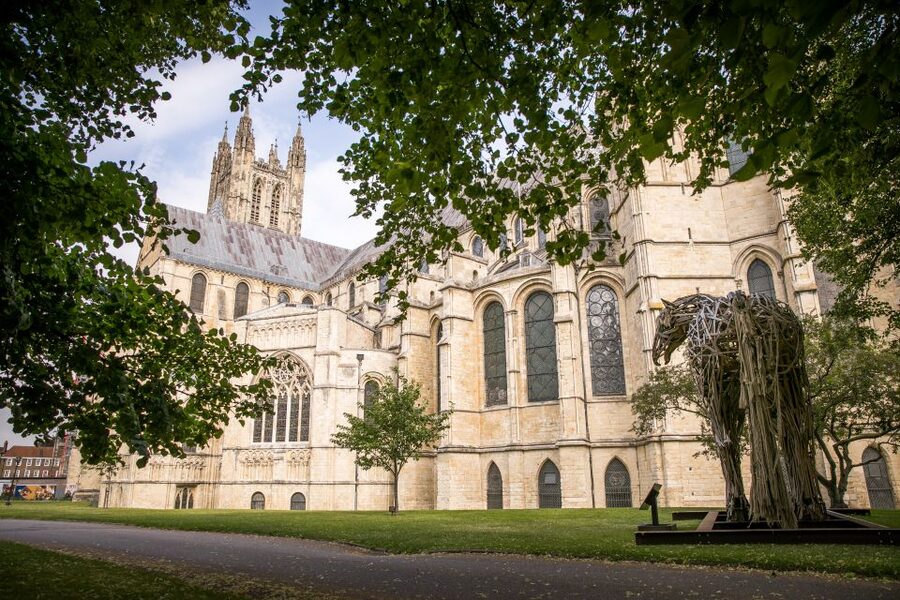
Canterbury Cathedral is not simply an impressive church with a famous name. It sits at the center of England’s Christian story and has been shaped by nearly 1,400 years of worship, rebuilding, conflict, and pilgrimage.
In 597 A.D., Pope Gregory the Great sent Augustine to England as a missionary. Augustine established his seat, or cathedra, at Canterbury and became England’s first Archbishop. That beginning explains the cathedral’s importance today: it is the mother church of the worldwide Anglican Communion and the seat of the Archbishop of Canterbury.
The cathedral later became one of Europe’s major pilgrimage centers after reports of miracles at the site. Geoffrey Chaucer’s Canterbury Tales helped make the pilgrimage famous far beyond Kent. You do not need to know Chaucer to appreciate the setting, but the connection adds weight to the pilgrims’ route through the city and cathedral.
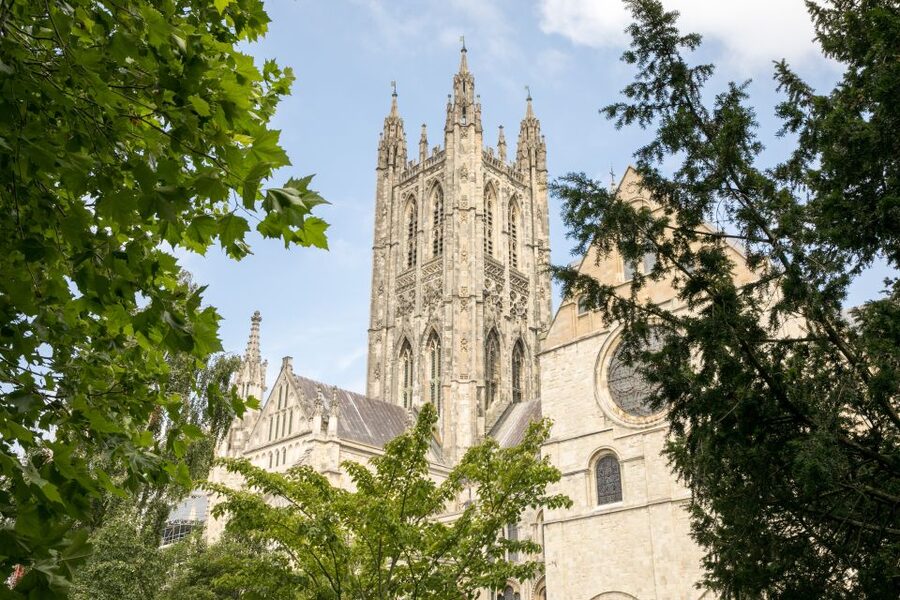
The building itself changed over the centuries. A major fire in 1174 led to rebuilding in the new Perpendicular Gothic style, and later generations added, altered, and repaired different sections. As you move through the cathedral, you are seeing several medieval building styles rather than one neat architectural plan.
That is why the audio guide matters. Without some explanation, Canterbury can feel like a series of beautiful spaces. With it, the building becomes a sequence of decisions, disasters, ceremonies, and religious changes.
More Church Audio Tours in the UK:
- Westminster Abbey Entrance Ticket Including Audio Guide
★ 4.0 · 661 reviews - Rome: St. Peter’s Basilica & Dome Entry Ticket & Audio Tour
★ 4.2 · 7,537 reviews - Istanbul: Basilica Cistern Fast-Track Entry and Audio Guide
★ 4.6 · 7,521 reviews
Entering the cathedral and collecting the audio guide
You present your voucher at Canterbury Cathedral and are directed to the desk for the media guide set and headphones. The equipment is included in the advertised ticket, with commentary available in English, French, German, and Japanese.
The process is not always as polished as you might hope. One recent booking reported receiving an uncharged handset, while another found the headsets poorly organized at collection and return. The audio itself was praised once working, but you should check that your device is powered on before walking away from the desk.
There was also a report of a £5 audio charge being requested at the cathedral despite the booking including audio. The stated ticket information includes the handset and headphones, so keep your voucher available and clarify the matter before paying anything extra.
The guide is self-paced, which is one of its strongest features. You can pause, replay sections, and spend longer in a favorite area. There is no stated time limit during the day, and one group stayed for several hours without being rushed.
The weakness is navigation. The guide offers suggested next steps, but the physical spaces are not always numbered to match the audio. You may need to backtrack or work out which feature the commentary is describing. Treat the handset as a source of information, not as a flawless turn-by-turn route.
The nave, soaring ceilings, and changing styles
Start in the main cathedral spaces, where the scale does much of the talking. High ceilings, long views, stonework, and colored windows give the building its first great impact.
Then listen closely to the commentary. Canterbury’s architecture was shaped by repeated building and rebuilding, with styles changing during the medieval period. The cathedral is therefore best read as a long work in progress rather than a single design completed at one time.
The audio guide helps you connect the visual details to the people who used them. Stories of royal visitors, monks, and martyrs make the building feel less remote. You are not only looking at arches and columns. You are hearing why these spaces mattered to the people who prayed, worked, governed, or came on pilgrimage.
I would not rush this section. The cathedral’s size can encourage a quick sweep from one end to the other, but that misses much of its character. Pause beneath the ceiling, look up at the window tracery, and let the commentary finish before moving on.
Some visitors find the suggested route difficult to follow, especially when audio stops are not clearly marked. If you lose your place, use the guide’s next-section options rather than trying to force the route in exact order. The experience is flexible enough to work as a loose tour.
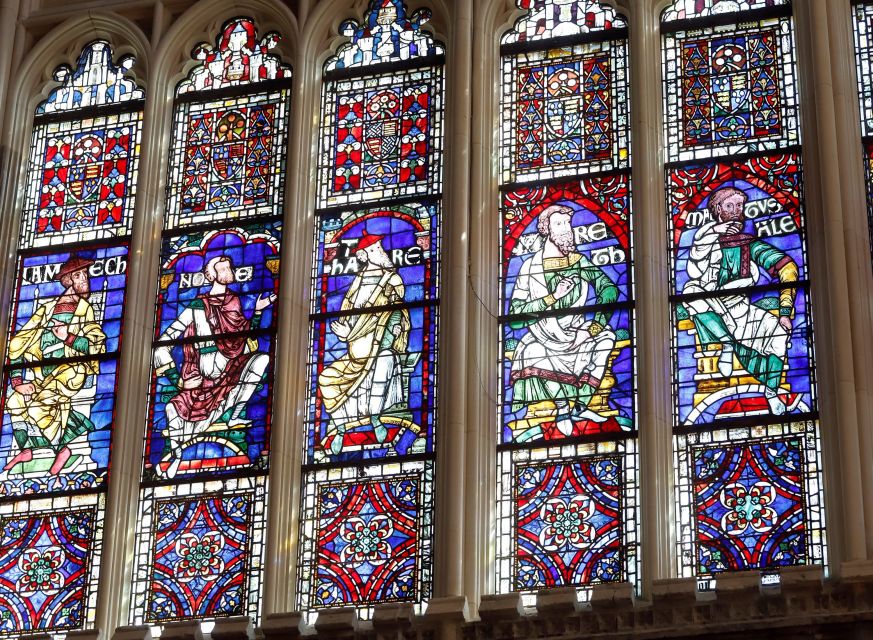
The stained-glass windows deserve your time
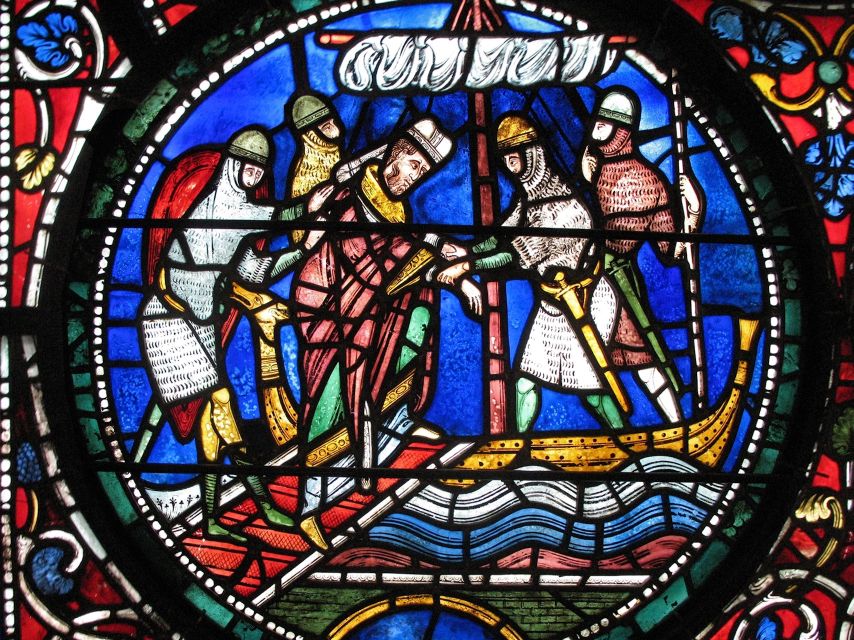
The stained glass is one of the strongest reasons to visit. Some of the windows are among the oldest in the world, and their color changes the feel of the interior even when the daylight is subdued.
The important point is to look beyond the overall glow. The windows contain artwork, religious subjects, and surviving medieval material that connect the cathedral to an earlier age. Their value is not only visual. They show how light, storytelling, and worship worked together in a medieval church.
The audio commentary gives you a better chance of understanding what you are seeing. Without it, you may notice the colors but miss the age and purpose of the glass. With it, you can spend time examining details instead of simply taking a few photographs and moving on.
Commercial photography is not permitted, and photography or video recording is not allowed at any time in the crypt. That may disappoint visitors who want to document every detail, but it also encourages you to look carefully rather than treating the visit as a photo stop.
A few more audio tours around the UK worth a look
- London: Emirates Stadium Entry Ticket and Audio Guide
★ 4.7 · 5,513 reviews - London: British Museum Audio Tour & Priority Entrance Ticket
★ 4.5 · 631 reviews - Golden Tours York Hop-on Hop-off Open Top Bus Tour with Audio Guide
★ 4.5 · 468 reviews - Bath: Roman Baths Entry Ticket with Audio Guide
★ 4.7 · 425 reviews
The crypt, Chapter House, and Great Cloister
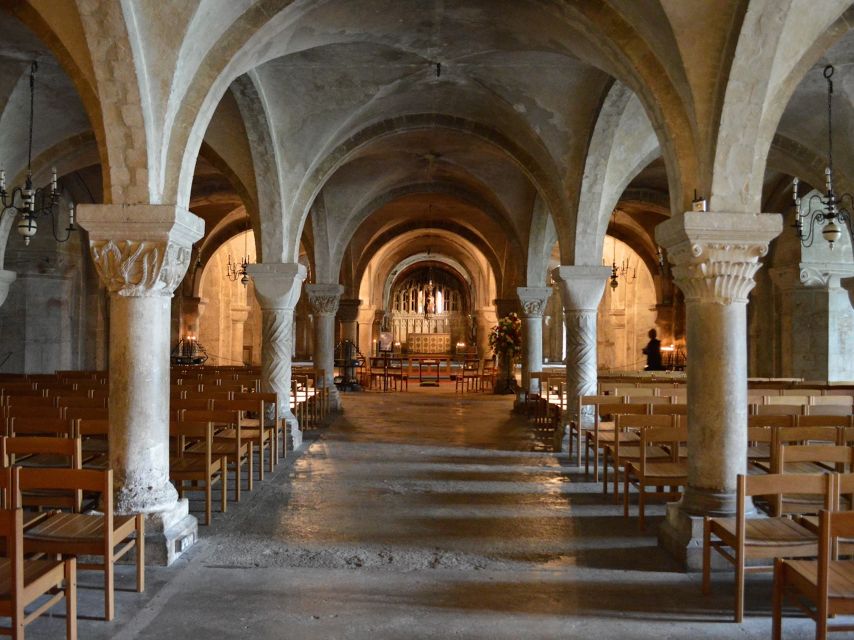
The crypt offers a different mood from the bright upper church. It is quieter, lower, and more atmospheric, with uneven floors and changing light levels in the museum areas. Access may involve stone steps in some places, though ramps are available at some entryways.
The Chapter House is included in the ticket. Its detailed ceiling is a particular draw, and it gives you another view of medieval craftsmanship away from the main nave. Make time for it rather than treating it as an optional side room.
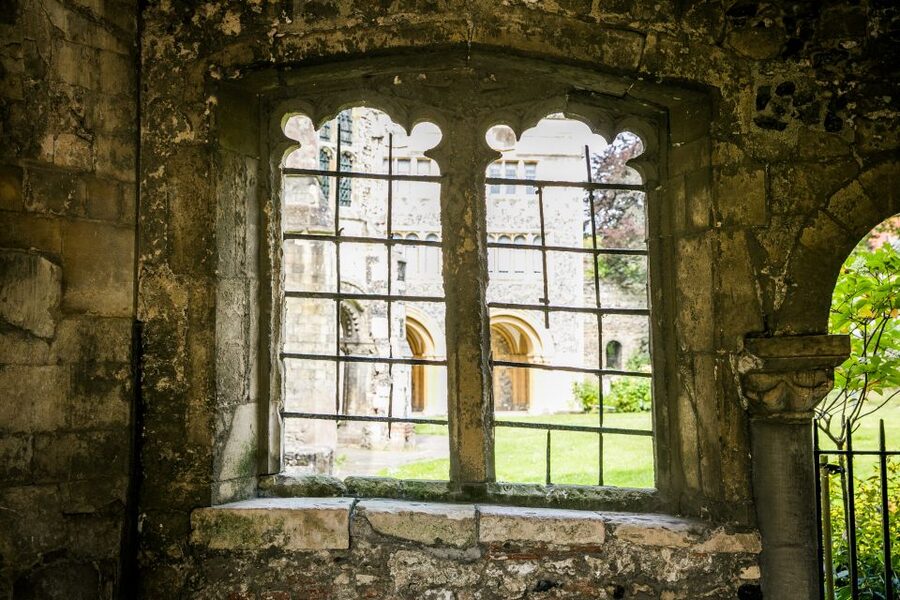
The Great Cloister is equally important for understanding daily monastic life. Monks walked these passages for centuries, and the enclosed space feels more personal than the vast church. Look at the stone details, allow the audio to explain the setting, and consider how different the rhythm of life here would have been from the public spectacle of pilgrimage.
The ticket also allows access to up to three exhibitions around the site. The exact exhibitions may vary, and some areas can close at short notice, so do not build your entire day around one particular display. Think of the exhibitions as useful additions that can fill out the story rather than the main reason to buy the ticket.
Gardens and the medieval Herbarium
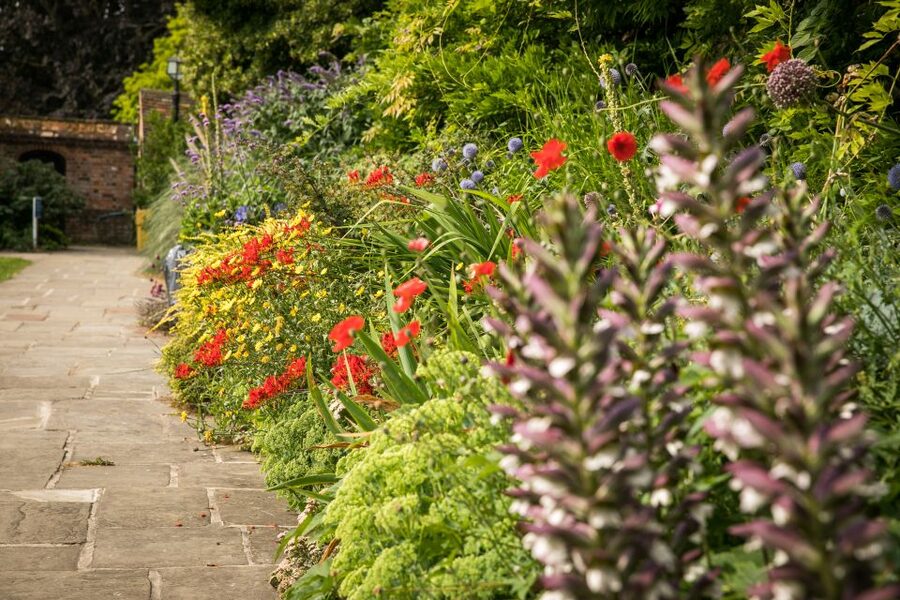
The cathedral precincts include three public gardens, including a reimagining of a medieval Herbarium. These spaces provide a welcome change after the stone interiors and help you see the cathedral as a group of buildings, paths, and working areas rather than one isolated church.
The Herbarium is especially useful for visitors curious about everyday medieval life. It offers a practical link to plants and remedies, adding a domestic and working dimension to the religious setting.
The gardens also give you room to pause if the audio guide becomes tiring. You can stop listening, walk at your own pace, and then return to the commentary when you are ready. That flexibility is a real advantage of a self-guided visit.
Do not assume that the gardens require a separate major visit. They are part of the cathedral experience, but the length of time you spend there depends on the weather and your interest in plants, ruins, and the wider precincts.
How long should you allow?
Two hours is enough for a meaningful visit if you focus on the main cathedral, stained glass, cloisters, and Chapter House. That timing also matches the experience of visitors who spent roughly two hours exploring inside and outside.
Three hours is more comfortable. It gives you time to listen to the audio without racing, examine the windows, visit the crypt and exhibitions, and take a break in the gardens.
You can spend much longer if you enjoy architecture or church history. One booking described a six-hour visit, though that is unusual and depends on how closely you study each section. There is no need to force that length, but the ticket is not a quick fifteen-minute attraction.
Services and other cathedral activities can affect your route. Parts of the building may close at short notice, and religious services may limit access to certain spaces. One Easter visit could not cover everything because masses were taking place. Check the day’s conditions when you arrive and keep your plans flexible.
Is the $31 price good value?
At $31 per person, the ticket is not a bargain-basement sightseeing stop. It is good value for anyone who will use the full site and listen to the guide.
You are paying for entry to a major historic cathedral, the audio handset and headphones, the Chapter House, Great Cloister, three gardens, and up to three exhibitions. If you rush through the nave and leave after forty minutes, the price will feel high. If you spend two or three hours exploring, the cost becomes easier to justify.
The audio guide improves the value because Canterbury is difficult to understand from architecture alone. A building this old can overwhelm you with detail. The commentary supplies context without requiring you to join a fixed group or follow a live guide from room to room.
The ticket also allows a more relaxed pace. You can choose your next section, pause for a garden break, or linger with the stained glass. That control is useful for couples, families with older children, and anyone who prefers not to keep up with a group.
Access, rules, and practical limits
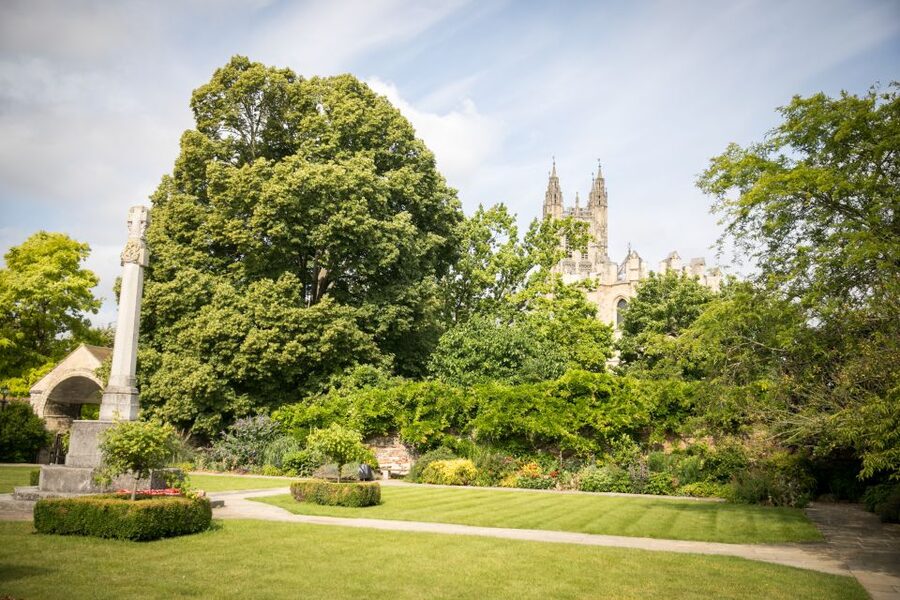
The cathedral is wheelchair accessible, but conditions vary by area. Floors are uneven in places, some entrances have stone steps, and some routes use access ramps. Museum lighting can also vary, so visitors who need steady light should take care.
Children under 16 must remain with an adult at all times. Children’s sit-on wheeled toys and throwing toys are not allowed.
Do not bring weapons, sharp objects, food, drinks, large bags, luggage, skateboards, scooters, fireworks, or skates. Assistance dogs are allowed, but other pets are not. Random bag searches may take place at entry to the cathedral and precincts.
Blue Badge parking is available subject to space, while public car parks are located nearby. General parking is not provided at the cathedral itself.
The experience is described as a small group, limited to nine participants, but the main attraction is still the self-guided format. You receive help from an English, French, Japanese, or German-speaking host or greeter, then explore independently.
Who should book this experience?
I recommend it most strongly to people who like history, architecture, religious buildings, and self-paced sightseeing. The cathedral is visually powerful, but the audio guide gives the visit much more meaning.
It is also a good choice if you want flexibility. You can select where to go next, pause the commentary, and spend more time in the areas that interest you most.
Families can make it work, provided children under 16 stay with an adult and everyone is comfortable with a quiet historic site. Visitors who prefer a perfectly marked route may find the audio system frustrating, especially if they expect numbered stops throughout the building.
If you are short on time, focus on the nave, stained glass, crypt, Chapter House, and Great Cloister. If you have half a day, add the gardens and exhibitions. That simple plan will help you avoid wandering without missing the cathedral’s best features.
Should you book Canterbury Cathedral with the audio guide?
Yes, if you want more than a quick look at a beautiful church. The cathedral’s scale, stained glass, crypt, cloisters, gardens, and long connection to English Christianity give you plenty to see, and the audio guide adds the explanation needed to make those details stick.
Book it if you can allow at least two hours and are happy with a self-guided format. Before leaving the collection desk, test the handset and confirm the return point. If you need a perfectly clear route or faultless equipment, prepare for a little patience.
For history lovers, the price is justified. Canterbury is the kind of place that becomes more rewarding the longer you look.
FAQ
How much does Canterbury Cathedral entry with the audio guide cost?
The listed price is $31 per person.
How long is the ticket valid?
The ticket is valid for one day.
What languages are available on the audio guide?
The audio guide is available in English, French, German, and Japanese.
Are the handset and headphones included?
Yes. The ticket includes the audio guide, handset, and headphones.
What areas are included with admission?
Admission includes Canterbury Cathedral, the Chapter House, the Great Cloister, three public gardens, and access to up to three exhibitions.
Is the cathedral wheelchair accessible?
Yes, the experience is described as wheelchair accessible. Some areas have stone steps, while some entryways have access ramps. Floors may be uneven.
Can children visit alone?
No. Children under 16 must be accompanied by an adult at all times.
Is parking available at the cathedral?
Parking is available for Blue Badge holders only, subject to availability. Public car parks are located nearby.
Can I cancel the booking?
Yes. You can cancel up to 24 hours in advance for a full refund.
Just added around the UK
- Stratford-upon-Avon: River Cruise and City Audio Tour★ 5.0 · 9 reviews
- Shakespeare’s Stratford-Upon-Avon: A Self-Guided Audio Tour★ 5.0 · 26 reviews
- Warwickshire & Stratford-Upon-Avon Self-Guided Audio Tours★ 5.0 · 6 reviews
- Rebels, Romance & Raisins St. Andrew’s Walking Audio Tour★ 5.0 · 2 reviews
- Stonehenge Private Immersive Audio Guide★ 4.5 · 15 reviews
- Oxford’s literary legends and landmarks: A Self-Guided Audio Tour★ 3.0 · 4 reviews
- A Guide to the City of Dreaming Spires: A Self-Guided Audio Tour of Oxford★ 5.0 · 2 reviews
- Discovering Cheltenham: A Self-Guided Audio Tour★ 4.5 · 23 reviews
Church & Cathedral Audio Tours, compared.

St. Peter’s Basilica & Dome Entry Ticket & Audio Tour
Read our review →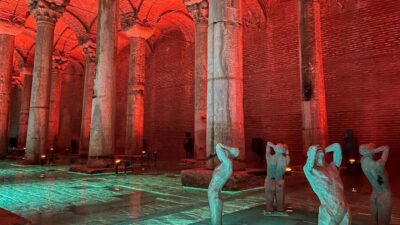
Basilica Cistern Fast-Track Entry and Audio Guide
Read our review →
Cathedral & Brunelleschi’s Dome Ticket & Audio App
Read our review →
Vatican & Sistine Chapel Ticket with Optional Audio Guide
Read our review →
St. Mark Basilica Ticket, Audioguide+History Gallery
Read our review →
Skip the Line: Vatican & Sistine Chapel Ticket with Audio Guide
Read our review →
St. Peter’s Basilica with Optional Dome Ticket & Audioguide
Read our review →
Browse the lists this tour appears in