

REVIEW · USA AUDIO TOURS
Self-Guided Audio Driving Tour in Blue Ridge Parkway
The Parkway tells better stories with a voice beside you. This self-guided audio tour turns a long mountain drive into a flexible road trip, with location-based narration, directions, local tips, and more than 765 points of interest. I especially like the offline GPS playback and the freedom to linger at a waterfall, skip a side trip, or split the route across several days. The main drawback is that you still need to plan your own stops, meals, fuel, and timing, and some attractions charge separate admission.
At $24.99 per vehicle for up to eight people, the tour is an easy value for a couple, family, or full carload. The narrator has a friendly personality, too. One person even named him Joe and wished they could take him everywhere. Just remember to download the tour before you leave service, bring a car charger, and keep your eyes on the road while the app plays.
Key points before you set out
- More than 765 audio points: Stories, directions, and tips play automatically as your phone’s GPS tracks your location.
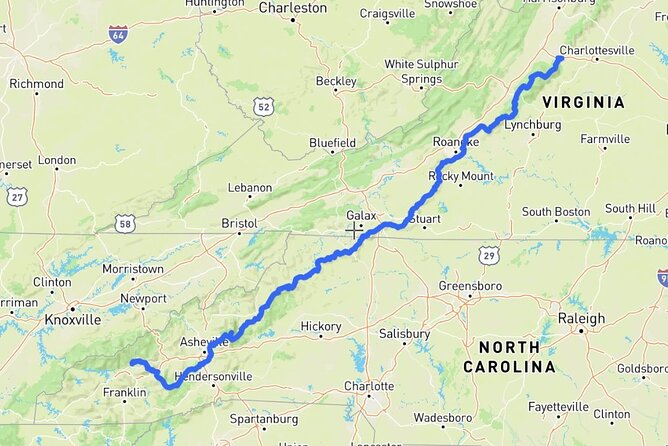
- A full Parkway route: The tour runs between Cherokee, North Carolina, and Afton, Virginia, with stops such as Linville Falls, Mabry Mill, Mount Mitchell, and Grandfather Mountain.
- Buy once for the whole car: One $24.99 purchase covers a group of up to eight people in one vehicle.
- Use it offline: Download the app and tour over WiFi or cellular data before driving. No signal is needed once the tour is stored on your phone.
- Built for flexible schedules: Suggested half-day, full-day, and multi-day plans help you shape the route around your time.
- Extra costs remain: Explore Park and Grandfather Mountain charge admission, and the tour does not include those fees.
Why an audio guide helps on the Blue Ridge Parkway

The Blue Ridge Parkway is easy to underestimate. You can drive for hours among wooded ridges, overlooks, historic sites, short walks, and side roads, but road signs alone do not explain why a place matters. This tour adds context while you drive, so a bridge, mill, old estate, or mountain pass becomes more than a quick photo stop.
The format is simple. Your phone uses its GPS chip to trigger commentary as you approach points along the route. You do not need to keep staring at a map or manually select every stop. The narration includes stories, directions, and suggestions, and it works in either direction along the tour route.
I like this approach more than a fixed bus excursion because you control the day. Stop for ten minutes at an overlook or spend half a day on a trail. Start in Cherokee, begin near Asheville, or pick up the route farther north. The tour does not require a fixed start time or a fixed end time.
That freedom also means you must take responsibility for the drive. The audio does not replace road signs, a current map, or common sense. Keep the phone mounted safely, avoid handling it while moving, and pull over before changing the itinerary.
More Self-Guided Audio Tours in the USA
- Gettysburg Battlefield Self-Guided Driving Audio Tour
★ 4.5 · 910 reviews - Joshua Tree National Park Self-Guided Driving Audio Tour
★ 4.5 · 762 reviews - Ultimate Acadia National Park Self-Guided Driving Audio Tour
★ 4.0 · 521 reviews
How to use the tour without wasting your first hour
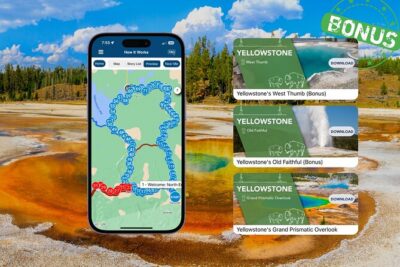
After booking, you receive instructions by email and text. Search for the message titled Download Audio Tour, sign in with your preferred Apple or Google account, and redeem the voucher code. Then download the free GuideAlong app and the tour itself under My Tours.
Do all of this before heading into the mountains. The tour works offline only after the audio has been downloaded over WiFi or cellular data. A USB car charger is important, since GPS use and continuous audio can drain a phone battery.
The route covers a very large stretch of the Parkway, so the listed stop times should not be treated as a single-day schedule. The drive itself can take much longer than eight hours once you add trails, meals, overlooks, traffic, weather, and side trips. The stated 8 to 20 hours is best understood as a broad estimate for using the tour, not a promise that you can comfortably see everything in one day.
For a short visit, choose a section. For a longer road trip, use the app’s suggested half-day, full-day, or multi-day plans. You can also create your own route based on your interests.
Cherokee and Asheville: strong places to begin
Cherokee makes a meaningful southern starting point. The Museum of the Cherokee Indian explains Cherokee culture and history, while the Oconaluftee Arts and Crafts Mutual presents traditional crafts and artwork. In summer, the outdoor drama Unto These Hills tells the story of the Trail of Tears, the division of the Cherokee Tribe, and the fight to remain on ancestral land.
The tour places Cherokee at the beginning or end, depending on your direction. Give it more than a quick pass if you want time for the museum, arts center, and other attractions in the area. The Cherokee section also connects naturally with Great Smoky Mountains National Park, so it works well for a multi-day trip rather than a hurried drive-through.
Asheville is another place where you should slow down. The city offers breweries, restaurants, art galleries, and the Biltmore Estate, a French Chateau-style property with major historical importance. The audio tour allows about an hour for Asheville, but that is only enough for a taste.
If you plan to visit Biltmore, add at least a full day for Asheville and the estate. The Parkway drive and Biltmore are separate experiences, and squeezing both into a few hours will leave you frustrated. Asheville is best treated as a base or overnight stop.
Southern highlights: Devil’s Courthouse and Mount Mitchell
Devil’s Courthouse has an intimidating name and a short, strenuous hike. The rocky viewpoint sits at 5,270 feet and looks across much of Pisgah National Forest toward the point where the Blue Ridge Mountains meet the Carolina Piedmont.
The trail is not a casual stroll, despite the brief distance. Wear proper shoes and allow time for the climb. The name comes from Cherokee legend and later settler stories, giving the audio commentary a useful human layer beyond the view.
Mount Mitchell offers a different kind of mountain achievement. It is the highest mountain east of the Mississippi, yet the summit viewpoint is reached by a paved half-mile walk from the parking area. The route is steep, so it still requires effort, but you do not need a long backcountry hike to reach the top.
The tour allows about 30 minutes here. That may work for a quick summit visit, but sunset could justify a longer stop if your timing is right. Mountain weather and visibility can affect the experience, so keep your schedule loose.
More Driving Audio Tours in the USA:
- Ultimate Lake Tahoe Self-Guided Driving Audio Tour
★ 4.5 · 435 reviews - Scenic Newport, RI Self-Guided Driving Audio Tour
★ 4.5 · 325 reviews - Arches National Park Self-Guided Driving Audio Tour
★ 4.5 · 288 reviews - Yellowstone National Park Self-Guided Driving Audio Tour
★ 4.5 · 249 reviews
Linville Falls and Grandfather Mountain

Linville Falls is one of the Parkway’s essential stops. The water drops three times into a gorge often called the Grand Canyon of the Southern Appalachians. The main trail leads to an overlook, with side paths offering views of the first and second falls before you reach the final viewpoint.
The hike is more than a quick roadside look, so allow at least an hour and expect to adjust that time if you want several viewpoints. This is one of the places where the audio guide helps by reminding you what lies beyond the parking area, but the trail itself deserves your attention.
Grandfather Mountain sits a short distance off the Parkway and charges a separate entrance fee. Adult admission ranges from $15 to $28, children’s admission from $10, and senior admission from $13 to $26. Prices vary, so check the current fee before you go.
The headline attraction is the Mile High Swinging Bridge, suspended between two mountain peaks. The gap below is not a mile deep, but the bridge still offers a real thrill and wide views. Grandfather Mountain also supports a stewardship foundation and protects wildlife and the mountain property.
The audio commentary includes a film connection that you will discover along the way. That small bit of pop-culture detail adds personality without taking away from the mountain itself.
Mabry Mill and the Parkway’s working past

Mabry Mill is probably the most photographed site on the Parkway, and it earns the attention. The mill pond, buildings, water channels, and surrounding setting make an easy picture stop, but the site is more than scenery.
When the mill is open, volunteers operate it as a working grist mill and prepare cornmeal for sale. Even outside operating hours, you can walk around and see the old flumes, troughs, moonshine still, and displays about the property.
The Mabry Mill Restaurant serves country cooking and is especially known for buckwheat pancakes. This is one of the best places to build a meal into your route rather than treating every stop as a rushed photo opportunity.
The tour allows about an hour here. I would keep that estimate flexible because opening hours, meal lines, and your interest in the exhibits can change the pace.
Humpback Rocks, Moses Cone, and the northern Parkway

Near the northern end, Humpback Rocks offers one of the route’s most rewarding hikes. The two-mile loop climbs to a rocky summit with views across Virginia’s hills and broad valleys. It is moderately difficult and usually takes about two hours, much longer than the one-hour stop estimate shown for the attraction.
In fall, the view is especially appealing, but the audio tour presents Humpback Rocks as a good stop in any season. Plan this as a proper hike, not a quick stretch of the legs.
At the Humpback Rocks Visitor Center and Mountain Farm, you can also learn about local mountain life. The combination of a trail, farm setting, and Parkway interpretation gives this area more substance than a single overlook.
Moses H. Cone Memorial Park occupies the former estate of a textile entrepreneur. Old carriage roads cross the grounds, and the Southern Highlands Crafts Guild presents traditional Appalachian work. Nearby Julian Price Park adds a scenic lake, while Blowing Rock and Boone make worthwhile side trips away from the Parkway.
The audio tour gives each of these places a clear role, but you should not try to do them all in one short stop. Pick one main activity and save the rest for another day.
James River, Explore Park, and Natural Bridge
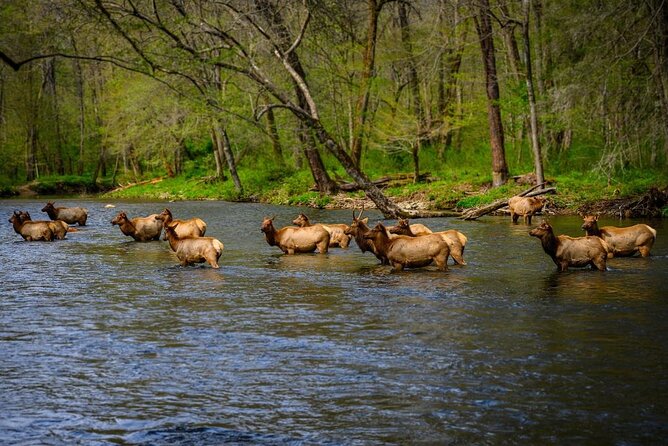
The James River crossing marks the lowest point on the Parkway. A large picnic area, footbridge, historic hand-operated locks, and trails around a former millpond give you several ways to pause.
A connector trail begins at the north end of the parking lot and leads toward the old millpond. Local outfitters can also arrange paddling or floating on the river, although those services are separate from the audio tour.
Explore Park sits off the Parkway near the Roanoke River and covers 1,100 acres. Its visitor center and museum include a large three-dimensional relief map of the Parkway, along with galleries about the road and the settlement of Roanoke and the surrounding river valley.
There are also trails for hiking and mountain biking. Admission is not included, and the stated day pass is $3. That modest fee is unlikely to change the value of the overall tour, but you should know about it before turning off the road.
Natural Bridge State Park is another side trip in Virginia. The park’s main feature is a 215-foot natural arch spanning a narrow canyon. Trails offer several views, and Cedar Creek Trail passes through forest beneath the bridge.
Thomas Jefferson once owned Natural Bridge and the surrounding land. Today it is preserved as a state park, making it an appealing final add-on near the northern end of the route.
Blue Ridge Music Center: make time for the sound
The Blue Ridge Music Center gives the Parkway a strong cultural stop. This section of Virginia is tied to the origins of country and bluegrass music and forms part of the Crooked Road Music Trail.
Displays cover musicians, songs, and the forces that shaped the region’s music. The center also hosts free Midday Mountain Music jam sessions from noon to 4 p.m. during the operating season. The Summer Concert Series brings established and newer bluegrass acts from Memorial Day through Labor Day.
Timing matters here. If you arrive outside the music hours, you can still visit the displays, but you may miss the part that makes the stop feel most alive. Check the day’s schedule before setting out, since the audio guide cannot create a performance that is not happening.
Cost, timing, and who gets the best value
The $24.99 price covers one vehicle with up to eight people. That is strong value for a family or group, especially compared with a private guide or several individual tickets. For two people, it remains reasonable if you use the commentary across several days.
The purchase has no expiry date and includes free updates. You can change your plans without changing the tour date, and you can stop, resume, or continue on another day. That is especially useful on the Parkway, where weather, trail conditions, and unexpected delays can reshape the day.
Admission is not included at Explore Park or Grandfather Mountain. Most of the listed Parkway stops have no admission ticket, but meals, lodging, fuel, Biltmore Estate, and other side-trip costs are also outside the tour price.
The tour suits independent drivers who want more context but dislike fixed schedules. It is also good for families because one purchase covers everyone in the car, and the narration can keep a long drive from feeling like a series of anonymous bends.
It is less suitable if you want a human guide, a set timetable, or transportation. The experience is private, but you are still the driver, planner, and decision-maker.
Should you book this Blue Ridge Parkway audio tour?
I would book it if you plan to drive a meaningful section of the Parkway and want more than directions. The combination of automatic stories, offline use, flexible timing, and one-car pricing gives you useful support without taking control away from you.
Choose it especially if you have several days, want to visit Cherokee and Asheville, or intend to stop at places such as Mabry Mill, Linville Falls, Mount Mitchell, and the Blue Ridge Music Center. If you only have a few hours and already know exactly where you are going, the tour may offer less value.
Download everything before leaving service, bring a charger, and use the audio as a companion rather than a substitute for planning. Done that way, it gives the Parkway something a standard map cannot: a running sense of why the road, mountains, music, bridges, mills, and communities matter.
FAQ
How much does the self-guided audio tour cost?
The tour costs $24.99 per group, with one purchase covering up to eight people in a single vehicle.
Where does the tour begin and end?
The listed route runs from the Blue Ridge Parkway in Cherokee, North Carolina, to the northern end of the Parkway in Afton, Virginia. You can start and finish anywhere along the tour route.
How long does the tour take?
The estimated duration is about 8 to 20 hours. You can also use the suggested half-day, full-day, or multi-day plans.
Does the tour require cell service or WiFi while driving?
No. You must download the app and tour over WiFi or cellular data before driving, but the audio works offline afterward using your phone’s GPS.
How does the audio commentary play?
Stories, directions, and tips play automatically based on your location. The phone’s GPS triggers the commentary as you move along the route.
Does the tour expire?
No. The purchase has no expiry date and includes free updates.
Are attraction admission fees included?
No. Explore Park charges a $3 day pass, and Grandfather Mountain has separate admission fees. The audio tour price does not cover those costs.
Is Asheville included in the tour?
Yes. Asheville is one of the featured stops, with suggestions for restaurants, breweries, art galleries, and the Biltmore Estate.
What should I bring for the tour?
Bring a fully charged phone and a USB car charger. Download the tour before leaving reliable service, and use a safe way to connect the phone for audio while driving.
Just added around the USA
- Self Guided Driving Audio Tour of Saguaro National Park★ 3.0 · 4 reviews
- Self-Guided Audio Driving Tour of Mount Lemmon★ 5.0 · 4 reviews
- Saguaro National Park Self-Guided Audio Tour★ 3.5 · 11 reviews
- A Self Guided Audio Tour in Tombstone★ 4.0 · 11 reviews
- Catskills Scenic Byway Self-Guided Driving Audio Tour★ 4.0 · 9 reviews
- Big Bend National Park Self Guided Audio Tour Guide★ 5.0 · 12 reviews
- Self-Guided Audio Driving Tour in Catskills Scenic Byway★ 4.5 · 7 reviews
- Shiloh Battlefield Self-Guided Driving Audio Tour★ 4.0 · 9 reviews
Driving Audio Tours, compared.



Ultimate Acadia National Park Self-Guided Driving Audio Tour
Read our review →



Browse the lists this tour appears in