
REVIEW · USA AUDIO TOURS
Chicago Self-Guided Audio Tour
Chicago rewards curious walkers. This $6 self-guided audio tour links 15 major sights, from Union Station to Navy Pier, with stories about architecture, art, science, politics, and city planning. I like the freedom to choose your route and the unusually broad mix of stops. You can spend an hour in one museum, skip another, or spread the experience across six days.
I also like the low price and simple delivery through SoundCloud and Google My Maps. The main caution is content length: the audio is designed as short commentary, not a full guided tour. Some tracks may last only a minute or a few minutes, so you should see this as an inexpensive companion to sightseeing, not a replacement for a museum guide or live local expert.
Five things to know before you go

- Fifteen stops cover a wide slice of Chicago: You get major museums, public art, historic buildings, lakefront sights, and neighborhood institutions in one package.
- You choose the route: This is not GPS-guided, so you can start and finish anywhere, visit stops in any order, and pause for meals or other plans.
- The price is hard to beat: At $6 per person, the tour costs less than most single attraction audio guides, though admission fees are separate.
- The audio is brief by design: It gives you useful context and stories, but you may want extra reading at the Field Museum, Art Institute, and other large attractions.
- Bring your own gear: You need a charged smartphone, headphones, and internet access. The links work in a browser, with no app download or SoundCloud account required.
How this Chicago audio tour really works
This is a private activity for your own group, but it is not a private guide walking beside you. You receive two private links before your selected start time through the booking platform’s messaging system.
The first link opens a SoundCloud playlist with audio for all 15 stops. The second opens a Google My Maps route with headphone icons marking each location. Use the map in your web browser, not the Google Maps app, then tap a location to reach its matching audio.
That setup is simple once you know the trick. I would open both links before leaving your hotel, check that they load, and save the pages in your browser. Since the links remain valid for up to six days, you do not need to force every stop into one long day.
The advertised duration is roughly three to nine hours, but that refers to exploring the sites and moving around Chicago. The audio itself is much shorter. One detailed assessment found that most recordings lasted one to four minutes, with the full audio adding up to less than 30 minutes. That is useful if you dislike long lectures, but disappointing if you expect hours of narration.
More Self-Guided Audio Tours in the USA
- Gettysburg Battlefield Self-Guided Driving Audio Tour
★ 4.5 · 910 reviews - Joshua Tree National Park Self-Guided Driving Audio Tour
★ 4.5 · 762 reviews - Ultimate Acadia National Park Self-Guided Driving Audio Tour
★ 4.0 · 521 reviews
Union Station starts with marble and movie history

Union Station is a good first stop because it gives you an immediate look at Chicago’s grand civic style. The Great Hall, with its soaring skylight and Beaux-Arts design, makes even a routine train journey feel ceremonial.
The audio points you toward the station’s film appearances, including The Untouchables and Public Enemies. It also covers the station’s World War II training role, famous passengers, and the tunnels beneath the building.
You do not pay admission, and you can explore at your own pace. Allow more than the suggested 20 minutes if you want to study the details or watch the flow of commuters. The short audio works well here because the building itself provides much of the experience.
Field Museum puts the T-Rex in a larger story
The Field Museum is not just about dinosaurs. The commentary directs you beyond the famous T-Rex toward the Ancient Americas collection, Egyptian mummies, and research laboratories above the public galleries.
You also get a quick account of the museum’s origins after the 1893 World’s Fair and its role in the study of evolution, anthropology, and natural science. That background helps you see the museum as a working research institution, not simply a collection of impressive displays.
Admission is not included. The 20-minute stop label should not be mistaken for a realistic museum visit. If you enter, you could easily spend several hours, and the short recording will only introduce the place. I would use the audio before entering, then follow your own interests inside.
Buckingham Fountain turns a photo stop into a story
Buckingham Fountain is free, easy to reach, and worth a pause in Grant Park. The audio explains the family legacy behind the fountain, its engineering, and the symbolism of the Great Lakes represented in its design.
You also hear about restoration work, seasonal operation, and the history of the nighttime light show. These details give meaning to what might otherwise be a quick photograph and a few minutes of spray.
The fountain is best treated as a flexible outdoor stop. You can linger, sit nearby, or fold it into your route between the Field Museum, the Art Institute, and Millennium Park. Since the audio is short, it will not interrupt the view.
Same place, a different route to walk:
- Los Angeles: Hop-On Hop-Off Bus Tour with Audio Guide
★ 3.7 · 2,030 reviews - City Sightseeing Hop-On Hop-Off Bus Tour with Audio Guide
★ 3.0 · 1,083 reviews - Medieval Torture Museum Ticket with Audio Guide and Ghost Hunting
★ 5.0 · 962 reviews - San Francisco: Alcatraz, Ferry & Audio Tour w/ Night Option
★ 4.4 · 617 reviews
The Art Institute needs your own time
The Art Institute of Chicago is one of the tour’s most important stops, but the audio can only point you toward the larger story. It covers famous works such as Grant Wood’s American Gothic, the museum’s major donors, and the way Chicago’s industrial wealth helped build a serious art collection.
It also raises the less tidy side of collecting, including controversial acquisitions and the competition between Chicago patrons and European buyers. That is valuable context, especially if you want more than a list of famous paintings.
Admission is separate, and 20 minutes is not enough for the museum itself. I would listen to the track outside or near the entrance, then set aside several hours if art is central to your Chicago visit. The audio offers orientation, not a gallery-by-gallery tour.
Millennium Park and Cloud Gate show modern Chicago
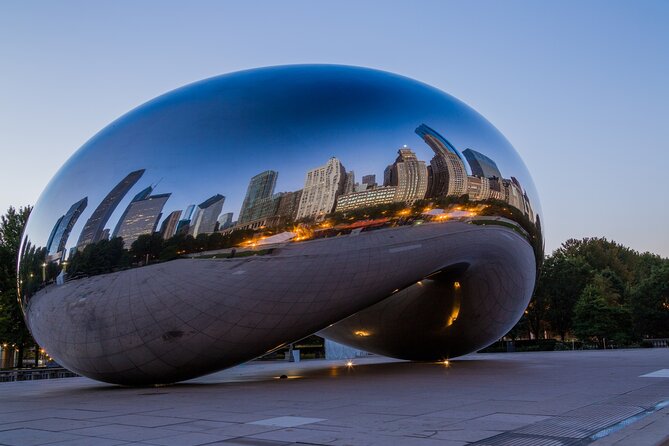
Millennium Park explains how former industrial land became a major public arts space. The audio covers political arguments, construction problems, underground engineering, the Crown Fountain, and the ecological purpose of the Lurie Garden.
This is a useful stop for understanding why the park feels more ambitious than a normal downtown lawn. Its art, gardens, performance areas, and engineering all work together, even if the short narration cannot explain every feature in detail.
Cloud Gate, better known as the Bean, receives its own track. You hear about the sculpture’s controversial creation, seamless surface, mathematical qualities, maintenance, and connection to Chicago’s industrial identity.
Cloud Gate is free, but access and viewing conditions can vary with park activity. You will get more from it if you walk around the sculpture instead of stopping at the first photo angle. The recording is a prompt to look closely, not a substitute for seeing the reflections change around you.
The Cultural Center rewards a slower look

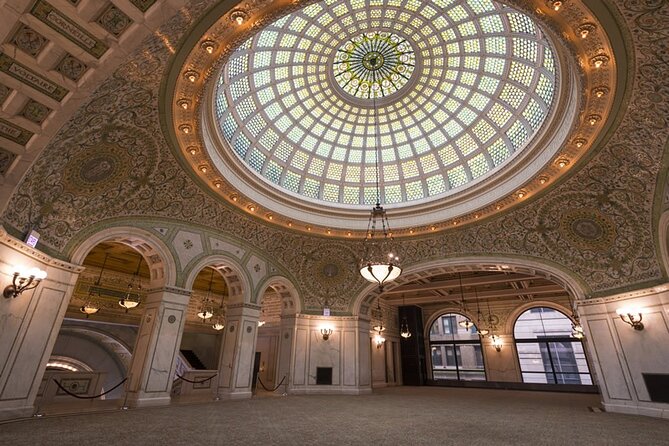
The Chicago Cultural Center is one of the strongest free stops. The building began as the city’s first central library and later became a public center for galleries, performances, and cultural events.
The audio highlights the Tiffany glass domes, mosaics, craftsmen, political battles over demolition, and architectural details that are easy to miss. It also explains how the building helps make art and culture available without an admission charge.
I would allow extra time here, especially if you enjoy interiors. The audio gives you a reason to look upward and examine the craftsmanship rather than simply passing through on the way to Millennium Park.
The Riverwalk explains Chicago’s engineering gamble
The Chicago Riverwalk gives you a different view of the city. From water level, you can see architectural details that are easy to miss from downtown streets, while the audio explains the river’s role in Chicago’s founding and the engineering project that reversed its flow.
It also covers the river’s modern redevelopment, urban ecology, and the effort to reclaim the waterfront for public use. That makes this one of the better places to connect Chicago’s industrial past with its current public spaces.
The route is free, and you can walk only part of it. I would pair it with the Cultural Center, Cloud Gate, or Navy Pier rather than treating it as a separate full-day outing.
Navy Pier mixes military history with entertainment
Navy Pier is more than rides, restaurants, and lake views. The audio traces its military training role during World War II, its near-demolition, and its later transformation into a major entertainment destination.
You also hear about the structure beneath the boardwalk, its economic role, and efforts to balance tourism with local needs and environmental concerns. This background adds useful perspective to a place that can otherwise feel purely commercial.
The pier is free to enter, but individual attractions and activities cost extra. You should plan your spending before you arrive, since the audio does not cover admission to anything on the pier.
The Driehaus Museum shows Gilded Age luxury
The Richard H. Driehaus Museum offers a change of pace from public parks and large institutions. Inside a restored Gilded Age mansion, you see decorative arts, Tiffany windows, hand-painted ceilings, and period furnishings.
The audio explains the original family, the restoration, the craftsmen, and the social customs of Chicago’s wealthy residents. It also covers how a private home became a public museum devoted to American decorative arts.
Admission is not included. This is a place where the short audio may feel more useful than it does in a very large museum, since the rooms are intimate and the details close at hand. Check the museum’s current opening information before building your route around it, as the tour data does not provide operating hours.
360 Chicago turns the skyline into a city lesson
At 360 Chicago, the view is the main event, but the audio gives you a way to read the skyline. It discusses the architects behind Chicago’s skyscrapers, urban planning, neighborhood patterns, and the events that shaped the city below.
Admission is separate, and you should budget for the observation deck as its own paid attraction. The recording cannot control weather or visibility, so its value depends partly on what you can see when you arrive.
I like this stop for first-time visitors because it connects separate sights into one picture. After visiting the river, parks, museums, and lakefront, you can look down and understand how those areas fit together.
Lincoln Park Zoo keeps admission at zero
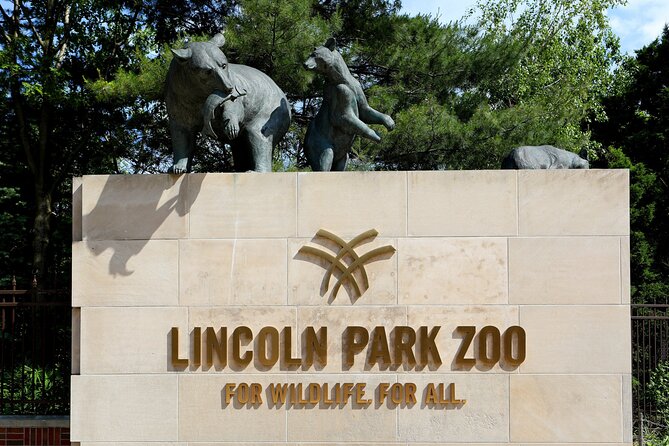
Lincoln Park Zoo is one of the tour’s best value stops because admission is free. The audio focuses on conservation, captive breeding, habitat design, animal welfare, and the zoo’s change from a small menagerie into a respected conservation center.
It also points to individual animals and research conducted on site. That gives you a reason to pay attention to the institution’s work, not only the animals in front of you.
The zoo can occupy much longer than 20 minutes. Treat the recording as a short introduction, then explore according to your interests. This stop suits families and anyone who wants a free activity with a scientific focus.
Chicago History Museum fills in the city’s backstory
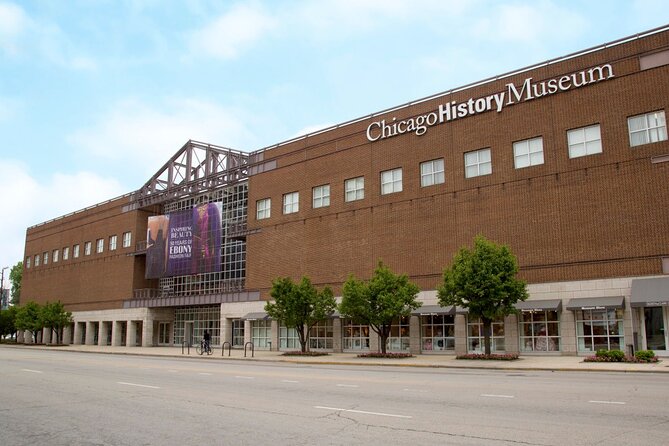
The Chicago History Museum connects the city’s major turning points, from a frontier trading post to a major American metropolis. It covers the Great Fire, the 1893 World’s Fair, cultural movements, and the everyday people who lived through periods of rapid change.
Admission is not included. The audio will help you decide which exhibits deserve your time, but it cannot replace the museum’s displays and personal accounts. I would choose this stop if you want social history, not only architecture and famous names.
Newberry Library adds an intellectual pause
The Newberry Library offers rare manuscripts, historic maps, literary collections, and research resources. The audio explains its founding, its role in Chicago’s intellectual life, and the writers and scholars connected with its collections.
Admission is free, which makes it an easy addition to a downtown route. The building and reading rooms deserve a calm visit, though the available information does not promise access to every research area. Use the audio to understand the library’s purpose, then follow any public exhibits or programs available that day.
Griffin Museum of Science and Industry ends on a grand scale
The Griffin Museum of Science and Industry occupies the last remaining building from the 1893 World’s Columbian Exposition. Its audio introduces the building’s fairground origins, interactive exhibits, medical and technology displays, the German U-boat, and the Pioneer Zephyr train.
Admission is separate, and this is another place where 20 minutes is only an introduction. You should set aside substantial time if you enter. The museum is large, so use the audio to pick a few priorities instead of trying to absorb everything.
Is $6 good value for Chicago?
Yes, if you understand what you are buying. For $6, you get a flexible map and short audio introductions to 15 places. That is a low-cost way to add context to a self-planned day, especially when several stops are free.
The value drops if you expect a full spoken tour. One critical assessment found the combined audio lasted less than 30 minutes, with several attractions receiving only a minute or less. I consider that the key buying decision. You pay for access, route ideas, and concise stories, not hours of expert narration.
You also pay attraction admission separately and arrange your own transportation. The tour provides no pickup, drop-off, food, drinks, headphones, or internet access.
Who should book it?
I would choose this experience if you like independence, want to cover many parts of Chicago, and prefer short audio to a scheduled group tour. It suits repeat visitors who already know how to spend time in museums, as well as first-time visitors who want a broad framework.
I would skip it if you want a local guide, detailed museum interpretation, or continuous narration while walking. A traditional tour costs more, but it may better match those expectations.
The average rating is 3.9 from nine reviews, with praise for clear, engaging narration and interesting folklore. The strongest practical advice is simple: listen before you go, plan your priorities, and bring headphones. At this price, the tour works best as a lightweight tool that helps you notice more, not as the main event.
FAQ
How much does the Chicago Self-Guided Audio Tour cost?
The price is $6 per person.
How long does the experience take?
The stated exploration time is approximately three to nine hours. You can also split it across multiple days.
How many attractions are included?
The audio playlist and itinerary map cover 15 attractions.
Is this a GPS-guided tour?
No. It is not GPS-guided. You choose the order, starting point, ending point, and amount of time at each stop.
What do I receive after booking?
You receive a private SoundCloud playlist link and a private Google My Maps itinerary link.
How long do the access links remain valid?
The private links remain valid for up to six days.
Do I need a SoundCloud account?
No account creation is required. You can open the link in a web browser and listen.
Should I use the Google My Maps link in the Google Maps app?
No. The instructions specify using the Google My Maps link in your web browser, not the Google Maps app.
Are attraction admission fees included?
No. Entry fees are not included where an attraction charges admission.
What should I bring?
Bring headphones or earphones, a fully charged smartphone, and internet access.
Just added around the USA
- Self Guided Driving Audio Tour of Saguaro National Park★ 3.0 · 4 reviews
- Self-Guided Audio Driving Tour of Mount Lemmon★ 5.0 · 4 reviews
- Saguaro National Park Self-Guided Audio Tour★ 3.5 · 11 reviews
- A Self Guided Audio Tour in Tombstone★ 4.0 · 11 reviews
- Catskills Scenic Byway Self-Guided Driving Audio Tour★ 4.0 · 9 reviews
- Big Bend National Park Self Guided Audio Tour Guide★ 5.0 · 12 reviews
- Self-Guided Audio Driving Tour in Catskills Scenic Byway★ 4.5 · 7 reviews
- Shiloh Battlefield Self-Guided Driving Audio Tour★ 4.0 · 9 reviews
Self-Guided Tours, compared.

Acropolis Ticket & Optional Self-Guided Audio Tours
Read our review →


Ultimate Acadia National Park Self-Guided Driving Audio Tour
Read our review →

Santorini: Akrotiri Ticket with Optional Self-Guided Audios
Read our review →