

REVIEW · BOSTON AUDIO TOURS
Boston Harborwalk & Tea Party Self-Guided Walking Audio Tour
Boston’s waterfront tells its best stories outdoors. This self-guided walk links South Station, the Harborwalk, the Boston Tea Party site, Long Wharf, and the New England Aquarium through GPS-triggered audio stories. I like the freedom to begin whenever you want, and I like that the narration adds context to buildings and wharves you might otherwise pass without noticing. The main drawback is that you must manage the app yourself, and the walk offers no live guide for questions or help with navigation.
At $9.99 per person, this is an inexpensive way to get a guided feel without joining a group. You receive lifetime access with no expiry, so you can pause, repeat the walk, or use it on a later Boston visit. Bring earbuds, download everything over strong Wi-Fi or cellular service, and expect the route to take roughly two to three hours if you stop for photos, food, or side trips.
Six things to know before you go

- South Station is the starting point, with an introduction to the huge eagle and clock above its facade.
- The Boston Tea Party gets more than a quick retelling, including the taxes, international conflict, and colonial trade behind the protest.
- GPS starts each audio story automatically, so you can keep your phone in your hand or pocket as you walk.
- The route covers about 1 to 1.5 miles, with more than 18 stories and a focus on Boston’s Waterfront District.
- Architecture is part of the tour, from the Federal Reserve Bank and Brutalist Harbor Towers to the Harbor Hotel’s copper dome.
- The ticket covers narration and maps only, not admission to the New England Aquarium or any other attraction.
What this Boston audio walk is really like

This is not a standard walking tour with a guide holding a flag. You meet no one at South Station. Instead, you download the Action Tour Guide app, enter the password sent by email and text, and head to the first GPS point.
Once you arrive, the first story begins automatically. The app then guides you from stop to stop, playing audio when your location matches the next point. The system is designed for hands-free use, though you will still want to glance at your phone now and then to confirm your position.
The route is short enough for most people who can manage an ordinary city walk. The stated distance varies slightly, with the main waterfront stretch described as about one mile and the full tour noted as more than 1.5 miles. The difference likely reflects the starting approach, the exact route, and the extra points included in the app.
You can finish in about one to two hours if you walk steadily. Allow two to three hours if you pause for photos, stop at the harbor, eat lunch, or explore the aquarium area.
More Audio Walking Tours in the USA
- Self Guided Classic Freedom Trail Location Aware (GPS) Walking Audio Tour
★ 4.5 · 258 reviews - Cape Cod & Provincetown Self-Guided Driving & Walking Audio Tour
★ 4.0 · 207 reviews - Santa Fe Historic Downtown Smart Phone Audio App Self Guided GPS Walking Tour
★ 4.5 · 112 reviews
Starting at South Station beneath the eagle and clock
South Station makes a useful starting point because it is easy to reach by public transportation and gives the tour an architectural opening rather than beginning with a generic street corner.
Your first story focuses on the enormous eagle and clock that dominate the station facade. It is a brief introduction, about ten minutes, but it gets you looking upward. That matters in Boston, where historic details often sit above eye level while people hurry along the sidewalk.
I like this opening because it begins with the city itself, not just the famous Tea Party story. You get a sense of Boston as a working transport center before moving toward the water and the events of the colonial era.
The practical issue is simple: South Station can be busy, and the exact GPS starting point matters. Stand near the first story’s location and make sure the app has permission to use your location. If the audio does not begin, check that the tour was downloaded and that your phone’s GPS is active.
The Federal Reserve Bank and Boston’s changing skyline
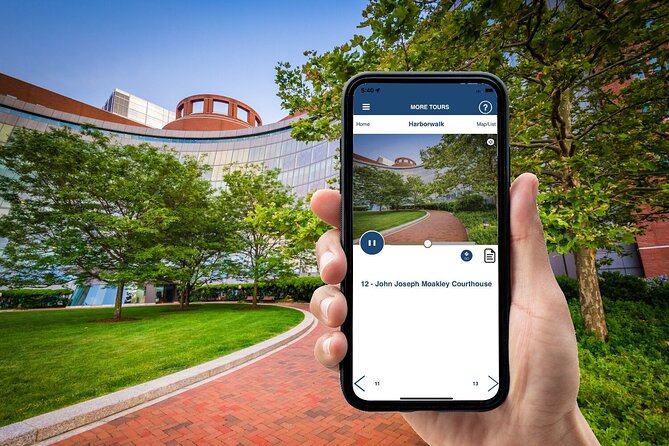
The walk moves past the Federal Reserve Bank of Boston, an imposing piece of modern architecture. The stop lasts about ten minutes and uses the building as a way into stories about finance and Boston’s changing city center.
This is one of the tour’s useful habits: it does not treat the waterfront as a sealed-off colonial museum. You move between old trade routes, modern institutions, apartment towers, hotels, and new construction. The contrast helps you see how much the waterfront has changed.
The Federal Reserve stop may appeal to you if you enjoy architecture and city development. If your main goal is only the Tea Party, it may feel like a side note. Still, it gives the route a broader frame and prevents the walk from becoming a string of dates and famous names.
Atlantic Wharf and the trade behind the Tea Party

At Atlantic Wharf, near Russia Wharf, the tour reaches the beginning of its main waterfront story. Here, the focus shifts to colonial trade and the ships that connected Boston to distant ports.
This section is important because the Boston Tea Party did not happen in isolation. The audio explains how international trade, taxes, and the cost of tea helped create tension in Boston. It also connects the local protest to a much larger war overseas and the financial strain that followed.
That added background is one of the strongest parts of the walk. Many quick tours present the Tea Party as a simple act of angry colonists throwing tea into the harbor. This route asks better questions: Why were taxes so high? Who benefited from the trade system? Why did a shipment of tea become such a flash point?
You are still walking along a modern harbor, with traffic, offices, and new buildings nearby. That setting works well. You can picture the waterfront as a place of cargo, arguments, money, and political pressure rather than just a scenic promenade.
More Self-Guided Audio Tours in the USA
- Gettysburg Battlefield Self-Guided Driving Audio Tour
★ 4.5 · 910 reviews - Joshua Tree National Park Self-Guided Driving Audio Tour
★ 4.5 · 762 reviews - Ultimate Acadia National Park Self-Guided Driving Audio Tour
★ 4.0 · 521 reviews - Ultimate Lake Tahoe Self-Guided Driving Audio Tour
★ 4.5 · 435 reviews
Harbor Towers and the argument over waterfront housing

The Harbor Towers are hard to miss. Their Brutalist design is heavy, fortress-like, and intentionally plain. You may admire the stark concrete forms, or you may wonder why anyone approved them. Either reaction is fair.
The audio uses the towers to discuss Boston’s struggle between luxury development and affordable housing. It also touches on the major effort to clean up the harbor, an issue that changed how people viewed and used the waterfront.
This is a good example of the tour’s range. A building that might seem unattractive or out of place becomes a doorway into questions about who gets to live near the water and how cities repair polluted urban areas.
The stop is also a reminder that this is not a purely historic route. You will see architecture from different periods and hear about decisions that still shape Boston today. If you prefer only colonial landmarks, this section may slow the pace. If you like cities as living places, it adds real value.
Rowes Wharf and the John Rowe story

At Rowes Wharf, the route returns to the people connected with Boston’s tea trade. The wharf is named for John Rowe, a merchant and tea smuggler who played a part in the events around the Tea Party.
The stop presents Rowe as more than a name on a sign. You hear about his dealings with the law and the complicated world of merchants, smuggling, and imperial rules. That complication is useful. Colonial Boston was not divided into neat groups of heroes and villains. Business interests, political beliefs, and personal survival often overlapped.
The wharf also gives you a chance to slow down. Look around before starting the next story. The harbor views make this a natural place for photographs, though the tour does not provide a planned break or a guide to organize one for you.
The Marina at Rowes Wharf and the copper dome

Near the marina, the Harbor Hotel provides one of the walk’s best architectural details. Its 80-foot copper dome combines modern construction with colonial-style design and includes a glass cupola above.
The audio points out a viewing trick: walk to the center of the archway and look straight up. From there, you can see through the top of the dome to the glass cupola.
This is exactly the kind of small observation that improves a self-guided walk. You are not merely told that a building is attractive. You are given a specific place to stand and a reason to look.
The stop lasts about ten minutes, but you may want to linger. Keep your phone handy if you want to compare the audio direction with what you see. GPS audio is convenient, but it does not replace paying attention to the physical route.
Long Wharf and the end of the main waterfront walk
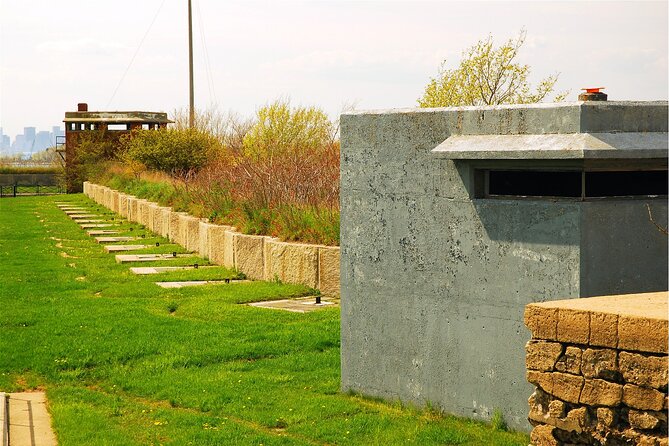
Long Wharf is where the scenic Harborwalk portion ends. It has been a key Boston waterfront location from colonial conflict with Britain through the modern tourist era.
This final stop pulls together the themes of the tour: trade, shipping, war, tourism, and the city’s continued relationship with the water. You get open harbor views and a clear sense that the waterfront has served many purposes over time.
The route is not physically long, but the story has several layers. If you walk directly from South Station to Long Wharf, you can move quickly. If you listen carefully and stop at each location, the pace becomes more relaxed.
Long Wharf is also a useful place to decide what you want to do next. You can finish the audio walk, continue toward the aquarium, or stop for food in the surrounding area. The app lets you pause, so you do not need to rush through the last story.
The New England Aquarium and what your ticket does not cover
The tour approaches the New England Aquarium, a major attraction partly built over the harbor. The audio explains how the facility uses access to the water and fits into the waterfront setting.
The important practical point is that aquarium admission is not included. This is a stop on the walking route, not an attraction ticket. If you want to go inside, you will need to arrange that separately.
You should also check your timing before combining the two activities. The audio route can be paused, but the aquarium is a separate visit with its own operating hours and entry arrangements. Treat the walking tour as a way to reach and understand the area, not as a substitute for an aquarium ticket.
Why the Tea Party section works better than a quick retelling
The Boston Tea Party is the headline subject, but the strongest teaching comes from the causes behind it. The audio connects the protest to taxation, imperial conflict, merchant interests, and the price of tea.
That approach helps if your earlier knowledge comes mainly from movies or a short school lesson. You get a clearer explanation of why tea mattered and why Boston’s merchants and colonists reacted so sharply.
The narration is designed to keep you moving. It gives you enough detail to understand the story without turning each sidewalk stop into a lecture. One useful feature is the extra content available in the app, which lets you hear more about a subject that catches your interest.
The tone also has some humor, according to the available feedback, and the narrator is described as clear and engaging. That matters on a walking tour. Dense information is harder to absorb when you are crossing streets, checking buildings, and dealing with city noise.
App setup, headphones, and route control
Download the separate Action Tour Guide app before you arrive. You must download the tour while you have strong Wi-Fi or cellular service. After that, the tour works offline, including its maps.
You receive a password by email and text. Search for audio tour if you do not see the instructions quickly. The same password can be used on the number of devices matching the number of people booked.
Earbuds are the best choice. They make the narration easier to hear and keep your hands free for photos. A couple could share one tour by splitting headphones, which lowers the effective cost, though each person will not have independent control of the audio.
The recommended devices are an iPhone with iOS 15 or later, an Android phone with version 9 or later, or an iPad or tablet with GPS and cellular capability. If you use more than one version of the tour in the app, select the one matching your starting point and direction.
Because there is no live guide, you are responsible for staying on the route and keeping a sensible walking pace. If the audio does not trigger, check your location, confirm that the correct tour is open, and contact support if needed.
Is $9.99 a good value?
At $9.99 per person, the price is low for a tour with more than 18 audio stories, offline maps, and unlimited use. A traditional private tour would cost far more, while a free walk without narration would leave you to research each building yourself.
The best value comes from flexibility. You can start at any time during the stated access period, pause for lunch, stop for photos, or return to the walk on another day. Lifetime access means you can use it again on a later Boston trip without buying it a second time.
The value is weaker if you want personal attention, a live conversation, or help handling unexpected route problems. You are paying for prepared narration and navigation, not a human guide.
The tour has a 4.9 rating from 17 ratings, with every listed rating recommending it. The most praised features are the clear narration, the GPS system, the useful amount of information, and the ability to move at your own pace. Those strengths match the product well.
Who should book this walk?
I would choose this tour if you want a short introduction to Boston’s waterfront and prefer setting your own schedule. It works especially well for:
- First-time visitors who want context before exploring more of Boston
- Families or couples who do not want to keep up with a group
- People with only an afternoon available
- Architecture fans interested in old and new buildings
- History-minded walkers who want more than a simple Tea Party anecdote
- Repeat visitors looking for a flexible waterfront stroll
I would be more cautious if you dislike using apps, have unreliable phone service before downloading, or want to ask questions as you walk. The route is self-guided from beginning to end, and the app is central to the experience.
Free cancellation is available when you cancel at least 24 hours before the start time. Cancellations inside that window are not refunded, so keep the cutoff in mind when making plans.
Should you book the Boston Harborwalk audio tour?
Book it if you want an affordable, flexible walk that connects Boston’s Tea Party story with trade, architecture, housing, and harbor cleanup. The GPS narration keeps you from wandering aimlessly, while the lifetime access gives you room to pause or repeat the route.
Skip it if you want a live guide, inside visits, or a full-day history program. For most independent visitors, though, $9.99 buys a useful layer of explanation for a scenic and manageable walk. Bring earbuds, download the app early, and let the harbor set the pace.
FAQ
How long does the Boston Harborwalk audio tour take?
The tour takes about two to three hours at a relaxed pace. The audio portion can take about one to two hours if you walk steadily and do not make long stops.
How far is the walking route?
The main Harborwalk section is about one mile, while the full route is described as more than 1.5 miles. The exact distance may vary based on the starting point and route followed.
Where does the tour start?
The tour starts at South Station in Boston. Your first story focuses on the station facade, including its large eagle and clock.
Where does the tour end?
The main scenic walk ends at Long Wharf. The route also approaches the New England Aquarium area.
Is a guide present at the meeting point?
No. This is a self-guided activity, so no person meets you at the start. You open the app at the first GPS point and follow the audio instructions.
What language is offered?
The tour is offered in English.
Does the price include admission to the New England Aquarium?
No. Attraction tickets, reservations, and admission passes are not included.
Do I need internet during the walk?
You need strong Wi-Fi or cellular service to download the tour. After downloading, the audio and maps work offline.
Can I pause and restart the tour?
Yes. You can start, pause, and resume the tour whenever you like. Lifetime access allows you to use it on later trips as well.
What device should I use?
An iPhone running iOS 15 or later, an Android device running version 9 or later, or an iPad or tablet with GPS and cellular connectivity is recommended. Headphones or earbuds are also recommended.
Just added around the USA
- Self Guided Driving Audio Tour of Saguaro National Park★ 3.0 · 4 reviews
- Self-Guided Audio Driving Tour of Mount Lemmon★ 5.0 · 4 reviews
- Saguaro National Park Self-Guided Audio Tour★ 3.5 · 11 reviews
- A Self Guided Audio Tour in Tombstone★ 4.0 · 11 reviews
- Catskills Scenic Byway Self-Guided Driving Audio Tour★ 4.0 · 9 reviews
- Big Bend National Park Self Guided Audio Tour Guide★ 5.0 · 12 reviews
- Self-Guided Audio Driving Tour in Catskills Scenic Byway★ 4.5 · 7 reviews
- Shiloh Battlefield Self-Guided Driving Audio Tour★ 4.0 · 9 reviews
Self-Guided Tours, compared.

Acropolis Ticket & Optional Self-Guided Audio Tours
Read our review →


Ultimate Acadia National Park Self-Guided Driving Audio Tour
Read our review →


Santorini: Akrotiri Ticket with Optional Self-Guided Audios
Read our review →
Browse the lists this tour appears in