
REVIEW · BAR HARBOR AUDIO TOURS
Acadia Mount Desert Island Self-Guided Driving Audio Tour
Lighthouses, tide pools, and local stories fill this island drive. I like that this tour covers more than 57 miles and connects the sights with location-based audio, so you are not simply following a map from one parking area to the next. I also like the price: $14.99 covers your whole car, up to four people, which is far less than paying per person for a guided excursion.
The main drawback is that the experience depends on your phone, your downloaded route, and your ability to stop safely. The narration can also feel light in places. One winter user found the information less useful during a snowy February visit, when plants and shoreline details were hidden. You will get the most from this tour in a season when roads, trails, and coastal viewpoints are open and easy to enjoy.
Key points to know before you go

- More than 57 miles and 48 audio stories: Expect a broad tour of Mount Desert Island, not just a quick circuit around Bar Harbor.
- Bass Harbor Lighthouse anchors the coastal route: You can see one of Maine’s most photographed light stations, though the tower and keeper’s house are closed.
- Easy walks add real value: Ship Harbor, Wonderland, and Little Long Pond offer short trails if you want more than a drive-by visit.
- The route works offline: Download the app and tour over strong Wi-Fi or cellular service before reaching the starting point.
- One price covers the car: At $14.99 for up to four people, the cost is especially good for families and small groups.
- You control the schedule: Pause for photos, meals, hikes, or tide pools, then return to the tour whenever you like.
What this Acadia audio tour actually gives you
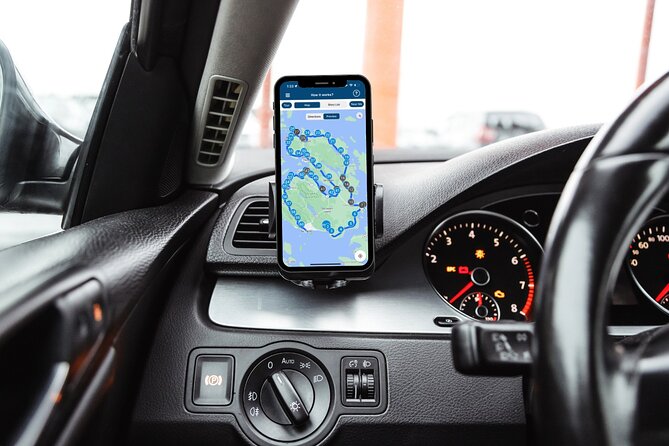
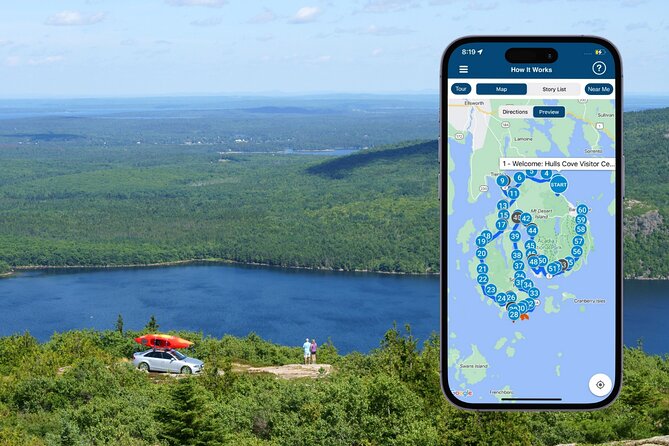
This is a private driving tour that begins at the Hulls Cove Visitor Center, north of Bar Harbor, and finishes at 1 West Street beside the Boardwalk. No guide meets you. Instead, you open the Action Tour Guide app, enter the supplied password, and follow the route using your phone’s GPS.
The audio stories play automatically as you reach each point. That hands-free setup is useful because you can keep your attention on the road, then pull over when a stop catches your interest. The app also includes offline maps, so you do not need a dependable signal throughout the park.
The advertised drive takes about two to three hours, but that estimate assumes you mostly keep moving. If you walk the trails, explore the shore, stop for food, or wait for low tide, plan on much longer. The tour is best treated as a flexible route for a full half-day or even several shorter outings.
You can connect your phone to your car stereo with Bluetooth, USB, or AUX. Apple CarPlay works with the audio playback, while Android Auto support is still being developed. For walking stops, headphones may be useful, but do not use them while driving.
The route is offered in English. It is designed for iPhones using iOS 15 or later, Android devices using version 9 or later, or an iPad or tablet with GPS and cellular capability.
More Self-Guided Audio Tours in the USA
- Gettysburg Battlefield Self-Guided Driving Audio Tour
★ 4.5 · 910 reviews - Joshua Tree National Park Self-Guided Driving Audio Tour
★ 4.5 · 762 reviews - Ultimate Acadia National Park Self-Guided Driving Audio Tour
★ 4.0 · 521 reviews
Start at Hulls Cove, then let the island unfold
Hulls Cove Visitor Center is a sensible starting point because it gives you a clear launch point near the main Acadia roads. Before you leave, download the tour while you have strong Wi-Fi or cellular service. This step matters. The app works offline after the tour is stored on your phone, but downloading it at the last minute can be frustrating if the signal is weak.
The route is not a live guided service, so you need to follow the correct starting point and direction in the app. If more than one tour version appears, choose the one that matches your planned starting place and direction.
The narration combines natural history, local stories, and practical stop suggestions. It explains how glaciers shaped the island, how shorelines formed, and how villages developed. It also adds smaller stories, such as the tale behind Otter Creek being surrounded by Acadia land and the name change from McKinley to Bass Harbor.
Bass Harbor Lighthouse and the island’s working coast
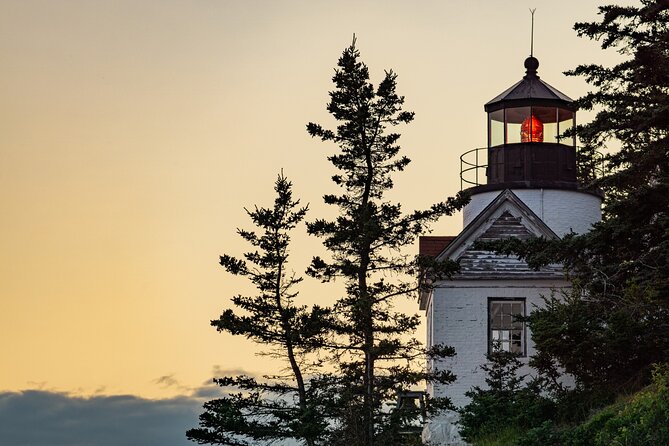
Bass Harbor Head Lighthouse is the first major highlight. Built in 1858, it is one of the three light stations managed by Acadia and the one most often photographed along the main coast. The setting gives you the classic Maine picture: a lighthouse above a rocky shore, with the sea stretching beyond it.
You can visit the grounds without an admission charge, but do not expect to climb the tower or tour the keeper’s house. Both are closed to the public. That restriction is worth knowing before you arrive, especially if you picture a full lighthouse interior visit.
The narration adds an amusing human detail about former keeper Robert Burchell, who moved into the house with his family in 2004. Most sightseers behaved well, but a few became too curious and tried to open the family’s door. It is a useful reminder that this is still a working private residence, not a museum set.
From there, the route continues through Bass Harbor, a traditional fishing village once called McKinley. The local naming story is pure small-town Maine. When residents were asked what to call a proposed post office, they reportedly said the government could name it after the president if it cared to. The name eventually became McKinley, after William McKinley, but local descendants later petitioned to restore Bass Harbor in 1966.
These stories are not essential sightseeing information, but they give the drive a human scale. You are not just passing through a coastal village. You are hearing how national politics, local identity, and everyday life crossed paths.
Ship Harbor and Wonderland bring you to the water
Ship Harbor Nature Trail is an easy one-mile walk that follows a narrow cove. It takes about half an hour, though you should allow more time if you stop along the shore. This is one of the tour’s better suggestions because it turns the audio route into an active visit instead of a string of roadside overlooks.
The narration tells a grim shipwreck story from 1741. About 200 Irish passengers were sailing toward Philadelphia to escape persecution from England when a storm wrecked their ship on this coast. The survivors reached land but had no immediate help. Some tried to swim toward the mainland and disappeared. Native people eventually found those still alive and carried word to English settlements.
The story has a slightly ghostly edge, which explains the trail’s reputation for being haunted. You should treat it as local lore rather than a reason to expect a supernatural event, but it adds character to a quiet shoreline walk.
Wonderland Trail offers another easy one-and-a-half-mile outing. The route reaches the water’s edge in less than an hour and is suited to birdwatching and tide-pool exploration. These two trails are close in spirit but not identical. Ship Harbor follows a narrow cove, while Wonderland is a good choice if you want open shoreline and small marine life.
The tour also points out Pretty Marsh Picnic Area, where tall trees and a stairway lead down to the shore. Visit near low tide if you want to inspect tide pools. These shallow pockets hold seawater after the tide retreats and can reveal a small world of shoreline life.
Check tide timing before building your day around this stop. A visit at high tide will not offer the same chance to explore the pools, and slippery rocks can make shore access awkward.
More Driving Audio Tours in the USA:
- Ultimate Lake Tahoe Self-Guided Driving Audio Tour
★ 4.5 · 435 reviews - Scenic Newport, RI Self-Guided Driving Audio Tour
★ 4.5 · 325 reviews - Arches National Park Self-Guided Driving Audio Tour
★ 4.5 · 288 reviews - Yellowstone National Park Self-Guided Driving Audio Tour
★ 4.5 · 249 reviews
Seawall shows how the ocean builds its own barrier
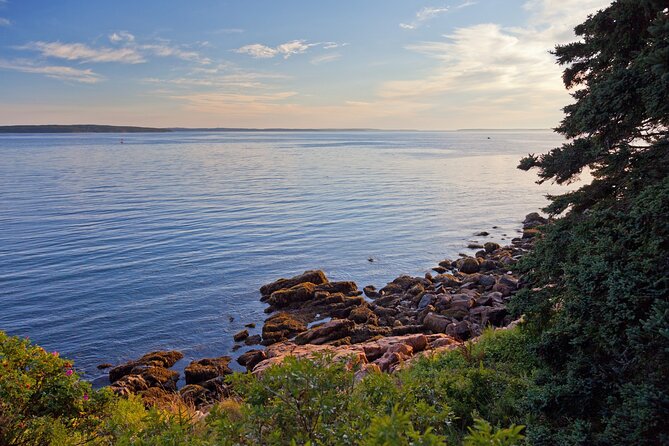
The Seawall stop explains a simple but striking bit of coastal geology. Storm waves move rocks from the lower beach toward shore. Repeated wave action sorts the stones, with heavier rocks collecting higher and lighter ones settling lower.
Over time, the result is a natural wall made by the sea. It is a good example of why this audio tour works best when you pause at the suggested places. The explanation is easier to grasp when you are looking directly at the rock formation rather than hearing a general description while driving.
Next comes Charlotte Rhoades Butterfly Park in Southwest Harbor. The park was named for a local resident whose family gave the property to the town in 1970. Their request was simple: it should remain a peaceful park for children and families.
The stop adds a change of pace after the rocky shoreline. It is also a reminder that Mount Desert Island is not only about Acadia’s famous viewpoints. Small town parks and donated public spaces are part of the island’s character, too.
Echo Lake offers freshwater and a harder walk
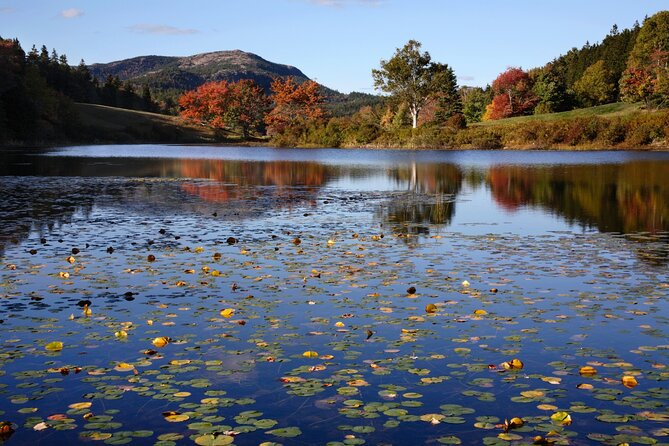
Echo Lake and Beach is the island’s most popular freshwater swimming spot. If you want a break from saltwater beaches, this is a practical place to pause. The lake also serves as a trail base for Beech Cliff and Beach Mountain.
The Beech Cliff route is a two-mile hike that takes about two hours and is described as fairly strenuous. Ladders carry you through unusual cliff formations, although the trail does not continue all the way to the top of Beech Mountain.
This is one place where the tour’s short two-to-three-hour estimate can become misleading. The audio stop itself is brief, but a climb with ladders is a serious addition to the day. Wear suitable shoes, allow time, and do not add the trail casually if you already have several other walks planned.
Little Long Pond keeps the walking easy

The Little Long Pond Trail is a gentler option. The two-mile loop follows old carriage roads through the woods and passes a field beside the pond. It should take less than an hour for most visitors following the suggested pace.
This stop suits you if you want a short walk without committing to the more strenuous Beech Cliff route. It also gives the tour some variety. You move from exposed coastal rock to forest, old roads, and a quiet pond setting.
Because the route is self-guided, you can skip this walk without losing the rest of the tour. That flexibility is one of the strongest reasons to choose an audio drive instead of a fixed group excursion.
Seal Harbor mixes beach time with private summer history

Seal Harbor Beach is a broad sand and pebble beach that is generally less crowded than Sand Beach. The stop includes a jumping platform and the chance to look for sea glass along the shore.
The beach may appeal to you if you want a less famous shoreline stop. It also gives families a place to stretch their legs without taking on a longer trail. Keep in mind that the tour does not include beach equipment, admission passes, or reservations, so anything you need for a swim or picnic is your responsibility.
The nearby town of Seal Harbor has long attracted wealthy summer residents. The narration points toward roads leading to private homes, including Skyland, a cottage Henry Ford built for his son in 1925. Martha Stewart has owned it since 1997.
That detail adds a little celebrity flavor, but the larger point is more useful: Mount Desert Island has long combined working villages, public parkland, and private summer estates. You will see traces of all three during this drive.
Otter Creek and the Tarn reveal the island’s changing shape
Otter Creek is a small village south of Bar Harbor, surrounded by Acadia National Park. The audio asks how that happened, then uses the question to explain the unusual relationship between the village and the park.
This is the sort of stop that benefits from narration. On your own, you might simply pass through a quiet settlement. With the story, you get a clearer sense of how land ownership and park boundaries shaped the island.
The Tarn, a small lake on the route, has a name derived from the Old Norse word tjorn, meaning a small mountain lake. It formed when a glacier pressed down on the ground beneath it.
The audio also notes that several dry summers changed the Tarn from a more recognizable pond into something closer to a marsh. That observation gives the stop a current environmental angle without turning the tour into a science lecture.
Jackson Laboratory and Bar Harbor finish the route
The Jackson Laboratory began operating in 1929 as one of the first centers devoted to cancer genetics. George Dorr donated the 13 acres where the campus was built.
Dorr appears several times in Acadia’s story as a major force behind the park’s creation, so this stop helps connect scientific work with the people who shaped the island’s public land. The story is brief, but it adds substance before the final arrival in Bar Harbor.
Bar Harbor was once called the Town of Eden. The name changed in 1918, and the community has served as a summer destination for more than two centuries. It is the island’s largest community and the final stop on this route.
The tour ends at 1 West Street beside the Boardwalk. Ending in town is convenient because you can continue with a meal, shopping, or a walk along the waterfront. It also makes the route feel like a complete loop through the island’s natural and human history, rather than a drive that simply returns you to the starting point.
Is $14.99 good value for your group?
At $14.99 per group of up to four, the price is one of the tour’s clearest advantages. A couple pays about $7.50 each, while four people bring the cost below $4 per person. You are paying for access to the audio route, not for admission to attractions, parking, food, or reservations.
That distinction matters. The tour may guide you to Bass Harbor Lighthouse, Echo Lake, and the trails, but it does not cover attraction passes or other costs along the way. Still, since many of the listed stops are free, the audio guidance gives you a useful structure without adding a large expense.
The lifetime access policy adds value for repeat visits. You can use the tour on another trip, pause it over several days, and return to missed sections. The supplied booking information also describes flexible use rather than a fixed departure time, so you are not tied to a bus schedule.
Free cancellation is available if you cancel at least 24 hours before the start time. Changes or cancellations inside that window are not accepted for a refund.
Who should choose this self-guided route?
I would recommend it most strongly to:
- Couples or families who want a private outing
- Independent drivers who dislike fixed group schedules
- Visitors who enjoy short walks mixed with scenic driving
- First-time Acadia visitors who want context for what they see
- Small groups looking for a low-cost alternative to a paid guide
- Repeat visitors who want a different way to connect the island’s villages and shorelines
It is less suitable if you want a live guide answering questions in real time. It may also disappoint you if you expect a detailed lecture at every stop. The narration covers geology, plants, local stories, and history, but at least one February user found the plant-focused information less useful under snow.
Season matters here. The tour can be used year-round, but several highlights depend on accessible roads, open trails, visible plants, and comfortable shoreline conditions. A winter drive may still offer scenery and history, but it will not show every stop at its best.
Should you book the Acadia audio tour?
Book it if you want an affordable, flexible way to connect Acadia’s coastal villages, short trails, lighthouse, beaches, and natural features. The offline maps and automatic audio make it easy to follow, while the pay-per-car pricing is hard to fault for a group of two to four.
Skip it if you need a personal guide, a tightly scheduled sightseeing trip, or detailed interpretation at every stop. For most independent visitors, though, this is a useful island framework. Download it before you leave reliable service, keep your speed sensible, and treat the two-to-three-hour estimate as driving time rather than a full day’s itinerary.
FAQ
How long does the Acadia Mount Desert Island audio tour take?
The driving route is about 57 miles and takes approximately two to three hours if you continue through the stops without lengthy hikes or breaks.
Where does the tour begin and end?
It begins at Hulls Cove Visitor Center, 25 Visitor Center Road in Bar Harbor. It ends at 1 West Street in Bar Harbor, beside the Boardwalk.
Is anyone waiting to guide me at the starting point?
No. This is a self-guided private activity. You start the tour yourself in the Action Tour Guide app, and the audio begins when you reach the first story point.
Does the tour work without cellular service?
Yes, provided you download the tour while you have strong Wi-Fi or cellular service. After downloading, the offline maps and audio can work without a live connection.
How many people can use one purchase?
One purchase covers a group of up to four people in the same car.
Is admission to the attractions included?
No. Entry tickets, attraction passes, and reservations are not included. The listed stops themselves do not require an admission ticket according to the tour details, but you are responsible for any separate costs during your day.
Just added around the USA
- Self Guided Driving Audio Tour of Saguaro National Park★ 3.0 · 4 reviews
- Self-Guided Audio Driving Tour of Mount Lemmon★ 5.0 · 4 reviews
- Saguaro National Park Self-Guided Audio Tour★ 3.5 · 11 reviews
- A Self Guided Audio Tour in Tombstone★ 4.0 · 11 reviews
- Catskills Scenic Byway Self-Guided Driving Audio Tour★ 4.0 · 9 reviews
- Big Bend National Park Self Guided Audio Tour Guide★ 5.0 · 12 reviews
- Self-Guided Audio Driving Tour in Catskills Scenic Byway★ 4.5 · 7 reviews
- Shiloh Battlefield Self-Guided Driving Audio Tour★ 4.0 · 9 reviews
Driving Audio Tours, compared.



Ultimate Acadia National Park Self-Guided Driving Audio Tour
Read our review →



Browse the lists this tour appears in