
REVIEW · USA AUDIO TOURS
Austin Self-Guided Driving & Walking Audio Tour Guide
Austin rewards a flexible plan. This self-guided drive links Mount Bonnell, Hill Country views, parks, and downtown with location-based stories that play from your phone. I like the freedom to stop for photos or food, and the $16.99 price covers an entire car of up to four people. The main caution is navigation: directions can become confusing near downtown, so you should stay alert and pull over before listening to longer stories.
The route gives you a useful first look at Austin in roughly three to four hours, even though the general tour duration is also described as one to two hours. You get lifetime access, offline maps, and no guide waiting at the starting point. That makes it handy for families and independent visitors, but it is not a polished substitute for a live guide or a carefully planned neighborhood walk.
Key points to know before you start
- Start at Mount Bonnell: The tour begins at 3800 Mt Bonnell Road and finishes near Congress Avenue downtown.
- Drive more than 19 miles: You follow a route with more than 20 GPS-triggered audio stories, though only several major stops are listed in the main itinerary.
- Pay once per car: The $16.99 price covers a group of up to four, making it a good deal for families or friends sharing a vehicle.
- Download before leaving Wi-Fi: The app and tour content must be downloaded while you have a strong internet connection.
- Plan for optional stop time: Parks, gardens, swimming, and downtown sightseeing can stretch the outing well beyond the basic driving time.
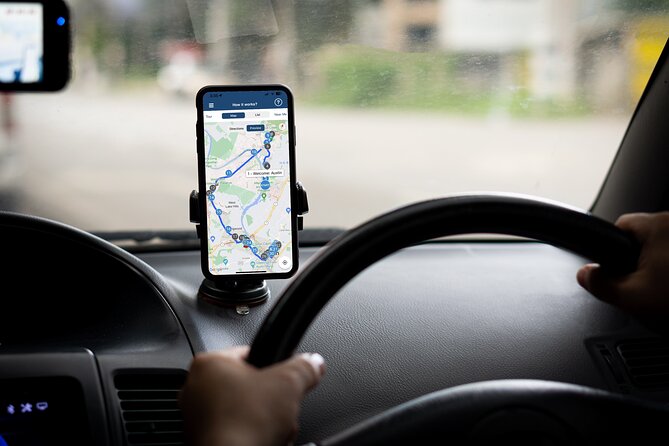
- Expect some navigation work: The app plays stories automatically, but you still need to watch the road, follow signs, and check your location.
Starting above Austin at Mount Bonnell

Your starting point is 3800 Mt Bonnell Road, on the west side of Austin. The tour uses Mount Bonnell as its opening area, then works toward downtown. This is a smart beginning because you get a quick sense of Austin’s rolling terrain before moving into the city center.
The opening stories set up the role of the Colorado River in Austin’s growth. The river helped create pockets of greenery in a dry and demanding part of Texas, and that theme carries through the parks and preserves later on. I like this sort of opening because it gives the scenery a reason, rather than treating each stop as an unrelated photo opportunity.
You should expect to spend some time getting oriented before the audio begins. No guide meets you at the start. Once you reach the first story point and open the Action’s Tour Guide app, the audio should begin automatically based on your location.
The app works best when your phone is connected to your car by Bluetooth, USB, or AUX. Apple CarPlay is supported for audio playback, though navigation features are still being developed. If you are driving, let the passenger handle the phone. You should never be adjusting the app while moving.
More Audio Walking Tours in the USA
- Self Guided Classic Freedom Trail Location Aware (GPS) Walking Audio Tour
★ 4.5 · 258 reviews - Cape Cod & Provincetown Self-Guided Driving & Walking Audio Tour
★ 4.0 · 207 reviews - Santa Fe Historic Downtown Smart Phone Audio App Self Guided GPS Walking Tour
★ 4.5 · 112 reviews
Bull Creek District Park and the Colorado River story
Bull Creek District Park is the first listed stop. The point here is not simply to look at a patch of green space. The audio explains how Austin’s position along the Colorado River helped make the city a strong candidate for the Texas capital.
That background gives the rest of the route some shape. Austin is not presented only as a music town or government center. You begin with water, trees, and the natural setting that helped the settlement survive and grow.
The stop is listed as taking about 10 minutes, but you can pause the tour if you want more time. The route allows you to stop for photos, snacks, and short side trips. That flexibility is one of the experience’s best features, especially if you are driving with children who need a break from the car.
The audio is designed for movement, not for a formal stop with a guide. You may want to pull over before listening to a full story. That matters because the narration can continue while you are still looking for a safe place to park or turn.
Pennybacker Bridge Overlook and the 360 Bridge
The next major stop is Pennybacker Bridge Overlook. Locals often call the bridge the 360 Bridge, and the overlook gives you views of the Colorado River and the surrounding hills.
This is one of the route’s strongest scenic moments. The bridge itself provides a memorable reference point, while the overlook helps you see how the river cuts through the Austin area. If you enjoy short photo stops rather than long museum visits, this part should suit you well.
The stop is also listed at about 10 minutes. That is enough for a quick look, but not necessarily enough if the overlook is busy or you want to linger. Since the tour has no fixed departure time, you can pause the app and give yourself a proper break.
You should take the navigation advice seriously here. One audio problem described by a customer involved being told to turn right at a light after crossing a bridge, when the correct move was to continue straight for two blocks and then turn left. That kind of error can send you off route. Keep the map open, watch road signs, and treat the narration as a helpful aid rather than your only source of directions.
Wild Basin Preserve and Austin’s protected wilderness
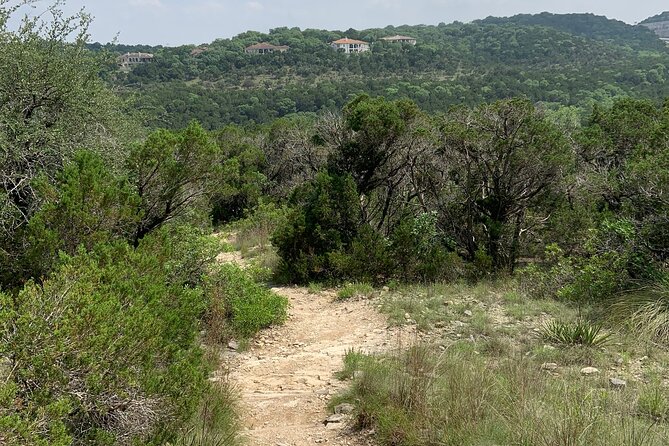
Wild Basin Wilderness Preserve brings the route back to nature. The preserve protects more than 200 acres and includes three miles of hiking trails. It offers a different experience from a roadside overlook because you can step out of the car and walk among preserved Texas wilderness.
The timing and admission details matter. The preserve requires a small fee on weekends and holidays, while weekday access is free and open. Attraction fees are not included in the tour price, so check the current arrangements before building a visit around this stop.
The audio stop itself is listed at 10 minutes, but that does not represent the time needed for a trail walk. If you want to hike, treat the audio tour as your route framework and allow extra time. The app gives you lifetime access, so you can pause the tour, explore, and resume later without losing the route.
This is a good example of where the experience works best for independent people. You are not being hurried from one attraction to the next. You decide if Wild Basin is a quick look or the main activity of the afternoon.
More Self-Guided Audio Tours in the USA
- Gettysburg Battlefield Self-Guided Driving Audio Tour
★ 4.5 · 910 reviews - Joshua Tree National Park Self-Guided Driving Audio Tour
★ 4.5 · 762 reviews - Ultimate Acadia National Park Self-Guided Driving Audio Tour
★ 4.0 · 521 reviews - Ultimate Lake Tahoe Self-Guided Driving Audio Tour
★ 4.5 · 435 reviews
Zilker Botanical Garden and Barton Springs
Zilker Botanical Garden covers 28 acres and includes native succulents, prehistoric plants, and a Japanese garden. The range of plant settings makes this a pleasant change from the car-based portions of the tour.
The stop is scheduled at roughly 10 minutes in the audio plan, but that is only a brief introduction. If you enjoy gardens, you will likely want more time. The tour gives you the context and points you toward the attraction, but admission or other attraction costs are not included.
Nearby Barton Springs adds a more local kind of Austin experience. The three-acre pool is spring-fed and popular for swimming. You will also find a miniature train for children and a community theater that presents free public shows.
These stops show why the total outing can take longer than the basic estimate. The audio may guide you through the area in a few minutes, but gardens, swimming, and performances each deserve their own schedule. I would not try to force every option into a tight two-hour plan.
If you are visiting with a family, Barton Springs may be especially useful as a break from sightseeing. The tour price is already set per group, and children can have a more active stop while adults take in the setting. Just remember that the tour does not include attraction passes, entry tickets, or reservations.
The Paramount Theatre and Austin’s downtown character

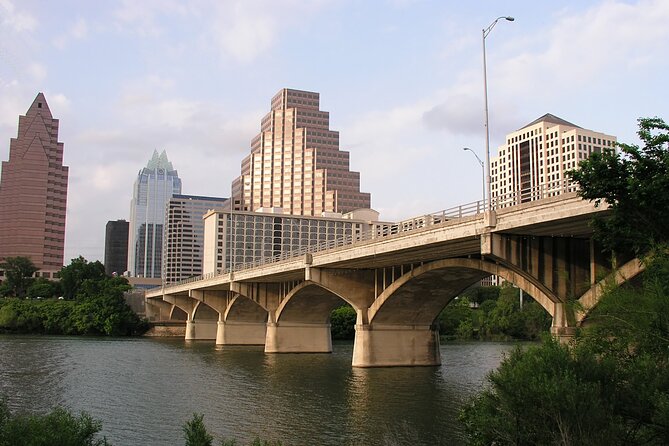
As the route reaches downtown, the Paramount Theatre gives you a look at one of Austin’s older entertainment landmarks. The large Paramount sign is easy to spot, and the theater is more than 100 years old.
Its story begins in 1915, when architect John Eberson designed the building, originally called The Majestic. That small detail gives the stop a useful sense of time. You are not simply passing another downtown facade. You are seeing a surviving part of Austin’s theater past.
The downtown section is where you should be most careful with the app. Several audio stories can come close together, and the directions may feel rushed when traffic, turns, and one-way streets enter the picture. One practical solution is to pull over and listen to each story before continuing.
The route provides a good overview, but it does not attempt to explain every nearby attraction in detail. If you want to visit the University of Texas campus, the LBJ Presidential Library, the river walk, or Austin City Limits, plan those as separate activities. The tour can point you into the city, but it should not be your only downtown plan.
Angelina Eberly and the fight over the capital
The Angelina Eberly Statue stop adds a political story to the route. In 1842, Austin was technically the capital of Texas, but it was still a vulnerable frontier town. The audio uses this period to explain why the capital’s location was not a settled matter.
This is the kind of short historical episode that helps the city feel less predictable. Austin’s identity did not appear fully formed. Its role as the capital had to be defended at a time when the town was exposed to political and military pressure.
The statue sits in the downtown portion of the route, where you may hear several stories in a short distance. The audio can give you useful context, but you will get more from it if you stop safely and listen without trying to make a turn at the same time.
The official endpoint is on Congress Avenue. That gives you a practical place to finish near central Austin, though the tour is not a guided walking tour of every downtown block. Once you reach the end, you can continue exploring on your own.
How the GPS audio app works in practice
After booking, you receive setup instructions and a password by email and text. Search for audio tour if the message is hard to find. You then download the separate Action’s Tour Guide app, enter the password, and download the tour while you have strong Wi-Fi or cellular service.
Once the content is stored on your device, the tour works offline. That is helpful in areas with weak service and prevents you from using mobile data throughout the drive. It also means you should not wait until you are already at Mount Bonnell to set everything up.
The app uses GPS to trigger stories as you reach each location. You do not need to press play at every stop, and you can pause, restart, skip content, or explore bonus material. You can also use the same access on the number of devices connected with the booking, based on the number of people booked.
The app supports iPhones running iOS 13 or newer and Android phones using version 9 or newer. For an iPad or tablet, a model with GPS and cellular connectivity is recommended. Headphones make sense if you are walking, while a car stereo is safer and more comfortable during the driving portions.
The system is convenient, but GPS audio is not a perfect navigation tool. An app can trigger a story at the right place and still give an unclear turning instruction. Use a passenger for navigation, obey the speed limit, and pull over for anything longer than a quick sentence.
Price, timing, and who gets the best value
At $16.99 per group of up to four, the cost is the tour’s strongest practical advantage. A family of four pays less than four individual tickets for many guided activities, and a couple can share the expense rather than paying per person.
You also receive lifetime access with no expiry. You can use it on a later Austin trip, split it across several days, or repeat sections for friends. That matters more than it may seem because the route includes stops that deserve extra time.
The stated duration needs a little interpretation. The general description says one to two hours, while the route details describe more than 19 miles, more than 20 stories, and about three to four hours. I would plan for three to four hours if you want to stop, take photos, and hear the stories without rushing.
The starting hours are listed as 6:00 a.m. to 9:00 p.m., Monday through Sunday, for the published operating period. Early starts can help you avoid the hottest part of the day, but attraction hours and access rules may differ. Check individual sites before relying on a very early or late stop.
Free cancellation is available if you cancel at least 24 hours before the start time. Changes or cancellations within 24 hours are not refundable.
Strengths and limits from the overall experience
The strongest point is freedom at a low group price. You can begin when you want, pause when you want, and skip anything that does not interest you. One particularly positive account praised the easy app and the ability to take time at each stop.
The storytelling also earns credit. The route links nature, city planning, theater, and Texas politics instead of giving you a string of disconnected facts. It is a brief overview, not a full study of Austin, but it gives you useful starting points.
The weak point is route clarity. Directions may be hard to follow near the Capitol and downtown, and one reported app failure involved random fragments of audio on a newer Android phone. Technical problems are not guaranteed, but you should download the content early and test the app before setting off.
Coverage is another consideration. The route gives you parks, scenic views, and central Austin, but it does not fully cover every surrounding neighborhood. If your main goal is the Longhorn campus, the LBJ Presidential Library, the river walk, or Austin City Limits, you will need to add those stops yourself.
Should you book this Austin audio tour?
Book it if you want a private, low-cost introduction to Austin and have your own car. It suits families, couples, and small groups who dislike fixed departure times and want to mix sightseeing with short walks, photos, swimming, or food breaks.
I would also choose it for a first visit when the hop-on, hop-off option is unavailable or when a live guide costs too much. The history is useful, the route covers several sides of the city, and lifetime access gives you room to spread the tour out.
Skip it if you need exact turn-by-turn navigation, a fully guided downtown walk, or detailed coverage of every neighborhood. You should also avoid treating the audio as a replacement for road signs. Download everything in advance, assign navigation to a passenger, and pull over when the story gets dense.
Used that way, this is a practical Austin sampler rather than a full city tour. For $16.99 per car, it gives you a sensible route, good flexibility, and enough local context to help you decide what deserves a longer visit.
FAQ
How long does the Austin audio tour take?
The route includes more than 19 miles and more than 20 audio stories. The detailed route information estimates about three to four hours, while the general duration is listed as one to two hours. Allow extra time for stops, walks, photos, and attractions.
Where does the tour start and finish?
It starts at 3800 Mt Bonnell Road in Austin and ends near Congress Avenue in downtown Austin. No guide meets you at either point.
Does the audio tour work without cell service?
Yes. You must download the tour while connected to strong Wi-Fi or cellular service. After that, the audio and offline maps work without a signal.
How many people are covered by one booking?
One purchase covers a group of up to four people in the same car. The password can be used on the same number of devices as the number of people booked.
Are attraction entry fees included?
No. Attraction passes, entry tickets, and reservations are not included. Wild Basin Preserve has a small fee on weekends and holidays, while weekday access is free according to the tour information.
What is the cancellation policy?
You can receive a full refund if you cancel at least 24 hours before the experience start time. Cancellations or changes made within 24 hours are not refunded.
More Driving Audio Tours in the USA
- Scenic Newport, RI Self-Guided Driving Audio Tour
★ 4.5 · 325 reviews - Arches National Park Self-Guided Driving Audio Tour
★ 4.5 · 288 reviews - Yellowstone National Park Self-Guided Driving Audio Tour
★ 4.5 · 249 reviews - Kauai Adventure Bundle: 4 Epic Audio Driving Tours
★ 4.5 · 211 reviews
Just added around the USA
- Self Guided Driving Audio Tour of Saguaro National Park★ 3.0 · 4 reviews
- Self-Guided Audio Driving Tour of Mount Lemmon★ 5.0 · 4 reviews
- Saguaro National Park Self-Guided Audio Tour★ 3.5 · 11 reviews
- A Self Guided Audio Tour in Tombstone★ 4.0 · 11 reviews
- Catskills Scenic Byway Self-Guided Driving Audio Tour★ 4.0 · 9 reviews
- Big Bend National Park Self Guided Audio Tour Guide★ 5.0 · 12 reviews
- Self-Guided Audio Driving Tour in Catskills Scenic Byway★ 4.5 · 7 reviews
- Shiloh Battlefield Self-Guided Driving Audio Tour★ 4.0 · 9 reviews
Driving Audio Tours, compared.



Ultimate Acadia National Park Self-Guided Driving Audio Tour
Read our review →



Browse the lists this tour appears in