
REVIEW · BULGARIA AUDIO TOURS
Audio Guide for Museum Paleontology and Historical Geology
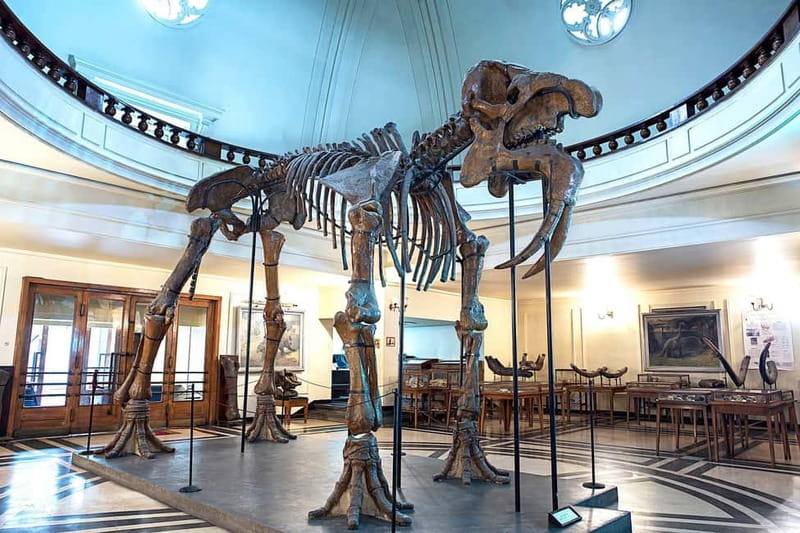
A seven-meter skeleton steals the show. This audio-guided visit takes you into the northern wing of Sofia University, Bulgaria’s oldest university, where the Museum of Paleontology and Historical Geology displays more than 200,000 fossil specimens, rock samples, and geological maps. I especially like the museum’s unusual setting inside an active university building and the chance to see a Deinotherium skeleton made with more than 90 percent original bones. The main drawback is that the modest audio-guide price does not include the museum admission ticket.
I also like the simple format. You use your own phone, open the audio player through a link sent by email, and avoid downloading an app. You need mobile internet, though traffic use is described as minimal, and the audio guide is available in Bulgarian, English, Italian, and Spanish.
Key Details Before You Go
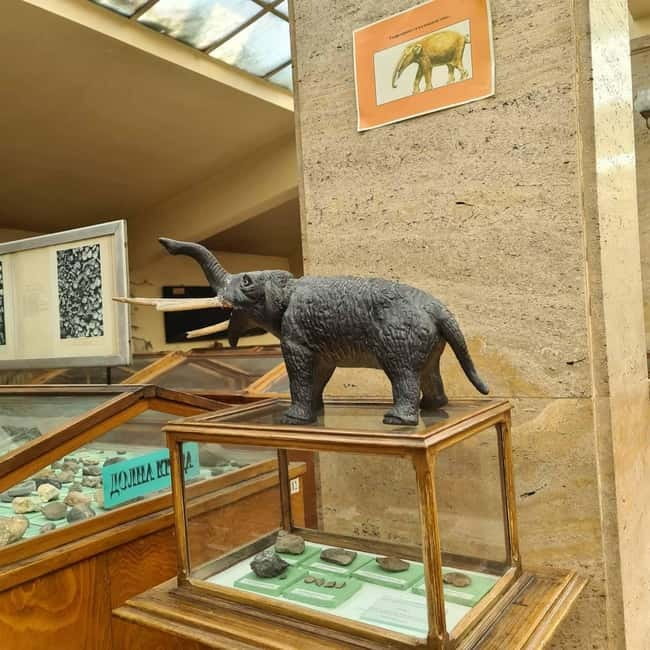
- The Deinotherium skeleton is more than 90 percent authentic: The central exhibit uses preserved original bones, making it the museum’s main draw.
- The museum is on the fifth floor: You will enter Sofia University and make your way through the large building to the Museum of Paleontology and Historical Geology.
- The audio guide lasts for 24 hours: Your link activates on the date you choose and remains valid for one day.
- The collection reaches beyond fossils: More than 200,000 items include fossil specimens, rock samples, and geological maps from Bulgaria and nearby territories.
- Four audio languages are available: You can listen in Bulgarian, English, Italian, or Spanish.
- Admission costs extra: The audio guide costs about $4.12 per person, while museum entry costs €1, or 2 BGN.
Entering Sofia University’s Northern Wing
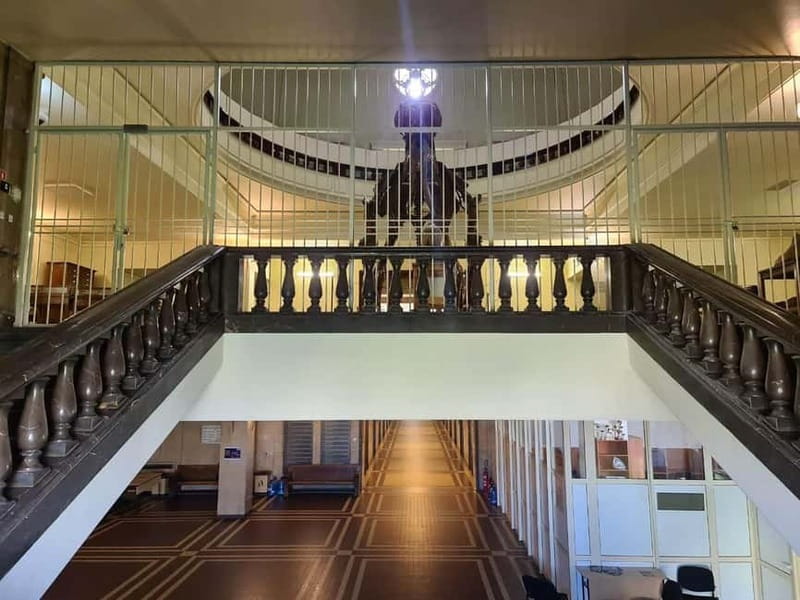
The visit begins at Sofia University, officially named Sofia University Kliment Ohridski. The museum is located on the fifth floor, beneath the dome of the building’s northern wing. This setting gives the outing a useful sense of place before you even reach the exhibits. You are not entering a large modern science center. You are walking through the halls of Bulgaria’s oldest university to find a specialist museum tucked inside.
The university is very large, so the PDF guide provided with your booking matters. Use the photos and directions before you arrive. The information says you can easily find the entrance with the help of those images, but the fifth-floor location means you should not expect the museum entrance to be obvious from the street.
I would keep the arrival simple. Have the PDF open on your phone, make sure you know which audio language you want, and allow yourself enough time to locate the museum inside the university. The experience is designed for an independent visit, not for a guide leading you through the building.
The museum’s location also affects the mood. You pass along university corridors before reaching displays about distant geological ages. That contrast is part of the appeal. Everyday academic life surrounds objects that date from a world far removed from modern Sofia.
More Museum Audio Tours in the world:
- Florence: Uffizi Priority Ticket & Masterpieces Audio App
★ 4.2 · 6,402 reviews - Paris: Louvre Museum Hosted Entry and Mona Lisa Audioguide
★ 4.6 · 5,235 reviews - Venice: St. Mark Basilica Ticket, Audioguide+History Gallery
★ 3.9 · 4,780 reviews
The Seven-Meter Deinotherium Skeleton
The first exhibit demanding your attention is the restored skeleton of Deinotherium thraciensis Nikolov. It measures about 7 meters long and 4.20 meters high, so the scale is hard to miss. The skeleton occupies the central position directly opposite the entrance, giving your visit a clear focal point.
The most important detail is its authenticity. More than 90 percent of the skeleton is made from authentically preserved bones. That matters because a large prehistoric display can sometimes rely heavily on replicas or reconstructed pieces. Here, the original material gives the exhibit a stronger physical connection to the distant past.
You can also understand why the museum puts this specimen in the center. Its size makes an immediate impression, but the preserved bones reward a slower look. Use the audio guide to place the skeleton within the museum’s wider geological story rather than treating it as a single oversized object.
The description identifies it as the pride of the museum’s paleontologists. That is a fair focus for the visit, especially if you have limited time. Still, I would not rush away after seeing it. The skeleton works as an introduction to the kind of evidence the museum studies: bones, rocks, maps, and traces of past worlds.
More Than Fossils: 200,000 Pieces in the Collection
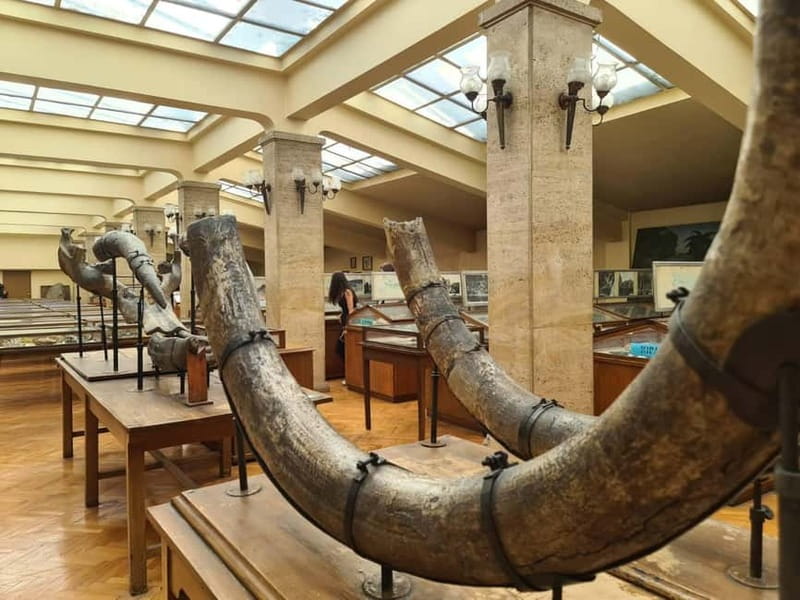
The museum houses more than 200,000 fossil specimens, rock samples, and geological maps of Bulgaria and neighboring territories. The collection’s size tells you that this is not simply a one-display attraction built around the Deinotherium.
You should expect the visit to move between different kinds of geological material. Fossils show evidence of former life. Rock samples help explain the physical ground beneath the region. Geological maps give a wider view of how Bulgaria and nearby areas are organized and understood through geology.
That range is valuable because it connects paleontology with historical geology. The museum is not only asking what lived long ago. It also presents material that helps explain the earth itself and the changes recorded in rocks and maps.
The collection size can also be a consideration. More than 200,000 specimens cannot all receive equal attention during a short visit. The audio guide gives you a way to focus on the key displays, but you should not expect every item in the collection to receive a full explanation. Your best approach is to give the central skeleton proper time, then use the audio recordings to guide your attention through the wider exhibition.
How the Phone Audio Guide Works
After payment, you receive an email with a link to the audio files. The link becomes active on the date you select and remains valid for 24 hours. You listen through your own phone, so you do not collect a separate device at the museum.
The player opens instantly. No download or app is required. That is a real convenience, especially if you prefer not to add another travel app to your phone or manage a separate audio device during your visit.
You do need mobile internet. The stated data use is minimal, but you should still arrive with a working connection and enough phone battery for the visit. Because the guide is delivered by link, your phone is the key piece of equipment. If you want to listen comfortably, bring headphones, though the supplied information does not say that headphones are provided.
The 24-hour validity gives you some flexibility on the chosen date. It does not mean the activity lasts for a full day inside the museum. Instead, it means the audio link remains usable during that day. Check the available starting times when booking, since the activity information says you must check availability for the time you want.
More History Audio Tours in the world:
- Colosseum, Roman Forum & Palatine Hill with Audioguide App
★ 4.4 · 6,291 reviews - Rome: Colosseum, Ancient Rome Tour or AudioGuided Tour
★ 4.4 · 2,879 reviews - Colosseum, Roman Forum & Palatine Hill Entry and Audioguide
★ 4.1 · 2,475 reviews - Taormina: Ancient Theater Skip-the-Line Ticket & Audio Guide
★ 4.5 · 2,412 reviews
Choosing the Right Audio Language
The audio guide is available in Bulgarian, English, Italian, and Spanish. That makes the experience useful for both local visitors and international visitors who want more than a quick look at the displays.
I would choose your language before entering the museum so you can begin without fuss. The audio files are accessed through the player, and the main benefit is control. You can listen at your own pace rather than trying to keep up with a fixed group.
The supplied details do not identify individual audio presenters or explain how long each recording lasts. You should therefore think of the guide as a practical aid to the museum visit, not as a live tour with questions and personal commentary.
That distinction matters. If you want a scheduled guide who reacts to your interests, this format may feel limited. If you prefer quiet exploration and the ability to pause, continue, and focus on the displays that catch your eye, the audio player is a good match.
What the Visit Is Like in Practice
Your visit follows a fairly clear sequence, even though it is self-guided.
First, you locate Sofia University and use the PDF directions and photos to find the museum entrance. Since the building is large and the museum is on the fifth floor, this is the part where a little preparation saves time.
Next, you enter the Museum of Paleontology and Historical Geology beneath the dome of the northern wing. The building itself is part of the setting. You are walking through university corridors before reaching a collection devoted to geological ages and prehistoric life.
Then you encounter the Deinotherium skeleton directly opposite the entrance. Its 7-meter length and 4.20-meter height make it the natural first stop. Look closely at the original bones and listen to the audio explanation before moving to the rest of the displays.
After that, you can spend time with fossil specimens, rock samples, and geological maps from Bulgaria and nearby territories. The exact route through these materials is not specified, so the audio guide and the layout of the museum will shape the order of your visit.
Finally, you can revisit any display while the link remains active. Since the guide is valid for 24 hours, you have the option of returning to an explanation during the same day, subject to the museum’s access arrangements and opening schedule, which are not provided here.
Is the $4.12 Audio Guide Good Value?
The audio guide costs about $4.12 per person. Museum entry is separate and costs €1, or 2 BGN. That makes the full outing inexpensive by Sofia sightseeing standards, though you should remember that the advertised audio price is not the total cost.
The value depends on what you want from the museum. If you are satisfied with looking at the large skeleton and moving on, the audio guide may not be essential. If you want context for the Deinotherium, the fossil collection, the rocks, and the geological maps, the small extra fee gives the visit more structure.
The no-app format also helps the value. You are paying for access to the recordings, not for a physical device, transport, or a long guided program. You still need to handle your own admission ticket and find your way through the university, but the low cost keeps the visit accessible.
I see this as a good add-on for a day in Sofia, especially if you already plan to visit the university area. It is less suitable if you want a major half-day attraction with a large number of interactive features. The information provided points to a specialist museum, and the price reflects that focused nature.
Who Will Get the Most From This Visit?
This museum suits anyone curious about fossils, geology, prehistoric animals, or Bulgarian science. The authentic Deinotherium bones give the visit a strong reason to go, even if paleontology is not usually your first museum choice.
Families may appreciate the skeleton’s size, though the available information does not describe children’s activities or interactive displays. Students and university visitors may especially enjoy the setting inside Sofia University. Anyone who likes smaller specialist collections can use the audio guide to build a clearer understanding of what they are seeing.
The experience also works well for independent visitors. You choose your language, use your own phone, and listen without being tied to a group. On the other hand, visitors who want detailed personal guidance, a named expert, or a clearly timed route should know that none of those features is included in the information provided.
Small Details That Make a Big Difference
Plan the museum as a focused stop rather than assuming it will fill an entire day. The activity is valid for one day, but no total visit length is given. The 24-hour audio access gives flexibility, not a promise of a full-day program.
Keep the email link easy to find. You need it to open the player, and the guide requires mobile internet. A fully charged phone is sensible, since the recordings are the main service included with your purchase.
Remember the ticket split. The audio guide and player access are included in the experience price, but museum admission is not. Bring the equivalent of €1 or 2 BGN for entry.
Most of all, use the PDF directions. Sofia University is very large, and the museum’s fifth-floor location means a little advance checking is worthwhile. The photos are meant to help you identify the entrance and reduce the chance of wandering through the building.
Should You Book the Sofia Paleontology Audio Guide?
I would book it if you want a low-cost, self-guided museum stop with one memorable centerpiece. The more than 90 percent original Deinotherium skeleton is a strong reason to visit, and the university setting adds character that a standalone display would lack.
I would skip the audio guide if you only want a quick photograph of the skeleton or if you dislike using your phone in museums. You will still need to pay admission separately, find the fifth-floor museum yourself, and use mobile internet for the recordings.
For most curious visitors, the price is reasonable. Choose your language, save the PDF directions, charge your phone, and treat the skeleton as the beginning of the visit rather than the whole story. That approach gives you the best value from a small but distinctive Sofia museum.
FAQ
Where is the Museum of Paleontology and Historical Geology?
It is located in Sofia University Kliment Ohridski, on the fifth floor of the university building’s northern wing.
What is the main exhibit?
The central exhibit is a restored skeleton of Deinotherium thraciensis Nikolov.
How large is the Deinotherium skeleton?
The skeleton is about 7 meters long and 4.20 meters high.
How much of the skeleton is original?
More than 90 percent of the skeleton is made from authentically preserved bones.
How many items are in the museum collection?
The collection contains more than 200,000 fossil specimens, rock samples, and geological maps.
Which languages are available for the audio guide?
The audio guide is available in Bulgarian, English, Italian, and Spanish.
How do I access the audio guide?
After payment, you receive an email with a link to the audio player. You listen through your phone.
Do I need to download an app?
No. The player opens through the link, and no download or app is required.
Do I need mobile internet?
Yes. You need mobile internet to use the audio guide, although the stated data use is minimal.
Is museum admission included?
No. Admission is separate and costs €1, or 2 BGN.
Just added around the world
- Coba Ruins: Self-Guided Walking Audio Tour in Mexico★ 3.5 · 2 reviews
- Self Guided Driving Audio Tour of Saguaro National Park★ 3.0 · 4 reviews
- Torino Walking Tour with Audio and Written Guide by a Local★ 4.5 · 35 reviews
- Self-Guided Audio Driving Tour of Mount Lemmon★ 5.0 · 4 reviews
- Trondheim’s Inner Circle: A Self-Guided Audio Tour★ 4.0 · 15 reviews
- A Tromsø Introduction: A Self-Guided Audio Tour★ 3.5 · 19 reviews
- Panorama Bus Tour with Audio Guide★ 4.0 · 3 reviews
- Saguaro National Park Self-Guided Audio Tour★ 3.5 · 11 reviews
Museums, compared.
Uffizi Priority Ticket & Masterpieces Audio App
Read our review →
Louvre Museum Hosted Entry and Mona Lisa Audioguide
Read our review →
St. Mark Basilica Ticket, Audioguide+History Gallery
Read our review →
Borghese Gallery Skip-the-Line Ticket & Audioguide
Read our review →
Borghese Gallery Ticket + Audioguide or Guided Tour
Read our review →
Orsay Museum Entry Ticket and Digital Audio Guide App
Read our review →
Uffizi Gallery Timed Entry Ticket & Audio Guide
Read our review →
Acropolis Museum Ticket with optional Audio Guide
Read our review →Browse the lists this tour appears in