
REVIEW · ATHENS AUDIO TOURS
Athens: Meteora Day Trip with Central Pickup & Audio Guide
Meteora is worth the long road north. This full-day trip from Athens gives you an efficient way to see Greece’s extraordinary cliff-top monasteries without arranging trains, taxis, meals, and local transport yourself. I especially like the four central pickup points and the chance to enter two monasteries, while guides such as Eva and Riki have earned praise for clear explanations and helping with photographs. The catch is simple: you spend about eight hours on the road during a 14-hour day.
You travel by air-conditioned coach from Athens to Kalabaka, then spend around three hours among the monasteries and rock pillars. I also like the practical mix of live guiding, multilingual audio commentary, scenic stops, and optional lunch. Still, this is a broad introduction, not a slow visit. If you want quiet time inside every monastery, stay in the Meteora area for at least one night.
Key points before you book
- Four easy Athens pickup points: Choose stops near Plaka, the Greek Parliament, Omonoia Square, or Karaiskaki Square.
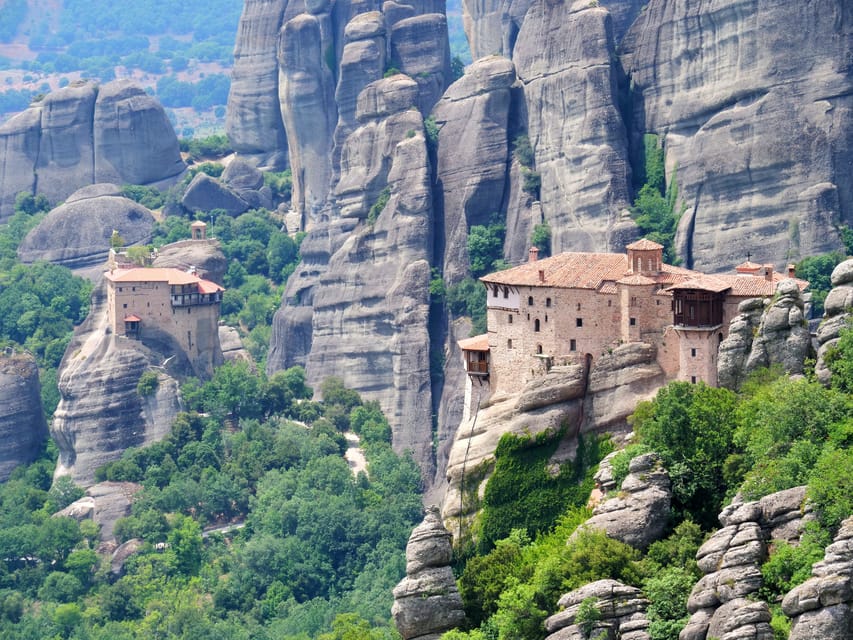
- Two monasteries inside: You see all six from the road and viewpoints, but enter two, depending on which are open that day.
- About four hours each way: Breaks help, but the bus ride is the main price you pay for a day trip from Athens.
- Optional Greek lunch: Select the lunch option for seasonal salad, a main course, and water, with vegetarian and vegan choices available.
- Eight-language audio guide: Commentary is offered in English, French, Spanish, German, Russian, Portuguese, Italian, and Chinese.
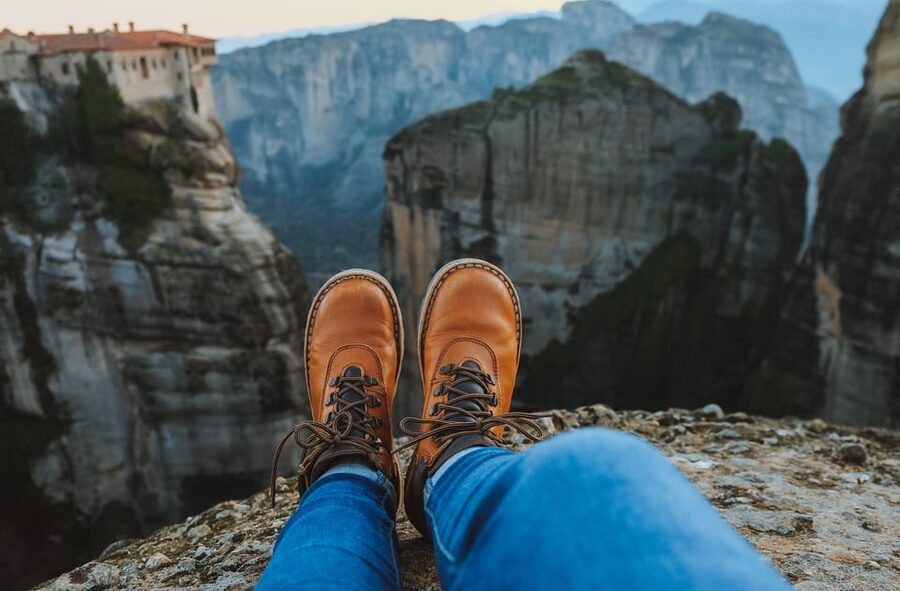
- Bring a camera and sturdy shoes: The rock views are superb, but monastery access includes steps and the tour is not suitable for people with mobility impairments.
Why Meteora is worth the long ride
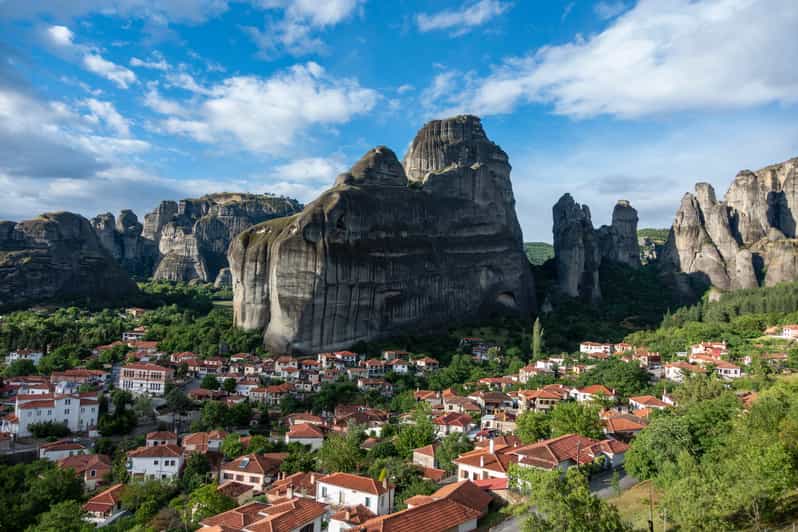
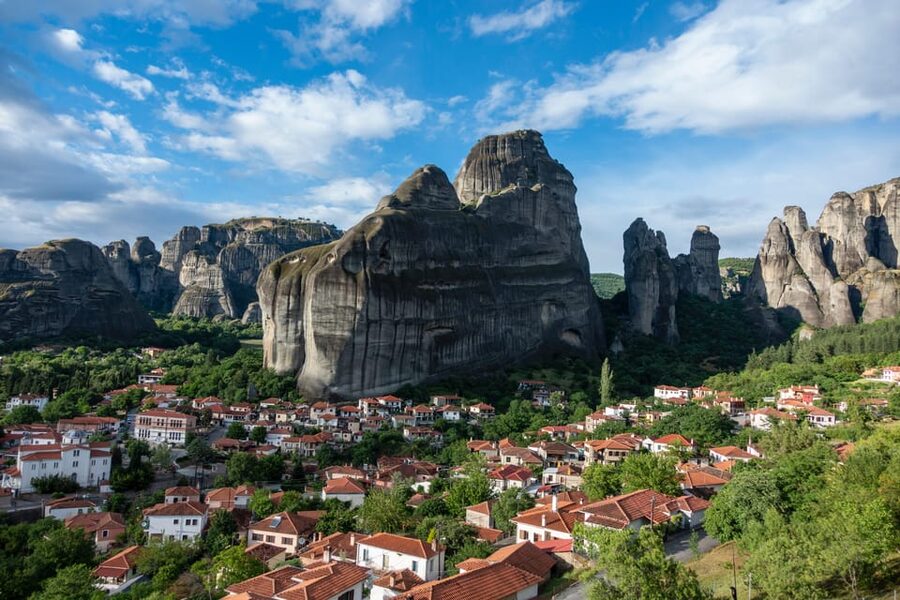
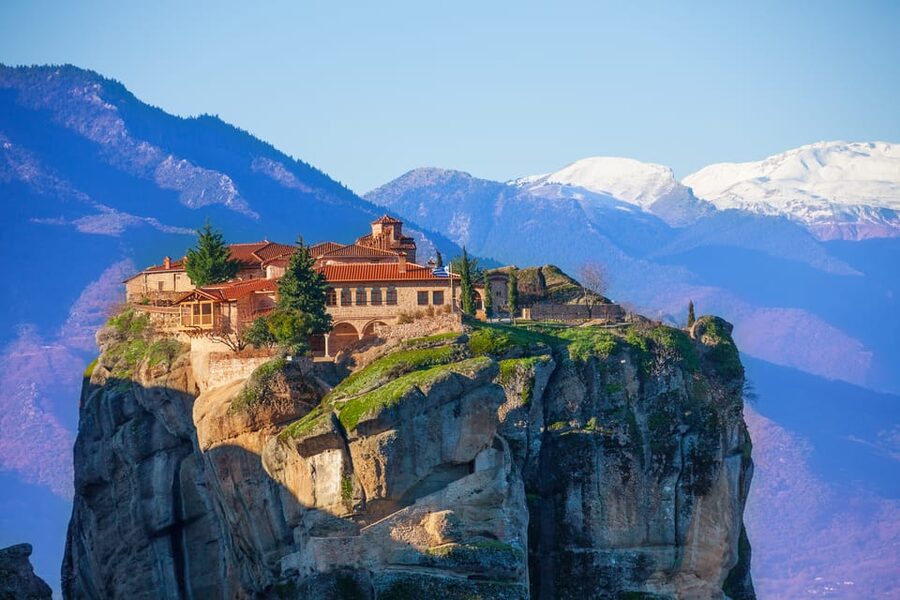
Meteora is one of those places that feels almost unreal at first sight. Huge sandstone pillars rise from the Thessalian plain, with Orthodox monasteries perched high above the town of Kalabaka. The rock formations were created millions of years ago, and their shape explains much of the site’s power: these are not simply old religious buildings, but monasteries placed in a dramatic natural setting.
Monks began living among the rocks again in the ninth century. The first monasteries were built in the fourteenth century, when the cliffs offered isolation and protection. Today, Meteora is one of the most important groups of Eastern Orthodox monasteries, and the entire site is recognized as a UNESCO World Heritage Site.
The trip gives you both parts of the story. You hear about the geology and natural setting, then learn how monks built a religious life in a place that seems difficult to reach even with modern roads. That combination makes Meteora more than a photo stop.
More One-Day Trips in Athens:
- Athens: Peloponnese Highlights Day Trip and V.R. Audio Guide
★ 4.5 · 1,425 reviews - From Paris: Giverny Day Trip with Audio Guide or Live Guide
★ 4.3 · 2,372 reviews - Giverny and Monet’s House Half Day Trip from Paris Guide or Audio
★ 4.0 · 1,319 reviews
Starting in Athens at four pickup points
The day begins early. The listed departures are 7:00 AM at the Melina Mercouri Monument in Plaka, 7:05 AM at the Greek Parliament in Syntagma, 7:15 AM at Omonoia Square, and 7:20 AM at Karaiskaki Square.
You need to wait at the specified blue hop-on-hop-off bus stops. This detail matters, since a large city square can have several possible meeting points. Check the exact stop before leaving your hotel, and arrive early rather than trying to identify the bus at the last second.
The central locations are useful if you are staying near Athens’ main visitor areas. You do not need to make your way to the railway station, which is one reason this trip appeals to people who want the simplest possible arrangement.
The same four locations are used for the return. The planned day lasts 14 hours, with many departures returning around 10:00 PM. Traffic can affect the exact time, so do not schedule a late dinner reservation or another fixed activity afterward.
The four-hour ride through central Greece
The coach takes about four hours to reach Kalabaka, although some journeys have taken closer to five hours depending on conditions. That is the part you must accept before booking. Meteora is far from Athens, and there is no clever shortcut that makes this a quick outing.
The positive side is comfort and simplicity. You can sit back in an air-conditioned bus, watch the countryside pass, and avoid driving unfamiliar roads. Scheduled breaks provide time for coffee, food, and toilets, and there is usually a stop on the return journey as well.
The quality of the ride depends partly on the coach. Most experiences describe careful driving and comfortable transport, but one useful warning is that some seats may feel hard during such a long day. A small cushion could be worthwhile if you dislike firm coach seats.
Rest stops can be more expensive than Athens, especially for food and snacks. Carrying water and a few provisions from the city is sensible, particularly in summer. One visitor specifically recommended two bottles of water per person during hot weather.
Kalabaka gives you a short taste of local life
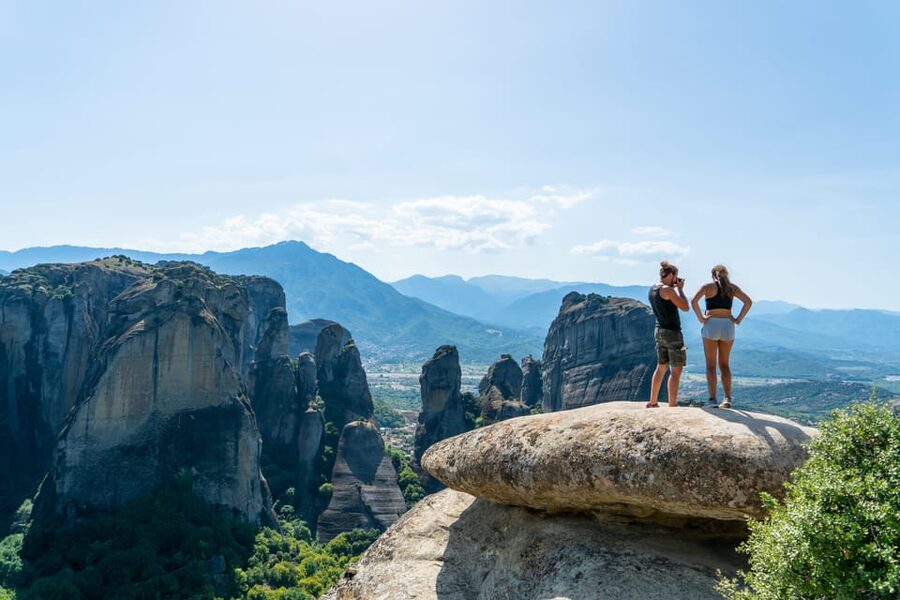
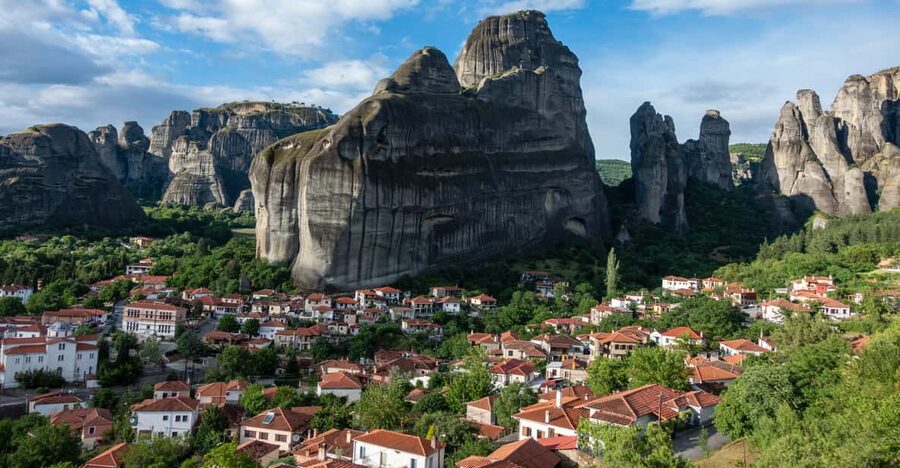
Kalabaka sits at the foot of the Meteora rocks. The town is your practical base for a break, lunch, and the meeting point with the local guide. You have roughly an hour here before the main visit begins.
If you select lunch, the meal includes a seasonal salad, one main course, and water. Vegetarian and vegan choices are available. Several people found the meal generous and enjoyable, while others found it less impressive, with occasional complaints about cold food or limited choices.
The meal is designed for speed and convenience, not a long restaurant experience. That can be an advantage on a tight schedule. You eat, use the facilities, and get ready for the monasteries without having to search for a restaurant in an unfamiliar town.
If you skip lunch, you can find your own food in Kalabaka. Be careful with timing, though. Walking farther into town for a meal can eat into the break, and you do not want to be the person holding up the coach. If you have dietary needs, the included option may be easier because vegetarian and vegan choices are specifically offered.
A few more audio tours around Athens worth a look
- Athens: Cape Sounio & Poseidon Temple Trip with Audio Guide
★ 4.4 · 4,521 reviews - Athens: Acropolis Ticket with Audio Guide
★ 4.0 · 3,575 reviews - From Athens: Delphi Full Day V.R. Audio Guided Tour
★ 4.6 · 3,028 reviews - Athens: Acropolis Museum Ticket with optional Audio Guide
★ 4.4 · 2,652 reviews
Seeing all six monasteries from the road
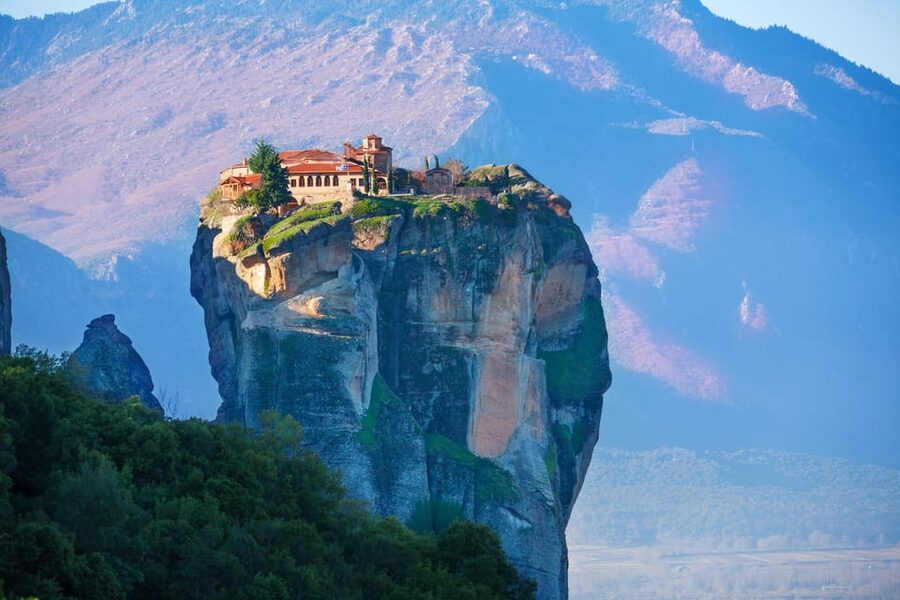
The Meteora portion lasts about three hours. You see all six monasteries from the outside, along with several viewpoints, but enter only two. The open buildings change by day, since only two or three monasteries are open at a given time.
That arrangement is sensible for a day trip. Trying to enter all six would leave you rushing from one queue to the next, with little time to appreciate the setting. Two interiors allow you to look more carefully at the religious spaces, while the road provides views of the other four.
The guide explains how the buildings were constructed on the rock columns and how the monastic communities developed. The audio guide gives additional commentary in eight languages: English, French, Spanish, German, Russian, Portuguese, Italian, and Chinese. The live tour guide speaks English.
The audio material is useful if you prefer to learn at your own pace, though it may feel brief and basic to anyone wanting a detailed lecture. The local guide fills in some of that gap, especially while the group moves between monasteries. Guides named Eva and Riki have been praised for clear explanations, patience, and help with photographs.
One limitation deserves plain treatment: the guide does not provide a full guided visit inside each monastery. You generally receive information outside, then enter on your own. That gives you freedom, but anyone expecting a detailed indoor tour with commentary at every icon and room may be disappointed.
Entering two historic monasteries
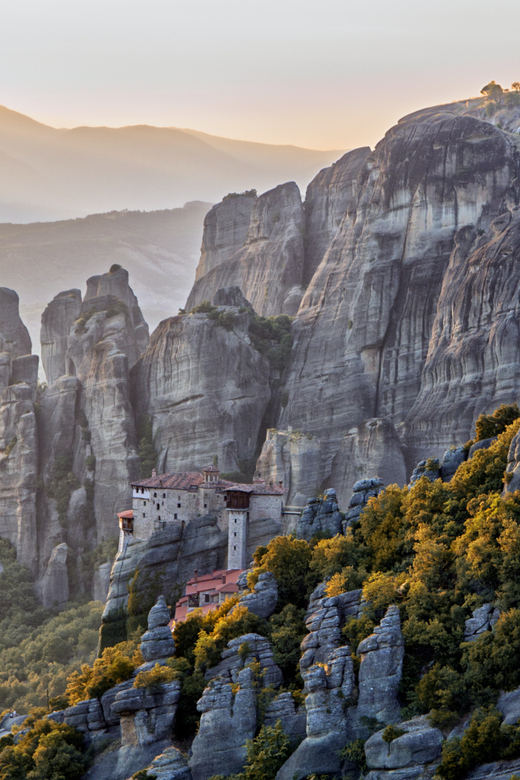
The two monastery visits are the heart of the day. You get a direct look at the religious buildings rather than seeing them only from viewpoints. Entrance tickets are not included and cost approximately €5 per monastery, so keep cash or another accepted payment method ready.
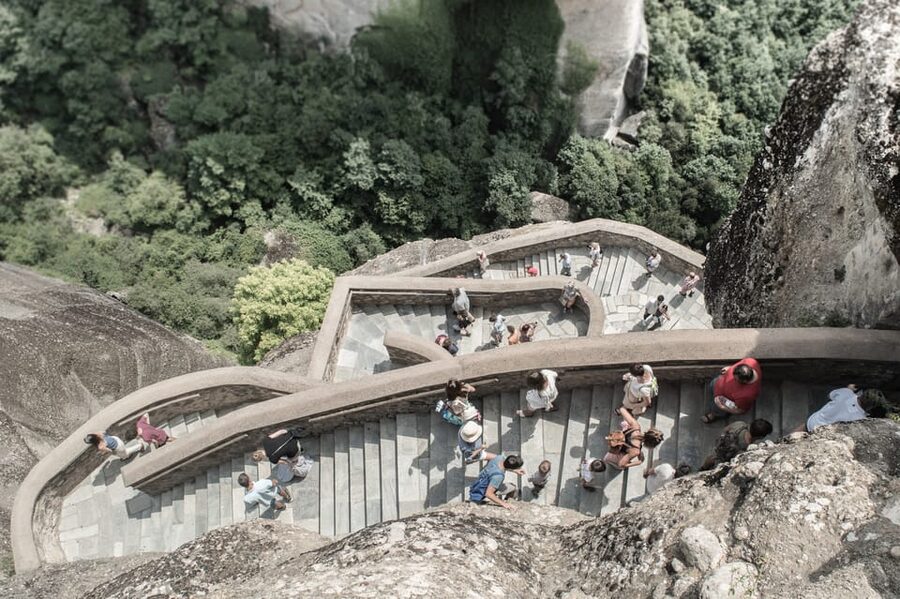
Access involves steps. One past visitor described about 140 steps to reach a monastery, which gives you a better sense of the physical effort than a simple accessibility label. Comfortable shoes are essential, and the tour is not suitable for people with mobility impairments.
You should also bring a passport or identity card. A copy is accepted according to the tour information. Pets are not allowed.
The interiors are not the only reason to enter. Going inside helps you understand the contrast between the severe rock setting and the quiet, carefully maintained religious spaces. You see how the monasteries function as living Orthodox institutions rather than as empty monuments.
Because the open monasteries vary, the exact experience cannot be fixed in advance. That is normal at Meteora. The important point is that you enter two of the six, while the others remain part of the panoramic experience.
Photo stops are a major strength
This trip leaves room for photographs. The guide stops at scenic viewpoints where the monasteries appear against the cliffs and the plain below. Those pauses make a real difference, since the best view is often not from inside a monastery but from across the valley.
Several guides have helped with group photographs and pointed out good angles. Eva has been singled out for taking pictures, and Riki has also been praised for making sure people returned home with useful images. That is a small service, but it matters when you are visiting as a couple, family, or solo visitor.
Weather can change the mood completely. Rain, fog, and smog may hide some viewpoints, while clear weather reveals the full scale of the rocks. If your schedule is flexible, check the forecast and choose the clearest available day. Meteora is still worthwhile in poor weather, but you should not expect the same sweeping views.
Some guides also point out filming locations connected with popular productions such as Game of Thrones and James Bond. These references are a pleasant extra, but the main attraction remains the unusual meeting of geology and monastic life.
The guides and drivers shape the day
The best part of a long coach excursion is often the people running it. The strongest experiences have included guides such as Eva, Riki, Dora, Erica, and Vasilis, along with drivers including Costas, George, Leonidas, and Yorgos.
The praise is consistent in a few useful areas: calm driving, clear instructions, help with photographs, and attention to the group’s timing. One guide used WhatsApp to share practical updates, links, and meeting information. Another helped people find an ATM and kept an eye on comfort breaks.
That personal care is valuable because the day has several moving parts. You must leave Kalabaka on time, return to the bus after each monastery, and manage the heat or cold outside. A good guide can make the schedule feel orderly rather than rushed.
The live guide is English-speaking, while the audio guide adds language support. If your English is limited, the audio commentary can make the history easier to follow. One useful detail from the experience is that Eva speaks slowly and clearly, which helps when the group includes many nationalities.
Is the lunch option worth paying for?
The answer depends on your priorities. Choose lunch if you want a fixed meal, a quick local-style stop, and less time spent making decisions in Kalabaka. The package includes salad, a main course, and water, and several people liked the portions and freshness.
Skip it if you are selective about food or want to choose your own restaurant. The meal has received mixed reactions, including complaints about cold food and meat that was not enjoyable. Some dishes may combine beef and pork, so ask about the menu if that matters to you.
The lunch break is only about an hour. Independent diners who walked farther into town sometimes found the food good but had to watch the clock. On balance, I would select the included lunch for convenience, especially with children, but I would not choose it solely because it promises a special culinary experience.
What the $80 price really buys you
At about $80 per person, the value comes from solving a difficult transport problem. The price includes round-trip coach transport from central Athens, four pickup choices, air conditioning, the local guide, photo stops, the multilingual audio guide, and entry to two monasteries, though not the entrance fees themselves.
You still pay about €10 for two monastery tickets, plus your drinks and personal purchases. Lunch is optional, so compare the final price with what you would spend arranging transport and food independently.
The main cost is your time. You give up a full day and spend much of it in transit. For someone with only a short stay in Athens, that may be a fair exchange for seeing one of Greece’s most remarkable places. For someone with several days available, staying overnight in Kalabaka would allow a slower visit and more time on the trails and in the monasteries.
Who should book this day trip?
I would recommend it to you if you want Meteora but do not want to organize the route yourself. It is particularly useful for first-time visitors to Greece, families who prefer a structured day, and anyone staying in central Athens.
It also suits photographers who value repeated viewpoints and people who want historical context without hiring a private guide. The guides often help with pictures, and the coach keeps the day simple.
I would hesitate if long bus journeys make you miserable, if you need step-free access, or if you want a quiet spiritual retreat. You may also prefer an overnight visit if Meteora is one of your main reasons for coming to Greece.
Should you book it?
Book this trip if you can accept the long ride as the price of seeing Meteora in one day. The scenery, monasteries, viewpoints, and helpful guides make the effort worthwhile, and the central pickup system removes much of the usual planning.
Choose a clear-weather date if possible, wear comfortable shoes, bring water, and budget for monastery entrance fees. If your schedule allows two days, stay near Kalabaka instead. If it does not, this is a practical and generally good-value way to add Meteora to an Athens itinerary.
FAQ
How long does the Athens to Meteora tour last?
The full experience lasts about 14 hours. The listed schedule generally begins around 7:00 AM and returns to Athens around 10:00 PM, though traffic can affect the arrival time.
Where can I be picked up in Athens?
Pickup is available at the Melina Mercouri Monument in Plaka, the Greek Parliament in Syntagma, Omonoia Square, and Karaiskaki Square. You should wait at the specified blue hop-on-hop-off bus stop.
How long is the bus ride to Meteora?
The scheduled journey takes about four hours each way. Some journeys may take closer to five hours depending on traffic and road conditions.
How many monasteries can I enter?
You enter two monasteries during the visit. You see all six monasteries from the outside and at viewpoints, but only two or three are open on a given day.
Are monastery entrance fees included?
No. Entrance tickets are separate and cost approximately €5 per monastery.
Is lunch included?
Lunch is included only if you select the lunch option. It includes a seasonal salad, one main course, and water, with vegetarian and vegan choices available.
What languages are available for the audio guide?
The audio guide is available in English, French, Spanish, German, Russian, Portuguese, Italian, and Chinese.
Is there a live guide?
Yes. The live tour guide speaks English. The guide provides information during the Meteora visit, while the audio guide offers additional commentary.
What should I bring?
Bring comfortable shoes, a camera, and a passport or identity card. A copy of your identification document is accepted.
Is the tour suitable for people with mobility impairments?
No. The experience is not suitable for people with mobility impairments, and access to the monasteries includes steps.
Just added around Athens
- Temple of Olympian Zeus: Self-Guided Audio Tour on your Phone (without ticket)★ 4.0 · 8 reviews
- Athens Ticket Pass: Acropolis & 6 Sites with 5 Audio Guides★ 3.5 · 84 reviews
- Ancient Agora of Athens: A Self-Guided Audio Tour★ 3.5 · 3 reviews
- Self Guided Tour In Athens With 100 Captivating Audio Stories★ 4.0 · 4 reviews
- E-ticket for Kerameikos with Audio Tour on Your Phone★ 5.0 · 4 reviews
- Athens Hop-On Hop Off w/ Acropolis & Acr.Museum tickets & 3 audio★ 3.0 · 5 reviews
- Athens Acropolis Museum Reserved Entry Ticket and Audio Tour★ 3.0 · 2 reviews
- Audioguided tour of Athens’ alternative neighbourhood of Exarchia★ 5.0 · 2 reviews
1-Day Tours, compared.
Giverny Day Trip with Audio Guide or Live Guide
Read our review →
Peloponnese Highlights Day Trip and V.R. Audio Guide
Read our review →
Giverny and Monet’s House Half Day Trip from Paris Guide or Audio
Read our review →
Albi and Cordes/Ciel Day Trip with Audio Guides
Read our review →
Rethymno: Full or Half-Day Trip to Chania with Audio Guide
Read our review →
Browse the lists this tour appears in