

REVIEW · UK AUDIO TOURS
500 Years of Crime and Punishment: A Self-Guided Audio Tour
Dark stories make old streets memorable. This 45-minute to 2-hour-15-minute audio walk takes you through Aberdeen’s darker past, from public hangings and church punishments to bodysnatchers, witches, and harbour crimes. I like the freedom to start whenever you wish, and I like that the route shows you parts of Aberdeen you might otherwise pass without noticing. The main drawback is that the directions can be difficult at certain points, especially around construction or places where phone connectivity is weak.
This is also a good-value choice at $8.99 per person. You get lifetime access to the English tour, offline audio, maps, and location data through the VoiceMap app. Still, you need your own smartphone and headphones, and this is not a guided group walk with someone beside you to solve navigation problems.
Key points before you set out
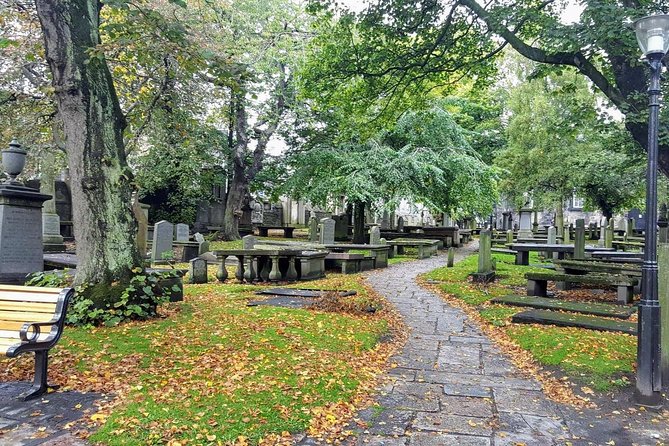
- Public punishment begins the story: Start at the Tolbooth Museum, a former gaol, and learn where Aberdeen once held prisoners and carried out public hangings.
- The route links crime to everyday history: Mercat Cross, the Anatomy Rooms, old kirkyards, The Green, and the harbour each reveal a different side of Aberdeen.
- You control the pace: The walk can take 45 minutes or more than two hours, depending on how often you stop, explore, or enter attractions.
- The audio adds stories to ordinary streets: You will hear about treason, witches, church punishments, bodysnatchers, and a child-snatching gang.
- Navigation needs attention: Keep the in-app map open, particularly near construction areas and less comfortable sections of the route.
- Museums cost extra: The Maritime Museum and any other attraction along the way are not included in the tour price.
Starting at Aberdeen’s old gaol

The tour begins at the Tolbooth Museum on Castle Street. This former gaol gives the walk an immediate sense of purpose. You are not starting with a general introduction to Aberdeen, but with the place where criminals were confined and where public hangings once took place.
That opening works well because crime and punishment were once public matters. A gaol was not tucked away from daily life in the modern sense. Punishments were meant to warn the wider population, and the audio helps you picture how these events fitted into the city’s streets and routines.
The museum is also the first practical point to check your bearings. The entrance can be hard to spot when construction is present, so arrive with enough time to locate the exact starting point. Download the tour before walking, then open the map and confirm your position rather than relying only on the spoken directions.
The walk is private in the simplest sense: only you and your group take part. That means you can pause the audio, repeat a section, or stop for a coffee without holding up anyone else. It also means you are responsible for getting from one stop to the next.
More Self-Guided Audio Tours in the UK
- Bristol: Self-Guided Sightseeing Audio Tour
★ 4.4 · 151 reviews - Essential Whitby: Discover the town’s legends on a self-guided audio tour
★ 5.0 · 47 reviews - Harry Potter’s Edinburgh: A Self-Guided Audio Tour
★ 4.5 · 42 reviews
Mercat Cross and the politics of punishment
From the old gaol, the route moves to Mercat Cross. This was a place for public announcements, but it was also used for public punishment. The cross itself is decorated with carvings of Scottish monarchs, giving the stop a visual link to royal power and civic authority.
The story here focuses on a queen and the way she responded to an outbreak of treason. That is a useful shift from local crime to national politics. It shows how punishment could send a message about loyalty to the crown, not simply deal with theft or violence.
I like this stop because it asks you to look closely at a familiar monument. Without the audio, you might see the carvings and move on. With the story, the structure becomes a place where announcements, authority, and public fear met.
The surroundings may not always be quiet or easy to study. This is a city-centre walk, not a museum visit, so traffic, pedestrians, and building work can affect the experience. Pause somewhere safe before starting the narration, and keep your attention on the pavement when moving between points.
A castle-like tower and Aberdeen’s changing streets

The route passes an impressive tower modelled on the tower at Balmoral Castle. It makes a natural photo stop and gives the walk a short change of mood. After the grim opening, you get a chance to look up at architecture rather than down at the history of punishment.
Next comes Seabury Court, beside St Andrew’s Cathedral. This section is valuable because it gives you a sense of Aberdeen’s older street pattern. Winding lanes can tell you a great deal about how a city grew, even when the buildings themselves have changed.
The tour is strongest when it connects a physical detail with a story. You are not just sent from one famous building to another. You are encouraged to notice how streets, courts, churches, and public spaces shaped life in the city.
Some sections may feel less polished than the headline stops. A few people have found the directions unclear and spent time looking for the next point. The best solution is simple: use the map shown in the app, check your location at every stop, and avoid rushing when the audio tells you to move on.
The Anatomy Rooms and Aberdeen’s bodysnatching past
One of the most unusual parts of the walk concerns the old university buildings and the Anatomy Rooms. This area was traditionally connected with medical study, and dissections took place at the rear.
That setting leads into Aberdeen’s relationship with bodysnatchers. Medical schools needed bodies for dissection, while families and communities regarded graveyards as places requiring protection. The resulting conflict produced one of the more unsettling chapters in the city’s past.
This is a good example of the tour’s wider value. Crime here is not presented as a string of unrelated horrors. The stories connect medicine, poverty, education, death, and the law. You get a better sense of why certain crimes appeared and why people found them so disturbing.
The stop also rewards patience. The Anatomy Rooms may be easy to miss if you only follow the main road, and the route takes you around the back. Listen carefully for the instruction before walking on. This is one of the points where a self-guided tour asks more from you than a live guide would.
Same place, a different route to walk:
- London: Emirates Stadium Entry Ticket and Audio Guide
★ 4.7 · 5,513 reviews - Westminster Abbey Entrance Ticket Including Audio Guide
★ 4.0 · 661 reviews - London: British Museum Audio Tour & Priority Entrance Ticket
★ 4.5 · 631 reviews - Golden Tours York Hop-on Hop-off Open Top Bus Tour with Audio Guide
★ 4.5 · 468 reviews
Graveyards, the Mither Kirk, and witch imprisonment
The next graveyard is atmospheric and full of material for the audio. You will be shown the grave of a doctor whose morals were far from admirable, then introduced to Aberdeen’s Mither Kirk, or mother church. This church was once central to early Aberdeen.
The churchyard section brings together several kinds of punishment. You hear about harsh church penalties and the imprisonment of people accused of witchcraft. These stories help explain how authority operated outside the courtroom. Religious institutions could police behaviour, enforce shame, and influence the treatment of suspected witches.
I find this part especially useful for understanding the difference between historical punishment and modern ideas of justice. Public disgrace, confinement, religious discipline, and execution could all belong to the same system. The route makes those connections while you walk through a place that still feels quieter and more personal than the main streets.
Take care in the graveyard and keep your volume at a level that lets you remain aware of your surroundings. You may want to pause the audio to examine stones or buildings. The flexible format makes that easy, and the longer two-hour option is better suited to this kind of slow looking.
The Green, street art, and a child-snatching gang

The Green changes the tone again. People have lived in this part of Aberdeen for thousands of years, but today it has a more contemporary feel, with street art, independent restaurants, and shops.
That contrast is one of the route’s clever touches. A place that feels young and creative can also carry a disturbing past. Here, the audio tells the story of a child-snatching gang that once operated in Aberdeen.
The subject is grim, but the setting helps you see how cities layer one period over another. Modern businesses and painted walls do not erase older stories. They simply give you a different surface through which to consider them.
The Green is also a practical place to pause. If you want to stretch the walk, this is a natural section for a drink or meal, though food and drink are not included. Just remember that every stop you add makes the total time longer than the shortest advertised duration.
One caution matters here. The route has been reported as passing near multi-storey flats where a local participant felt uncomfortable walking alone. I would avoid taking this section late at night, stay aware of your surroundings, and consider doing the walk during daylight. The concern is not a reason to reject the tour, but it is a reason to plan sensibly.
Aberdeen Harbour and punishment by the water
Aberdeen grew around its harbour, so the final sections take the story toward the water. The harbour was an economic centre, a place of work, and also a setting for unpleasant punishments.
This stop broadens the tour beyond churches, prisons, and graveyards. Punishment was shaped by geography. A harbour offered crowds, hard labour, ships, and public exposure. The audio uses that setting to show how Aberdeen’s relationship with the sea affected both ordinary life and the darker side of civic control.
The harbour section can also help you understand why the city developed where it did. The route is not simply cataloguing crimes. It links the city’s economy to the places where people were disciplined, watched, and sometimes publicly shamed.
As with the rest of the walk, do not expect an attraction with an entrance gate or staff member waiting at the stop. The value is in the narration and in seeing the location while the story is fresh in your mind.
A possible pause at the Maritime Museum

The Maritime Museum is a pleasant optional stop along the way. Its displays cover Aberdeen’s maritime past, including fishing and the oil industry. You can enter if you want a fuller look at the harbour’s role in the city.
Admission is not included, so decide based on your time and interests. If your main goal is the crime-and-punishment story, you can simply pass the museum and continue. If you want more context about Aberdeen’s working life, ships, fishing, and oil, it gives the harbour section extra depth.
This is where the flexible format works best. A guided group would normally keep moving. Here, you can pause the audio, visit the museum, and resume later. The app provides lifetime access, so you do not need to finish every part in one uninterrupted walk.
Ending near the Town House
The route ends outside Aberdeen Town House on Union Street, only a few metres from the starting area and close to public transport. That makes the finish convenient, especially if you want to continue exploring central Aberdeen afterward.
A loop or near-loop route is useful for a self-guided walk. You do not need to arrange a taxi back to the beginning or work out a separate return journey. Still, the short distance between the start and end points makes it worth checking exactly where the audio expects you to begin and finish.
The listed time range is unusually broad, but it makes sense. A fast listener following the route closely might finish in about 45 minutes. If you stop for photos, examine the churchyard, take a break in The Green, or visit the Maritime Museum, the walk can stretch to around two hours and fifteen minutes.
What $8.99 gets you
At $8.99 per person, the tour costs less than many live city walks. The main value comes from the combination of stories and independence. You can use it at any time, repeat it later, and access the audio and map offline after downloading the VoiceMap app.
That offline option matters in practice. Aberdeen’s streets may have areas with weak connectivity, and one piece of feedback specifically linked navigation trouble to poor signal and location accuracy. Download the audio, map, and geodata before setting out, then keep the route visible on your screen.
The price does not cover your phone, headphones, transport, food, museum entry, or other attraction tickets. If you already carry the first two items, the cost remains modest. If you need to buy anything extra, include that in your budget.
The tour is offered in English only. Most people can take part, and service animals are allowed. Since no live guide is present, the experience suits people who are comfortable using a phone and making their own way through a city.
Who should choose this Aberdeen walk?
I would choose this experience if you enjoy unusual local stories more than a standard list of landmarks. It suits independent walkers, couples, small groups, and anyone who likes stopping often to take photographs or read a plaque.
It is also a good fit if you have already seen Aberdeen’s main sights and want a different angle. The route connects places you might otherwise treat as background scenery, from the Mercat Cross to Seabury Court and the old medical buildings.
I would be more cautious if you want exact turn-by-turn support from a person. The directions have caused frustration at some points, and construction can make the start or route harder to recognise. It is also not ideal for a late-night walk, given the concern about one section near multi-storey flats.
Free cancellation is available if you cancel at least 24 hours before the scheduled start time. Changes or cancellations within 24 hours are not refunded, so keep that deadline in mind when making plans.
Should you book it?
Book this tour if you want dark Aberdeen history at your own pace and are willing to manage the navigation yourself. The stories are varied, the price is fair, and the route gives you a sharper sense of how punishment, religion, medicine, trade, and city growth once overlapped.
Skip it if you want a polished guided walk with constant personal direction, or if construction and occasional route uncertainty would spoil your day. For the best experience, go in daylight, download everything before leaving, bring headphones, keep the in-app map open, and allow closer to two hours if you plan to stop along the way.
FAQ
Where does the tour start?
It starts at the Tolbooth Museum on Castle Street, Aberdeen AB11 5BB.
Where does the tour end?
It ends outside Aberdeen Town House on Union Street, Aberdeen AB11 5BU.
How long does the audio tour take?
The estimated duration is 45 minutes to 2 hours and 15 minutes. Your total time depends on your walking speed and how often you stop.
What language is available?
The tour is offered in English.
Is a guide included?
No. This is a self-guided audio tour used through the VoiceMap app.
Do I need my own phone and headphones?
Yes. A smartphone and headphones are not included.
Can I use the tour without mobile data?
Yes. The tour includes offline access to the audio, map, and geodata after you download them through the app.
Are museum admission fees included?
No. Entry to the Maritime Museum and any other museums or attractions along the route must be paid separately.
Can I cancel for a refund?
Yes. You can receive a full refund if you cancel at least 24 hours before the scheduled start time. Cancellations within 24 hours are not refunded.
Just added around the UK
- Stratford-upon-Avon: River Cruise and City Audio Tour★ 5.0 · 9 reviews
- Shakespeare’s Stratford-Upon-Avon: A Self-Guided Audio Tour★ 5.0 · 26 reviews
- Warwickshire & Stratford-Upon-Avon Self-Guided Audio Tours★ 5.0 · 6 reviews
- Rebels, Romance & Raisins St. Andrew’s Walking Audio Tour★ 5.0 · 2 reviews
- Stonehenge Private Immersive Audio Guide★ 4.5 · 15 reviews
- Oxford’s literary legends and landmarks: A Self-Guided Audio Tour★ 3.0 · 4 reviews
- A Guide to the City of Dreaming Spires: A Self-Guided Audio Tour of Oxford★ 5.0 · 2 reviews
- Discovering Cheltenham: A Self-Guided Audio Tour★ 4.5 · 23 reviews
Self-Guided Tours, compared.

Acropolis Ticket & Optional Self-Guided Audio Tours
Read our review →


Ultimate Acadia National Park Self-Guided Driving Audio Tour
Read our review →

Santorini: Akrotiri Ticket with Optional Self-Guided Audios
Read our review →
Browse the lists this tour appears in